US top court backs Big Tech over terror claims / Photo: © AFP

 Justice Alito steps aside from major US climate case
 Willis happy with England exile after retains Top 14 player award

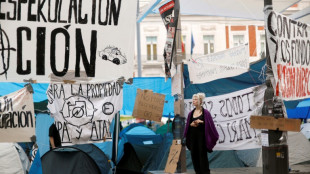 Spain housing protests keep heat on government as PM seeks new law

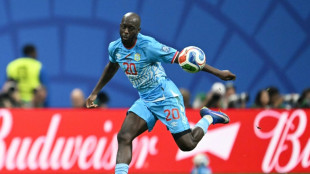 Wissa spoils Zimbabwe homecoming as DR Congo win AFCON qualifier

 UK police release on bail five men held over airbase incident

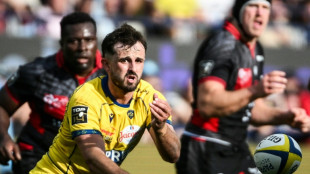 Ex-All Black Plummer 'sure' New Zealand will find Super Rugby solution
 Shein sees 1% revenue growth in first half of 2026

 Netherlands regrets Israel retaliation in settlements row
 Moscow seizes Russian assets of German food retailer Metro
 Bulgarian spirits inflamed by new rakia rules

 Documentary turns camera on architect Peter Zumthor
 UK police say releasing on bail five men held over airbase incident
 Trump admin finalizes reversal of US fuel economy standards
 US says no China arms sale plans after envoy cites Trump offer
 Dozens kidnapped in two weekend attacks in northern Nigeria
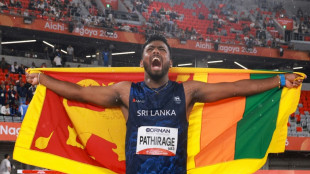 Next stop the world: Pathirage wins Asian Games javelin gold

 Aster Launches Perpetual Grid Trading 2.0 with Up to 140,000 $ASTER Liquidity Mining Campaign

 Seoul says North Korean mines 'highly suspected' as cause of DMZ blast

 Russia pummels Kyiv in latest deadly daytime attack

 Wartime Ukraine works to keep its railways on track

 Boy among 3 dead in migrant Channel crossing accident: French authorities
 SGFX Creates a Standout Brand Experience at Forex Expo Dubai 2026

 Pope urges Europe to help combat 'deceit and lies' in international ties
 Injured Buttler to miss England ODI series in Pakistan

 Madrid housing protesters vow to maintain pressure on government
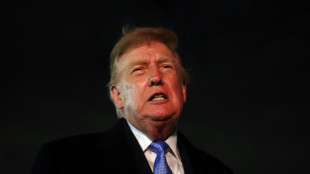
The US Supreme Court handed a victory to Twitter and Google on Thursday, saying the social media giants could not be held liable by victims of terrorist attacks for posts that endorsed the Islamic State group.
Crucially, the cases that targeted Google-owned YouTube and Twitter were seen as potential challenges to decades-old legal protections for tech companies.
The justices declined to wade into the debate, indicating that the cases fall outside the scope of the law because the platforms did not in any case "aid and abet" IS terror attacks by hosting postings supportive of the extremist group.
A law known as Section 230 gives internet platforms blanket immunity from any legal fallout of content that comes from a third party, even if it is pushed out as a recommendation by the website.
Section 230, which became law in 1996, is credited with allowing the no-holds-barred expansion of the internet but has increasingly been seen as helping cause the harmful effects of social media on society.
Without it, websites would potentially be open to lawsuits for content posted by users, making the free-wheeling discussions seen on social media subject to much stricter moderation.
A bitterly divided US Congress has failed to update the rules, and many US states are passing their own laws to make platforms such as Facebook, Instagram and TikTok more responsible for content.
"Enough is enough... Congress must step in, reform Section 230, and remove platforms' blanket immunity from liability," said influential Democratic Senator Dick Durbin after the ruling.
- 'Decline to address' -
The justices of the Supreme Court largely evaded the question. They said that the allegations against YouTube and Twitter did not amount to a liable infraction and therefore the debate over section 230 was not pertinent.
"We therefore decline to address the application of Section 230 (in a case) that appears to state little, if any, plausible claim for relief," they said.
The justices however gave no indication on how they could potentially address the immunity issue in the future, nor were their stances on the matter made clear at hearings in February.
Google welcomed the result.
"Countless companies, scholars, content creators and civil society organizations who joined with us in this case will be reassured by this result," said Halimah DeLaine Prado, Google’s general counsel.
An association representing US tech companies said the decision was good news.
"The Court correctly recognized the narrow posture of these cases and declined to rewrite a key tenet of US Internet law, preserving free expression online and a thriving digital economy," said Matt Schruers, head of the Computer & Communications Industry Association.
- 'Fight another day' -
The first of the two cases involved a US victim of the 2015 Paris attacks, claimed by the IS group.
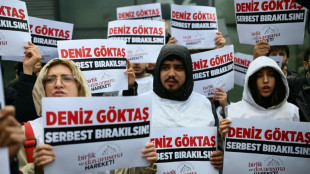
The other case was brought by the family of a victim of a 2017 attack by the group on an Istanbul nightclub.
The family alleged that Twitter's failure to take down and stop recommending IS tweets constituted aiding an act of terror.
The Supreme Court declines to hear the vast majority of the cases that come its way, and experts had predicted that by opting to decide on this one justices could be willing to modify the increasingly contested landmark law.
But in the hearings, the justices largely expressed doubts that the case would be fit to begin a debate about reworking Section 230.
J.Bergmann--BTB