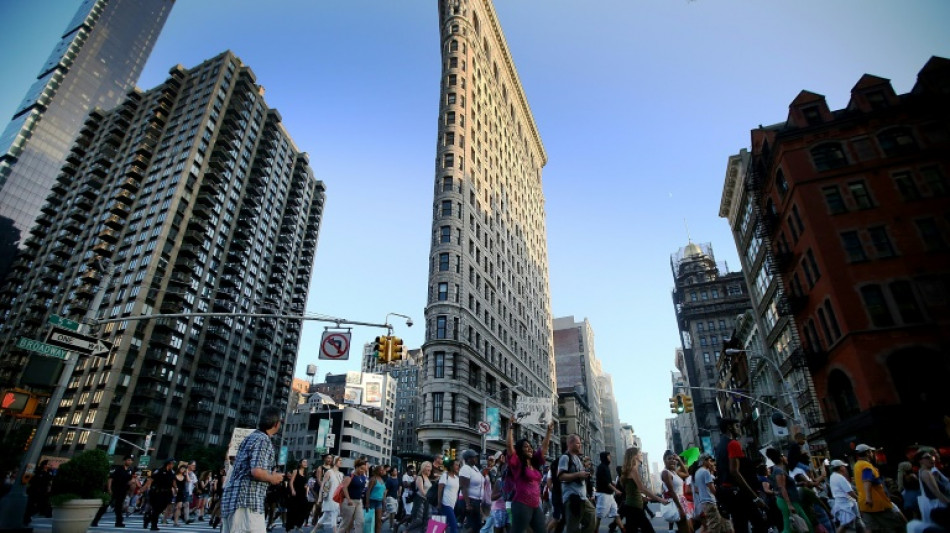
New York's landmark 'Flatiron' sold -- hopefully for real this time / Photo: © GETTY IMAGES NORTH AMERICA/AFP/File

 Dodgers eye three-peat, Red Sox face Yankees as MLB playoffs begin

 Certification of Boeing 737 MAX delayed by software bug

 Celine Dion wows Paris Fashion Week with surprise gig

 AMD buys firm founded by AI 'godmother' Fei-Fei Li
 Italy rebound in Turkey as France win late in Belgium

 Pope says concerns about AI 'should be taken seriously'

 Hurricanes to hoist title banner as NHL season begins

 Justice Alito steps aside from major US climate case

 Willis happy with England exile after retains Top 14 player award

 Spain housing protests keep heat on government as PM seeks new law

 Wissa spoils Zimbabwe homecoming as DR Congo win AFCON qualifier

 UK police release on bail five men held over airbase incident

 Ex-All Black Plummer 'sure' New Zealand will find Super Rugby solution

 Shein sees 1% revenue growth in first half of 2026

 Netherlands regrets Israel retaliation in settlements row

 Moscow seizes Russian assets of German food retailer Metro

 Bulgarian spirits inflamed by new rakia rules

 Documentary turns camera on architect Peter Zumthor
 UK police say releasing on bail five men held over airbase incident

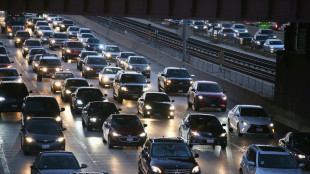 Trump admin finalizes reversal of US fuel economy standards

 US says no China arms sale plans after envoy cites Trump offer

 Dozens kidnapped in two weekend attacks in northern Nigeria

 Next stop the world: Pathirage wins Asian Games javelin gold

 Aster Launches Perpetual Grid Trading 2.0 with Up to 140,000 $ASTER Liquidity Mining Campaign

 Seoul says North Korean mines 'highly suspected' as cause of DMZ blast

New York's iconic Flatiron Building was auctioned off Tuesday for $161 million to a group of investors led by real estate developer Jeffrey Gural, after the previous bidding's winner failed to complete the transaction, organizers said.
The sale of the world-famous skyscraper took place outdoors in lower Manhattan with seven bidders registered and about a hundred people present, Mannion Auctions told AFP.
The property -- on a wedge-shaped lot at the intersections of Fifth Avenue, Broadway and 22nd Street -- went to Gural, 80, one of its five current owners, who was the second highest bidder during the highly contested previous auction.
On March 22, little-known bidder Jacob Garlick, founder of the Abraham Trust equity venture fund, obtained rights to the Flatiron with a pricey offer of $190 million but missed a deadline to pony up 10 percent of the money to lock in purchase.
The 121-year-old property -- one of the first skyscrapers in Manhattan, designed by renowned Chicago architect Daniel Burnham -- has been empty since its last tenant left in 2019. Its five owners could not agree on what to do with the building, and a judge ordered its auction.
After Garlick pulled out of the deal, the building could have automatically gone to Gural, who had offered $189.5 million in March, but he opted for a new auction to be held.
The 22-story triangular edifice completed in 1902 was revolutionary for its time, built on a steel skeleton and clad in limestone and terra cotta with touches of both beaux arts and Renaissance revival architecture.
C.Meier--BTB