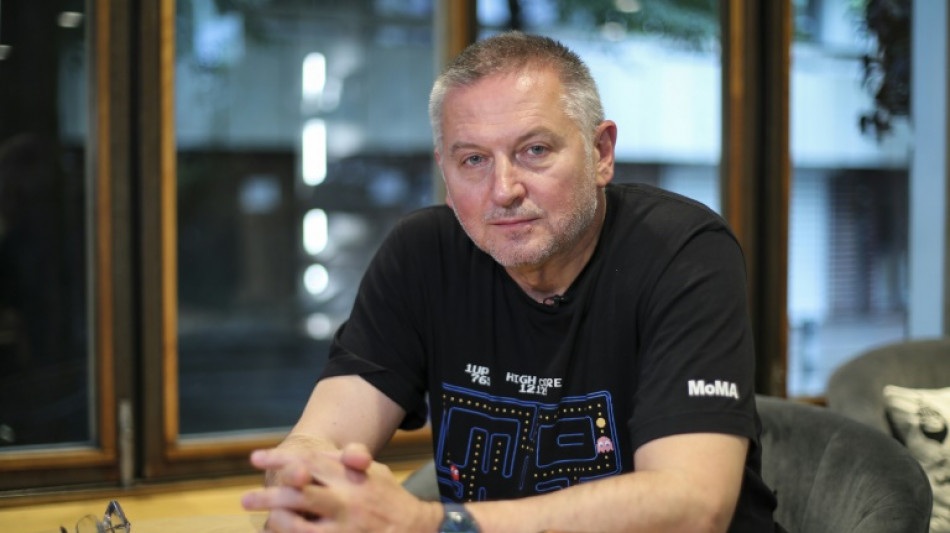
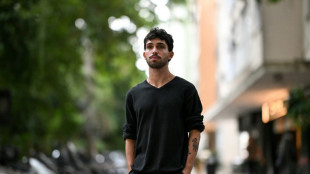
'Wars bring back the past': Booker Prize winner Georgi Gospodinov / Photo: © AFP

 8.3 mn refugees at risk due to 'severe' funding cuts: UN
 Stocks drop and oil rises as Hormuz hopes fade

 OpenAI cancels release of newest model due to safety concerns

 AI bosses head to White House as safety pressure builds
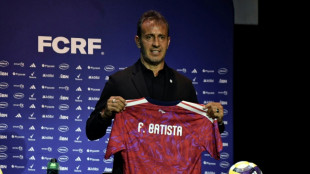 Batista sacked as Costa Rica coach after six months
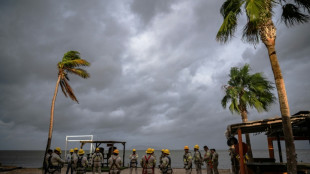 Flooding, power cuts and evacuations as Hurricane Polo slams Mexico

 Dodgers eye three-peat, Red Sox face Yankees as MLB playoffs begin
 Certification of Boeing 737 MAX delayed by software bug

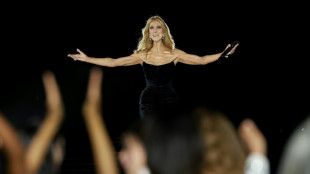 Celine Dion wows Paris Fashion Week with surprise gig
 AMD buys firm founded by AI 'godmother' Fei-Fei Li
 Italy rebound in Turkey as France win late in Belgium

 Pope says concerns about AI 'should be taken seriously'

 Hurricanes to hoist title banner as NHL season begins

 Justice Alito steps aside from major US climate case

 Willis happy with England exile after retains Top 14 player award
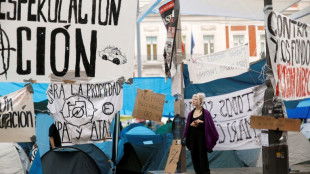
 Spain housing protests keep heat on government as PM seeks new law

 Wissa spoils Zimbabwe homecoming as DR Congo win AFCON qualifier

 UK police release on bail five men held over airbase incident

 Ex-All Black Plummer 'sure' New Zealand will find Super Rugby solution

 Shein sees 1% revenue growth in first half of 2026
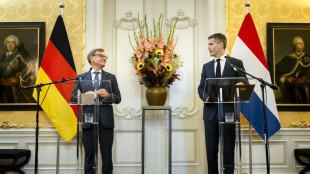 Netherlands regrets Israel retaliation in settlements row

 Moscow seizes Russian assets of German food retailer Metro

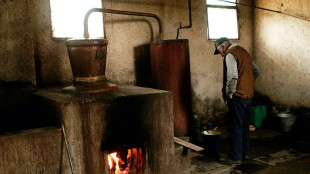 Bulgarian spirits inflamed by new rakia rules

 Documentary turns camera on architect Peter Zumthor

 UK police say releasing on bail five men held over airbase incident
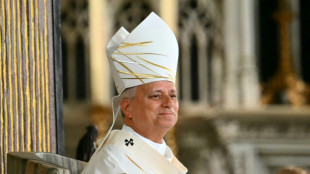
Bulgarian writer Georgi Gospodinov doesn't view himself as a predictor of the future. But he said his International Booker Prize-winning dystopian novel "Time Shelter" has become reality.
"When you live in dystopian times, dystopian books become reality or turn into some kind of documentary," he told AFP in an interview.
He said he hadn't foreseen Russia's invasion of Ukraine, though.
"These things were in the air. (But) I'm not a prophet, nor did I think it would come to this. I did not foresee the war."
"Wars bring back the past," he continued, describing Russian President Vladimir Putin as "a dictator" who "wanted to take his country back to the time of World War II".
"Time Shelter" -- which brought Gospodinov and translator Angela Rodel the prestigious British Booker Prize last month -- focuses on a "clinic for the past" that offers experimental Alzheimer's treatment.
To trigger patients' memories, it recreates the atmosphere of past decades down to the smallest detail.
But, with time, healthy people start coming to the clinic, seeking an escape from modern life.
- Return to the past -
Such is the success that the past invades the present.
Across Europe, governments organise "referendums for the past" to choose their own "happy decade" -- which ends up in a re-enactment of World War II.
Gospodinov said he came up with the idea for his third novel -- published in 2020 in Bulgarian and 2022 in English -- after witnessing societies' glorification of the past.
"The past is what nationalism and populism thrive on," the 55-year-old said, giving as examples former US president Donald Trump's "Make America Great Again" slogan, as well as Brexit.
Born in 1968 in the town of Yambol in southeastern Bulgaria, Gospodinov said people who had lived through Communism, like him, "have more experience to recognise the danger... of populist abstractions".
"Because we had already lived in a promised future, in a promised time," he said.
He urged "everyday work with memory" so people remembered that peace cannot be taken for granted.
When Gospodinov -- who describes literature as "an antidote to propaganda" -- began his novel back in 2016, he thought he would need to explain his title "Time Shelter" as a play on words in reference to "bomb shelter".
But the war in Ukraine has "disastrously" revived the word, the poet and playwright said.
- Euphoria at home -
Despite the book's sinister themes, Bulgarians celebrated the Booker Prize win.
Local media in the European Union's poorest member state compared the euphoria to when the national football team came fourth in the 1994 World Cup.
"I didn't expect that this joy could bring people together like that," Gospodinov said, remembering the 1994 "feeling that now you can move mountains".
"Now I realise how much Bulgarian society actually needs good news."
When he returned from the Booker ceremony in London, Gospodinov attended the spring book fair in Sofia.
As usual, he exchanged greetings with each of the hundreds of people who queued for hours in the rain to meet him.
He said he drew the "empathy" needed for his writing from his childhood, when his family lived on the "ground floors" -- literally and metaphorically.
Writers -- just like everyone else -- "have а right to be fragile, vulnerable, sad, insecure; to be hurt, to be lonely; to be on the weak, losing side", he said.
"Otherwise you can't experience, you can't tell stories about people who are on the losing side if you're not on their side. It doesn't work," he added.
J.Bergmann--BTB