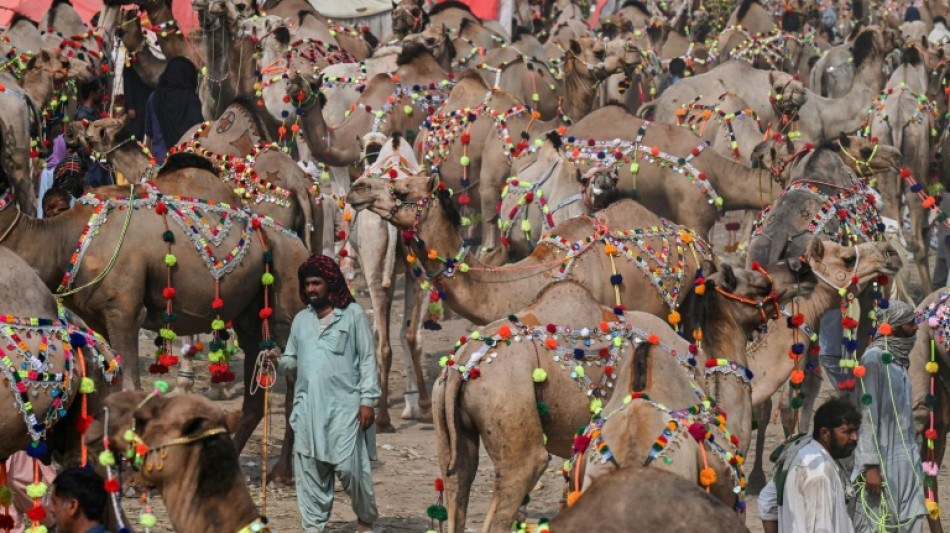
Fewer buyers for Eid camels as Pakistanis count the rupees / Photo: © AFP

 South Korea volleyball team latest to be bussed to wrong Games venue
 Malaysia starts sending Myanmar migrants home

 8.3 mn refugees at risk due to 'severe' funding cuts: UN

 Stocks drop and oil rises as Hormuz hopes fade
 OpenAI cancels release of newest model due to safety concerns

 AI bosses head to White House as safety pressure builds

 Batista sacked as Costa Rica coach after six months
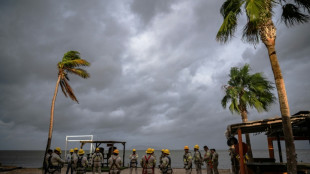 Flooding, power cuts and evacuations as Hurricane Polo slams Mexico
 NFL Giants obtain QB McCarthy from Vikings

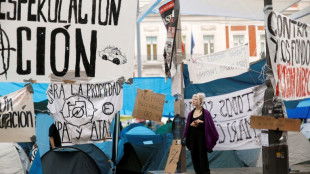 Deal for evicted Spanish pensioner as PM seeks new housing law

 Clippers apologize, warn fans of 'challenges' after Leonard scandal

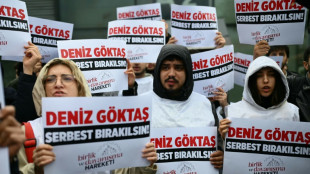 Turkish comedian convicted for Erdogan 'insult' freed pending appeal

 Trump announces 'biggest' US steel plant in battleground Iowa

 Olise wonder strike gives Zidane's France win in Belgium

 US stocks fall, bond yields rise as Middle East war drags on

 Trump denies offering to sell arms to China's Xi

 Wemby ready for NBA Spurs to move rivals in climb to top
 Ukraine to postpone some spending amid delays in aid: PM
 Tuchel says Czech Republic game 'not yet a must-win'
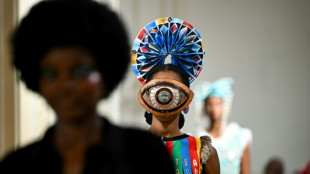 MaXhosa puts South Africa on the Paris fashion map

 Rose, Scott among 2027 World Golf Hall of Fame finalists
 Brunson says NBA champion Knicks can't get satisfaction

 France puts out largest wildfire since 1949

 Real Madrid's Perez summoned over Barcelona referee payments comments

 Oil takes off again, Wall Street dips after Trump rejects Iran truce offer
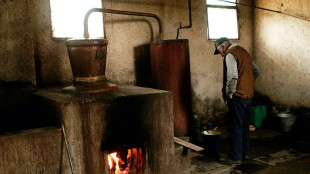
Teenager Amanullah Khan teeters on his tiptoes, daubing towering camels with festive henna patterns to entice Eid al-Adha customers at a market near the Pakistan capital.
Hundreds of farmers have camped at livestock markets between Islamabad and its twin city Rawalpindi for two weeks, hoping to sell animals ahead of the annual holy festival starting Thursday in Pakistan.
But with rampant inflation -- reaching a record 38 percent in May -- markets are attracting smaller crowds.
Khan's cousin Zakaria brought 18 camels to market after good profits last year but has sold only one so far.
"People's purchasing power is over. Customers are not coming to the market, and those who come prefer to return empty-handed due to the high prices of the animals," Zakaria, 21, told AFP.
During the festival, Muslims around the world will slaughter an animal -- a goat, sheep, bull or camel -- keeping a third for themselves before giving a third to friends and relatives, and a third to charity.
The ritual commemorates the readiness of Ibrahim -- Abraham in the Christian and Jewish faiths -- to sacrifice his son to show obedience to Allah.
The centuries-old festival is guided by tradition, but this year many middle-class Pakistanis will not be able to perform a sacrifice.
"Our income is the same but the prices are sky-high. From where would we get that much money?" buyer Ali Akbar, a 46-year-old builder, asked.
Another customer, Zerak Ali, had come to enquire about the price of a camel, which can cost up to one million rupees ($3,500).
"It is worth 700,000 for you," Zakaria barters. But 56-year-old shopkeeper Ali leaves, leading his two grandsons towards the enclosure housing cheaper bulls.
Camel sacrifice is not common in Pakistan, but some wealthier buyers prefer the animal because 11 families can share its meat, according to Islamic rules.
More than 250 camels have been brought to the Islamabad market, along with thousands of bulls, cows, goats and sheep.
Bulls cost up to 500,000 rupees, while the price of goats ranges from 50,000 to 150,000.
Eating into Zakaria's profits are market taxes, rising fodder and truck rental prices, as well as staff wages.
"I will lose millions of rupees this year," he glumly predicts.
Bakht Zaman, a farmer from Mardan district in Pakistan's northwest, brought 10 camels to market and has so far sold only one for 500,000 rupees.
"The value of the Pakistani rupee has fallen," says buyer Haq Nawaz. "Who will buy such expensive animals?"
L.Dubois--BTB