India's headhunter warriors sever past, fret over future / Photo: © AFP/File

 South Korea volleyball team latest to be bussed to wrong Games venue

 Malaysia starts sending Myanmar migrants home

 8.3 mn refugees at risk due to 'severe' funding cuts: UN

 Stocks drop and oil rises as Hormuz hopes fade
 OpenAI cancels release of newest model due to safety concerns

 AI bosses head to White House as safety pressure builds

 Batista sacked as Costa Rica coach after six months

 Flooding, power cuts and evacuations as Hurricane Polo slams Mexico

 NFL Giants obtain QB McCarthy from Vikings

 Deal for evicted Spanish pensioner as PM seeks new housing law

 Clippers apologize, warn fans of 'challenges' after Leonard scandal

 Turkish comedian convicted for Erdogan 'insult' freed pending appeal

 Trump announces 'biggest' US steel plant in battleground Iowa

 Olise wonder strike gives Zidane's France win in Belgium

 US stocks fall, bond yields rise as Middle East war drags on

 Trump denies offering to sell arms to China's Xi

 Wemby ready for NBA Spurs to move rivals in climb to top

 Ukraine to postpone some spending amid delays in aid: PM

 Tuchel says Czech Republic game 'not yet a must-win'

 MaXhosa puts South Africa on the Paris fashion map

 Rose, Scott among 2027 World Golf Hall of Fame finalists

 Brunson says NBA champion Knicks can't get satisfaction

 France puts out largest wildfire since 1949

 Real Madrid's Perez summoned over Barcelona referee payments comments

 Oil takes off again, Wall Street dips after Trump rejects Iran truce offer
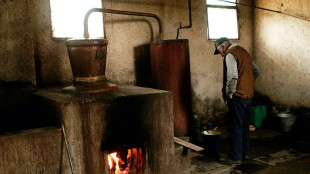
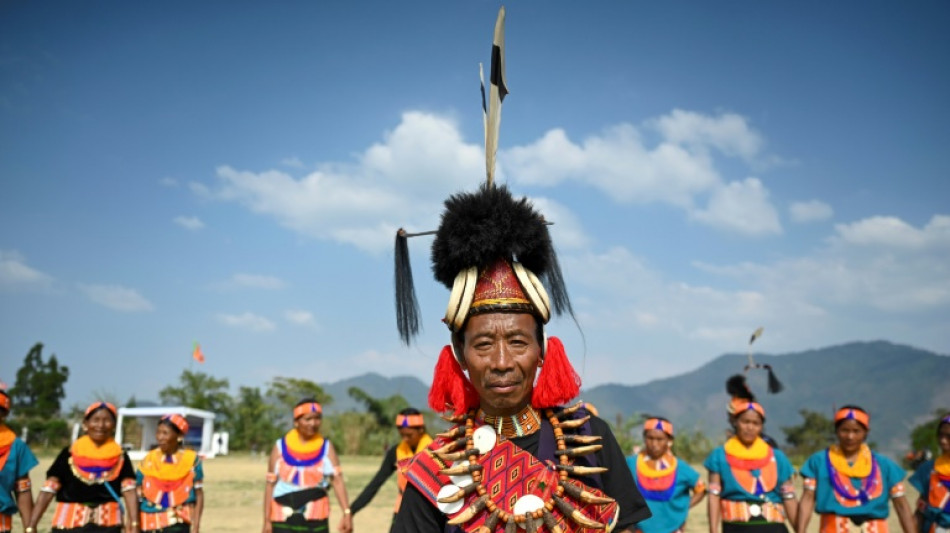
Once, the way to get ahead among India's Konyak warriors was by chopping off an enemy's skull. Today, the last survivors of a past age mourn the changing times -- and a new generation they see as soft.
At 90, Nokkho Konyak can barely see beyond a few feet, his facial tattoos marking him as a warrior are fading and his frail body needs support.
But his eyes light up and his hands become animated when he talks about "those simpler times".
"We witnessed our brave elders cutting off enemies' heads and participated in many battles," he told AFP.
Nokkho is a Konyak, a small but fierce and respected warrior community in northeastern India's Nagaland state.
The Konyaks were the last to give up the age-old practice of severing enemies' heads in this remote, hilly and densely forested region close to the Myanmar border.
"I am lucky to still be alive, to be around my extended family, and I feel that today's generation is too privileged," he said at Chi village, about 360 kilometres (225 miles) from the regional capital Dimapur.
- 'Heads were trophies' -
Nokkho is an old man from a dying breed that practised or witnessed headhunting before it stopped half a century ago.
"Human heads were trophies that earned you respect," he said, sitting in front of a wall decorated with the skulls of animals sacrificed by his family.
Warriors were inked with different tattoos signifying anything from participation in a battle to killing someone and actually taking a head.
As a young boy, he practised lopping off heads on large puppets, though he never severed a human one in battle himself.
The last two headhunters in the village, his two elderly friends, died about 20 years ago.
Most tribal fights happened over land and limited resources, with warriors carrying spears, axes and machetes ambushing their enemies.
Wherever possible, enemies' headless bodies were tied to a bamboo pole and taken back to the victor's village.
The head itself was taken and paraded about for the village to see, hailed as a sign of bravery to be celebrated.
"My youth was a time of great transition," Nokkho said, referring to the arrival of missionaries, who denounced headhunting and gradually converted most people from their traditional animist beliefs to Christianity.
Nokkho remembers World War II, the end of British colonial rule, the formation of the Indian state in 1947, the first roads and power lines, and now, finally, the arrival of mobile phones.
- 'Hard for women' -
Like Nokkho, 90-year-old Bo Wang, king of nearby Hongphoi village, took up hunting wild boars and other animals after "headhunting became taboo".
Wang's family, like other royals in nearby Konyak villages, has been the final local authority for generations.
"Everyone lived in fear of an ambush, and we were taught to be wary of everyone," Wang said, describing the stress of growing up with the threat of headhunters.
The area is peaceful now, he said, but he laments what he sees as a lost era.
"Everything changed with modernity, our culture is dying," he said.
"People respected hierarchy, elders and their king -- which isn't the case anymore," he added.
Dressed in a traditional red conical cap adorned with fluttering feathers and boar tusks, he sat around a fire with his peers reminiscing, saying they hoped their stories, lives and culture would not be forgotten.
But Wang's second wife, Kamya, 80, said she was glad her granddaughters were growing up today and not in the conditions she experienced.
"There was just stress, not enough food or resources," she told AFP. "It was particularly hard for women, who thanklessly worked at home, in the fields -- all the time".
Kaipa Konyak, 34, from a local tribal organisation working to support the Konyak culture, said that the history would not be lost.
"Young people are proud of their warrior traditions and culture," he said.
"We remember our roots and will strive to protect them while also securing our future with the best modern education and infrastructure."
I.Meyer--BTB