Facebook alters fact-checking controls for US users / Photo: © AFP

 South Korea volleyball team latest to be bussed to wrong Games venue

 Malaysia starts sending Myanmar migrants home

 8.3 mn refugees at risk due to 'severe' funding cuts: UN

 Stocks drop and oil rises as Hormuz hopes fade

 OpenAI cancels release of newest model due to safety concerns

 AI bosses head to White House as safety pressure builds

 Batista sacked as Costa Rica coach after six months

 Flooding, power cuts and evacuations as Hurricane Polo slams Mexico
 NFL Giants obtain QB McCarthy from Vikings

 Deal for evicted Spanish pensioner as PM seeks new housing law

 Clippers apologize, warn fans of 'challenges' after Leonard scandal
 Turkish comedian convicted for Erdogan 'insult' freed pending appeal

 Trump announces 'biggest' US steel plant in battleground Iowa

 Olise wonder strike gives Zidane's France win in Belgium

 US stocks fall, bond yields rise as Middle East war drags on

 Trump denies offering to sell arms to China's Xi
 Wemby ready for NBA Spurs to move rivals in climb to top

 Ukraine to postpone some spending amid delays in aid: PM
 Tuchel says Czech Republic game 'not yet a must-win'

 MaXhosa puts South Africa on the Paris fashion map

 Rose, Scott among 2027 World Golf Hall of Fame finalists

 Brunson says NBA champion Knicks can't get satisfaction

 France puts out largest wildfire since 1949

 Real Madrid's Perez summoned over Barcelona referee payments comments

 Oil takes off again, Wall Street dips after Trump rejects Iran truce offer

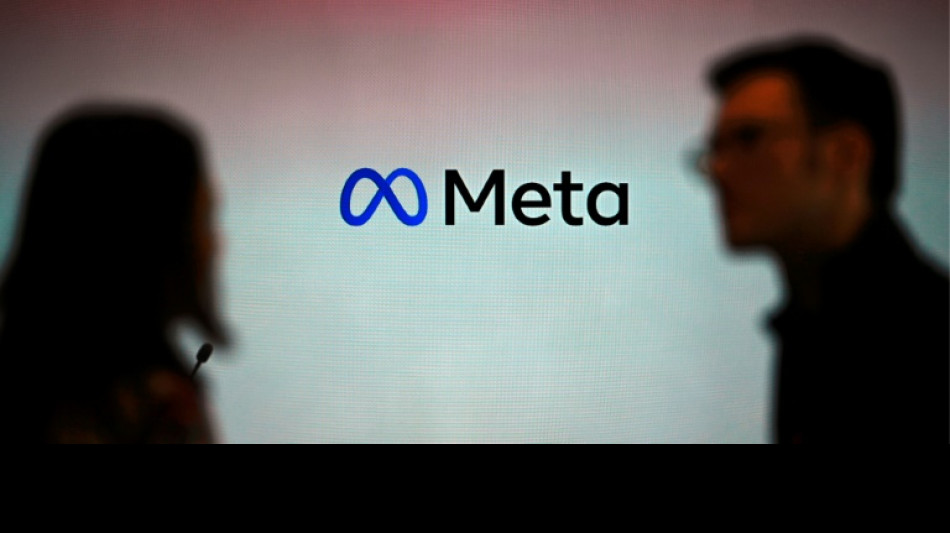
Meta-owned Facebook has handed US users the controls over fact-checked content, in a potentially significant move that the platform says will give them more power over its algorithm but some analysts insist could benefit purveyors of misinformation.
For years, Facebook's algorithm automatically moved posts lower in the feed if they were flagged by one of the platform's third-party fact-checking partners, including AFP, reducing the visibility of false or misleading content.
Under a new "content reduced by fact-checking" option that now appears in Facebook's settings, users have flexibility to make debunked posts appear higher or lower in the feed or maintain the status quo.
Fact-checked posts can be made less visible with an option called "reduce more." That, according to the platform's settings, means the posts "may be moved even lower in feed so you may not see them at all."
Another option labeled "don't reduce" triggers the opposite effect, moving more of this content higher in their feed, making it more likely to be seen.
"We're giving people on Facebook even more power to control the algorithm that ranks posts in their feed," a Meta spokesman told AFP.
"We're doing this in response to users telling us that they want a greater ability to decide what they see on our apps."
Meta rolled out the fact-checking option in May, leaving many users to discover it for themselves in the settings.
It comes amid a hyperpolarized political climate in the United States that has made content moderation on social media platforms a hot-button issue.
Conservative US advocates allege that the government has pressured or colluded with platforms such as Facebook and Twitter to censor or suppress right-leaning content under the guise of fact-checking.
On Tuesday, a federal court in Louisiana restricted some top officials and agencies of President Joe Biden's administration from meeting and communicating with social media companies to moderate their content.
Separately, misinformation researchers from prominent institutions such as the Stanford Internet Observatory face a Republican-led congressional inquiry as well as lawsuits from conservative activists who accuse them of promoting censorship -- a charge they deny.
- 'Exposure to misinformation' -
The changes on Facebook come ahead of the 2024 presidential vote, when many researchers fear political falsehoods could explode across social media platforms. The move has also prompted concern from some analysts that it could be a boon for misinformation peddlers.
"Downranking content that fact-checkers rate as problematic is a central part of Facebook's anti-misinformation program," David Rand, a professor at the Massachusetts Institute of Technology, told AFP.
"Allowing people to simply opt out seems to really knee-cap the program."
Meta downplayed the concerns, saying it will still attach labels to content that is found to be misleading or false, making it clear that it was rated by one of its third-party fact-checkers. The company said it was exploring whether to expand this control to other countries.
"This builds on work that we've been doing for a long time in this area and will help to make user controls on Facebook more consistent with the ones that already exist on Instagram," Meta's spokesman said.
Aside from this control, Facebook is also allowing users to decide the degree to which they want to view "low quality content," such as clickbait and spam, and "sensitive content," including violent or graphic posts, on the platform.
The impact of the changes, analysts say, is only likely to be known over time when more users -- especially those who distrust professional fact-checkers -- start tweaking their settings.
Fact-checkers, who are not able to review every post on the mammoth platform, routinely face an avalanche of online abuse from people who dispute their ratings -- sometimes even when they peddle blatantly false or misleading information.
"Someone who dislikes or distrusts the role of fact-checkers could use it to try to avoid seeing fact-checks," Emma Llanso, from the Center for Democracy & Technology, told AFP.
Facebook, she said, should be researching and testing whether it will increase or decrease users' "exposure to misinformation" before it rolls it out more widely around the world.
"Ideally they should share the results of that kind of research in an announcement about the new feature," Llanso added.
F.Müller--BTB