'Drive My Car': Murakami adaptation by rising indie star wins Oscar / Photo: ©

 Far-Right Extremists Claim Opportunity to Seize Control of GOP After Midterms

 New Campaign Highlights Knowledge Gaps on Carbon Monoxide Safety Among Americans

 JR East Launches 'teppay' to Integrate Suica Balance with Mobile Payments
 Phil Spencer on Housing Market Fairness: How Buyers and Sellers Navigate Falling Prices

 Beirut Cinema Festival Draws Thousands Despite War Fatigue

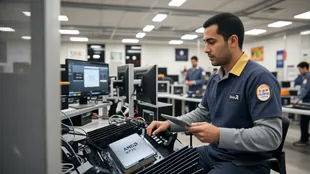 AMD Forecasts First-Ever Revenue Lead Over Intel on AI Chip Surge

 GoodData.AI Launches the Agentic Serving Plane, a New Category of Enterprise Data Infrastructure for AI Agents

 Abu Dhabi Demand Response Project Achieves 401 MW Peak Reduction in 2025

 Panthers expected to begin 2027 NRL season away from new stadium
Ryusuke Hamaguchi's "Drive My Car" is not your average road movie, instead taking viewers on a poignant three-hour journey into the psyches of two characters haunted by the past.
The Japanese arthouse film based on a short story of the same name by Haruki Murakami won the Oscar for best international film on Sunday, crowning a run of top accolades and rave reviews.
It also earned nominations for best picture, best adapted screenplay and best director for Hamaguchi.
In a brief speech, Hamaguchi thanked the Academy -- and was almost played off stage before saying "just a moment" and continuing to thank both the actors in attendance and those who could not travel to Los Angeles.
"Drive My Car" tells the story of an actor and stage director, played by Hidetoshi Nishijima, who goes to Hiroshima to put on Chekhov's "Uncle Vanya" after his wife's death.
The organisers of the theatre festival arrange a chauffeur for him: a taciturn young woman named Misaki, played by Toko Miura.
During their commutes, a relationship develops which is not romantic or even platonic, but ends up steering each of them towards a personal reckoning.
As in all of Hamaguchi's work, the film is full of rich dialogue -- especially in the driving scenes, which offer plenty of cathartic moments at close quarters.
On its road to the Oscars, "Drive My Car" racked up an impressive array of awards, pushing Hamaguchi, a rising star of Japanese indie cinema, into the global limelight.
It won best screenplay at Cannes last year before picking up best foreign language film at the Golden Globes and the BAFTAs.
Hamaguchi's previous commercial feature "Asako I & II" was also a Cannes hit, having been shortlisted for the Palme d'Or at the French festival in 2018.
On Sunday, it defeated a tough field of contenders that included "The Worst Person in the World" (Norway), "Flee" (Denmark), "The Hand of God" (Italy) and "Lunana: A Yak in the Classroom" (Bhutan).
- 'Unique' -
Shozo Ichiyama, programming director for the Tokyo International Film Festival, said Hamaguchi's sudden international fame had been unexpected.
"I was sure French critics would like 'Drive My Car', but I was more surprised by the Americans," he told AFP.
"It's perhaps partly because he was not well known in the US at all, so critics were taken by the novelty" of his style when watching the film, he added.
Although Hamaguchi studied under renowned director Kiyoshi Kurosawa at university, "his movies are unique, and different from other Japanese films," Ichiyama said.
Hamaguchi has described the difficulties of transposing the words of Japan's top novelist Haruki Murakami, which occupy "the space between reality and fantasy", to the big screen.
But he said in an interview with Hollywood awards prediction site Gold Derby that the broad appeal of Murakami's work contributed to the rapturous critical response to his film.
"In the adaptation, I wanted to see what Murakami's view of the world would look like on screen -- the deep despair and furtive hopes of the characters, which is something very universal," Hamaguchi said.
"The reaction of the public, who often mention the themes of separation and grief in 'Drive My Car', made me realise that the film isn't just about pain, but above all about people who try to live a slightly better life despite their sadness, or perhaps because of their sadness."
E.Schubert--BTB