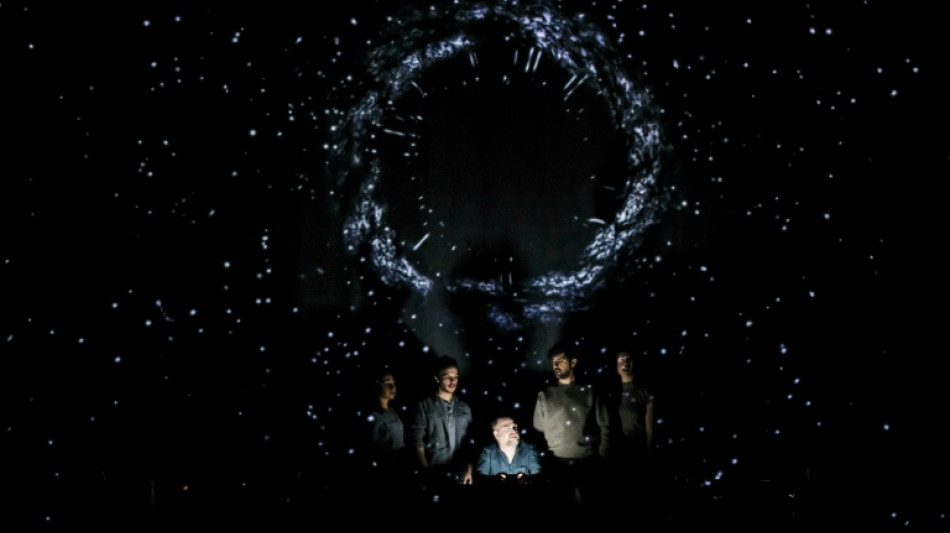
Reality takes center stage in Quebec documentary theater / Photo: © Theatre du Nouveau monde/AFP

 Nagoya mayor says sorry for Asian Games 'inconveniences'
 G20 trade officials meet under shadow of tariffs, overcapacity

 India's fat dog vote goes viral
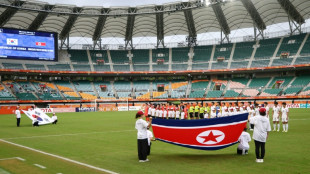 Asian Games crowds in spotlight as 998 see hosts in 50,000 stadium
 The eight stadiums for the 2027 Rugby World Cup

 Thieves swipe drugs under nose of Fiji police, swap with flour

 South Korea demands North apologise for DMZ mine blasts
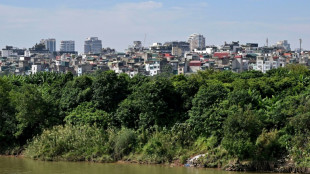
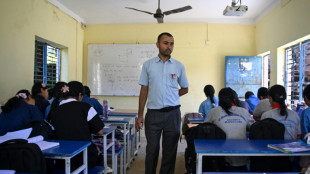 In Nepal's flood zone, teachers mourn students who never returned
 US Supreme Court lifts limits on third-country deportations

 Antonelli eager to 're-establish order' as F1 returns to Malaysia

 Paw-fect candidate: Australia finds new koala rescue dog
 One third of world population exposed to harmful air pollution: monitor
 North Korea denies South's claim it was apparently behind DMZ mine blasts

 West Bank's violent settlers part of a new generation fuelled by ideology
 US-led coalition ends mission in Iraq
 Pope-backed White Sox join Braves with MLB playoff wins

 NBA close to picking new $12-13bn Vegas team owners: report
 LA28 Olympics torch relay to visit all 50 states
 Spain brush aside Croatia in Nations League, England down Czechs
 Trump hails 'morally binding' AI self-regulation pledge
 Yamal inspires Spain to Croatia romp on World Cup homecoming

 UN to hold fourth informal poll of secretary-general candidates
 Who are the Emiratis behind crisis-hit Manchester City?
 Singer Angelique Kidjo urges Africans to 'create together'
 Alleged Rihanna mansion shooter mentally fit for trial, says judge
Mass shootings, artificial intelligence and genetically modified foods are topics not often associated with theater.
But audiences in Canada's Quebec province are flocking to documentary plays that seek to take on difficult topics and spur debate.
"Bringing reality to a stage is challenging," especially when "tackling complex subjects," says Marie-Joanne Boucher, an actress who co-produced a play about the 1989 Ecole Polytechnique massacre, an anti-feminist university mass shooting that left 14 people dead and deeply scarred the nation.
In the play, "Project Polytechnique," two main actors recount the horrors of the attack and press the audience to consider what can be done to prevent more mass shootings.
The words of one of the survivors and of a police officer who was among the first to arrive at the grisly scene are recited, along with comments from a firearms enthusiast and anti-feminists who continue years later in online forums to justify the attack and adulate the killer.
"We say to the spectator: Come to the theater and you will be entertained, but you will also leave with a better overview of today's society," says Annabel Soutar, co-founder of Porte Parole, a pioneer of the genre in Quebec.
Over the past two decades, her theater company has produced about 20 plays on themes as diverse as hydroelectricity, genetically modified foods and health care. Since then, many other docu-theater companies have followed suit.
- One in four plays -
Debuting in the 1920s, in Germany and then in Russia, documentary theater initially developed to support communist ideology. It then spread during the 20th century throughout the world and moved away from propaganda to focus on social topics.
In Canada, it was more in the English-speaking part of the country that the genre was embraced in the 1970s, but it has now taken on new life in Quebec.
Approximately one in four theater productions in Quebec today is a docu-play, according to Herve Guay, an academic who edited a book on the genre.
Part of the reason for this runaway success is the broad "aesthetic variety" of docu-plays, says Guay.
Montreal resident Emilie Cabouat-Peyrache recently saw "Project Polytechnique" and loved it.
"Documentary theater allows you to explore a lot of subjects, sometimes surprising ones," she said.
- 'Apotheosis of documentary theater' -
Another popular docu-play, "Run de lait" (Milk Run), deals with the disappearance of small Quebec farms, Canada's milk quota system and the mental health of farmers.
"We are at the apotheosis of documentary theater and Quebec society is ripe to be challenged in this way on social issues," believes Justin Laramee, who produced the show.
In an interview with AFP, he said he was pleased to perform it for both urban dwellers and farmers alike. "It started conversations, and we need that in our society now."
Allowing audiences to explore new worlds were key objectives for the creators of "Pas perdus," a documentary play about identity, heritage and memory featuring non-actors performing tasks silently while a recording of their voices plays over speakers.
"We live in a society with a lot of noise, a lot of positions taken, not necessarily a lot of depth, and I think we need a return to authenticity," explains the play's co-writer Anais Barbeau-Lavalette
The play has elicited strong responses from audiences. "We get a lot of feedback," Emile Proulx-Cloutier, who wrote the play with Barbeau-Lavalette. "Spectators often tell me that they leave shaken."
P.Anderson--BTB