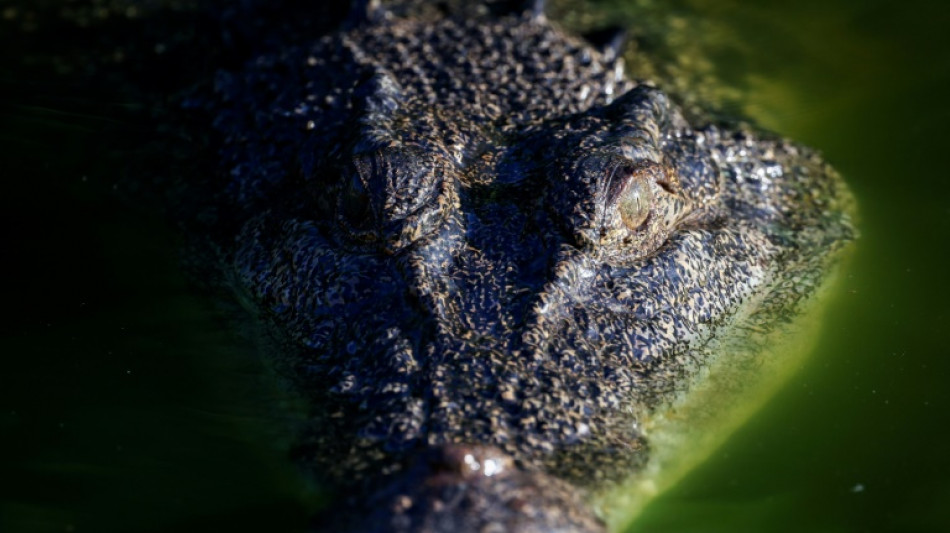
From edge of extinction to Australia's croc 'paradise' / Photo: © AFP

 Japan win marathon penalty shootout to set up South Korea gold-medal clash

 Djokovic grinds out opening-round win at China Open

 Northern Ireland police probe blockade of disputed parade

 UK PM Burnham reopens divisive debate on rejoining EU

 Man City future in doubt after guilty verdict

 'Do something,' begs Iranian woman after death sentence over protests

 China extends 52-year unbeaten record as Games organisers say sorry
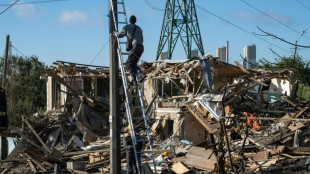
 In Manchester, people say City scandal is 'shame for football'
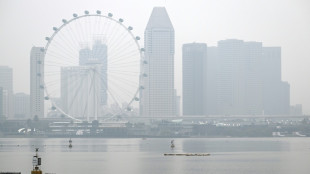
 Stocks lacklustre as inflation data weighs on sentiment

 Israel-bound plane rerouted, pilots wounded in reported fight

 Truth commission on Sweden's Sami people seeks redress

 Energy costs spark inflation surges in France, Italy

 South Korea break China hearts to reach Asian Games football final
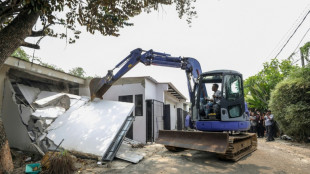
 Eala storms into Asian Games semi-finals to thrill adoring fans

 Turkey freezes ex-minister's assets as fund crisis grows

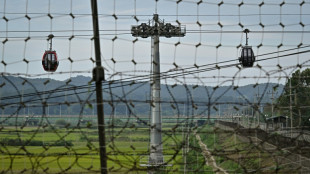 What we know about the North Korean POW dispute

 Most equities rise after oil price plunge, US data in focus

 Polar oceans transformed as warming melts ice habitats: research

 Lost shark becomes viral star in South Korea
 Dangote to launch $16bn refinery in Kenya
 North Korean leader 'extremely obese': Seoul spy agency

 Yankees and pope-backed White Sox start MLB playoffs with wins

 Malaysia's ex-PM Mahathir in hospital for observation

 'No limits': Marathon world record holder Sawe chasing history

 Countdown begins to biggest-ever Rugby World Cup
If you want a snappy death, one expert's advice is to leap into a river near the Australian city of Darwin -- within minutes, you'll be in the jaws of one of the hundreds of crocodiles that stalk its murky waters.
That's the promise of Grahame Webb, whose conservation efforts are credited with helping wrestle Australia's saltwater predators back from the verge of extinction.
"You can't sugarcoat crocs; these are seriously dangerous," Webb told AFP in his leafy garden in the country's tropical Top End.
Blunt messaging about the dangers around the waterways of Australia's north has been vital to rebuilding a population of the scaly reptiles once decimated by uncontrolled hunting, he said.
Before government protection in the 1970s, an estimated 98 per cent of the wild saltwater crocodile population had disappeared in the Northern Territory, driven by leather demand and culling.
Now, according to government figures, over 100,000 "salties", which can grow over six metres long and weigh more than 1,000 kilograms (2,200 pounds), hunt along the coasts, rivers and wetlands of the continent's far north.
- 'Eating people' -
"It's been a raging success story," Webb said.
But protecting the animals was only a first step.
"To conserve predators, you've got to rebuild their population; if you're successful at doing that, they then start eating people again, and everyone wants to get rid of them."
Charlie Manolis, a crocodile expert from the International Union for Conservation of Nature, said that by the 1980s, it was clear the community needed to see real value in the creatures to tolerate them as neighbours.
A public safety campaign, known locally as Crocwise, and regular relocations of the toothy predators from densely populated areas have helped them to coexist more peacefully with their sometimes-prey.
Wild egg harvesting is part of a "ranching" program in the Northern Territory that links the leather industry and livelihoods directly to the animals, according to colleagues Webb and Manolis.
Under the scheme, landholders -- many of them Indigenous Australians -- can receive payments for wild eggs collected from their properties, which are then supplied to ranches.
The lucrative leather trade relies on farms primarily stocked with eggs and animals plucked from the wild, with 70,000 eggs and 1,400 crocodiles allowed to be taken each year.
"There are quite a lot of people who are employed through crocodiles," Webb said, highlighting both tourism and farming industries.
- 'Cattle eater' -
The crocodile farming industry has been estimated to be worth over Aus$100 million (US$66 million) a year to the Territory, which is the largest producer of skins in Australia. The resulting leather is highly prized by luxury brands such as Hermes and Louis Vuitton.
Manolis said that although some people are critical of the management strategy for "using" animals and removing them from the wild, the connection to an industry has helped save the species from mass culls.
"It's not about farming, per se. Farming is what we used to make sure the wild population is conserved," he said.
"I was in mining, then I was a mother, and now I'm a croc keeper," Jess Grills, 32, told AFP with a smile as she manoeuvred a boat through an artificial river at Crocodylus Park near Darwin.
The park, founded by Webb, is a tourist attraction and "paradise" for "problem crocs" -- animals removed from the wild for posing a danger to locals or developing a soft spot for chomping on livestock.
"You can't train a crocodile, but you can put them in a place where they are not going to be a problem," she said as she routinely hoisted a hock of meat tethered to a long pole over the side of the boat.
She slapped the water with the bait and dangled it above.
The dark green muzzle of a once notorious "cattle-eater" called Prince slowly surfaced, followed by the glaring reptilian eyes.
The creature launched its hulking body upwards, its jaws at full stretch, before clamping its teeth deep into the flesh and splashing back into the water.
The message is clear for onlookers: be wary around where these giants hunt and live.
- 'A million years' of fear -
"You've always got to speculate that there is a crocodile in the water, no matter what," Grills said.
As populations boom and larger crocs become common, attacks, though rare, are likely to increase, Manolis said
Dealing with a fear that goes back "a million years" while keeping support for conservation will be "the biggest challenge", Manolis said.
"Let's face it, WWF (World Wildlife Fund) doesn't have a picture of a crocodile on it. It has a panda."
For Grills, the chance to admire the predators up close helps get support to save the animal.
"If you respect them and their territory, I don't think they would be as terrifying."
O.Bulka--BTB