Dramas elevate Iran cinema but it's comedy that sells / Photo: © AFP

 Oil companies close in on Venezuela despite hurdles
 Turkey freezes ex-minister's assets as fund scandal grows

 Guardiola backs Man City after bombshell guilty verdicts

 G20 trade ministers open talks under strain of Trump tariffs

 France in talks with UK to end 2025 migrant accord: ministry

 Europe's surging inflation spreads gloom in stock markets
 Truth commission demands compensation for Sweden's Sami people
 Japan win marathon penalty shootout to set up South Korea gold-medal clash
 Djokovic grinds out opening-round win at China Open
 Northern Ireland police probe blockade of disputed parade
 UK PM Burnham reopens divisive debate on rejoining EU
 Man City future in doubt after guilty verdict
 'Do something,' begs Iranian woman after death sentence over protests

 China extends 52-year unbeaten record as Games organisers say sorry
 In Manchester, people say City scandal is 'shame for football'
 Stocks lacklustre as inflation data weighs on sentiment

 Israel-bound plane rerouted, pilots wounded in reported fight

 Truth commission on Sweden's Sami people seeks redress

 Energy costs spark inflation surges in France, Italy

 South Korea break China hearts to reach Asian Games football final

 Eala storms into Asian Games semi-finals to thrill adoring fans

 Turkey freezes ex-minister's assets as fund crisis grows
 What we know about the North Korean POW dispute

 Most equities rise after oil price plunge, US data in focus

 Polar oceans transformed as warming melts ice habitats: research

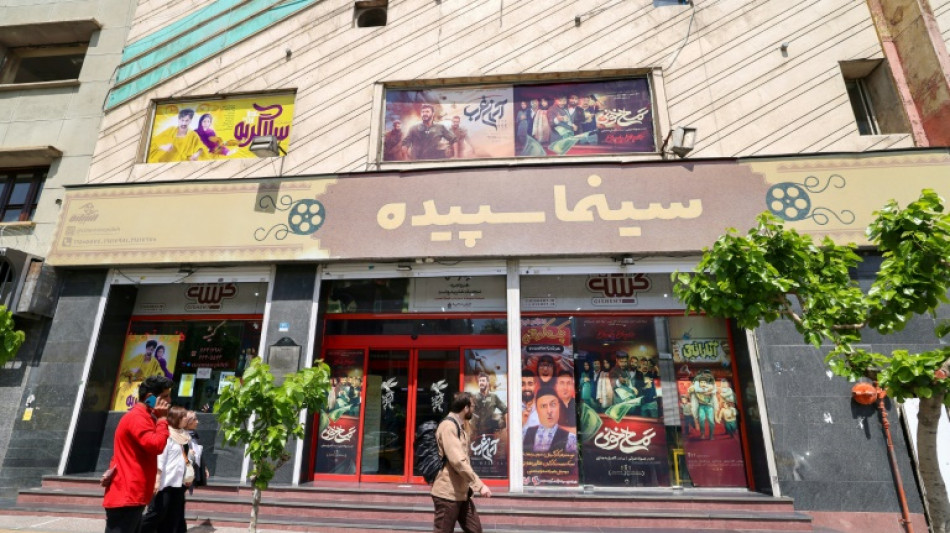
Social dramas have made Iranian films and their directors renowned at international festivals such as Cannes, but at home it's comedy that sells and has long been the favoured genre.
There are around 750 screens in the Islamic republic, and going to the movies is a preferred leisure activity for people seeking distraction from often difficult daily lives.
An Iranian film may be in competition at this year's Cannes, but it was comedy that monopolised the top six box office places in the Iranian year 2023-2024 that ended in March.
During those 12 months, 28 million cinema tickets were sold in Iran.
"These films offer a simple plot and structure that make them accessible to everyone," movie critic Houshang Golmakani told AFP.
It's a generic formula that works well and generally has stereotypical characters -- pretty women, young people wanting a better life, a "Don Juan" and clumsy pious men.
"We need to laugh because the social-economic situation is difficult," said 47-year-old trader Milad, speaking outside a cinema in the capital Tehran.
"I go to the movies and can forget all my troubles for a few hours."
Elaheh Kargar, a 24-year-old nurse, said she "naturally chooses a comedy" so she can "have a good time" at the cinema.
Take one of the big successes of the past few months, the comedy "Hotel".
- Mix-ups -
This film tells the tale, replete with misunderstandings and mix-ups, of a man who hides his fiancee from his former wife so he can borrow money from his ex's aunt.
It was filmed on the island of Kish, where Iranians like to recharge their batteries in a relaxed setting inspired by Dubai just a 12-hour ferry ride across the Gulf.
"Hotel" was seen by 6.2 million people, but even it was overtaken by "Fossil" which, at 7.5 million, became one of the top-viewed movies in the history of Iranian cinema.
"Fossil" chronicles the adventures of a group of musicians before and after the Islamic revolution of 1979, after which pop music was banned for more than two decades.
It plays on nostalgia for the golden age of popular music by covering hits sung by actors resembling Iranian stars of the 1950s to 1980s, many of whom went into exile in the United States.
"When we screened 'Fossil' the house was always full," said one employee at a Tehran cinema who asked not to be identified.
"This film revived cinema, which had been in recession because of Covid. If we screened it again now, the house would still be full."
"Fossil" was not a hit with Iran's ultra-conservatives and did not make them laugh.
Kayhan newspaper raged that it promoted Shah-era culture, "promiscuity" and "Westernisation", and urged officials to "block the cultural influence of enemies" on younger generations.
Many Iranian comedies use satire to criticise the inflexibility of the country's rulers towards young people.
"Dynamite" recounts the setbacks of two Shiite seminarians who move into a flat and become neighbours with a cannabis dealer and two young female Instagram influencers.
- Sanctions -
The directors obey the restrictions imposed by the Islamic republic: women should wear hijab head scarves, men and women must not touch each other and alcohol cannot be shown.
But that does not prevent them from mocking official cultural values such as "protecting the family at all costs", said Golmakani, adding that such movies "end without really harming these values".
The authorities tolerate comedies because "they respond to the needs of the population", the critic added.
Iran's cinema-going public has few choices because of the low number of foreign productions, particularly Hollywood movies, shown locally.
The country is also subject to international sanctions and has no diplomatic relations with the United States.
People can also see serious works by, among others, Asghar Farhadi, Oscar-winning director of "A Separation", and Saeed Roustaee who made "Law of Tehran".
But three 2022 films that drew international acclaim -- "Leila's Brothers", "World War III" and "Beyond the Wall" -- were not allowed to be screened, meaning enthusiasts had to download them.
The Iranian film in competition at Cannes this year, "The Seed of the Sacred Fig" by Mohammad Rasoulof, will not be shown at home as its director fled abroad after being sentenced to five years in jail.
Golmakani believes that the success of comedies pushes producers to favour the box office to the detriment of social dramas, which are "increasingly marginalised" at a "time when costs are increasing".
"The excessive production of comedies affects the overall quality of Iranian cinema," he said.
F.Müller--BTB