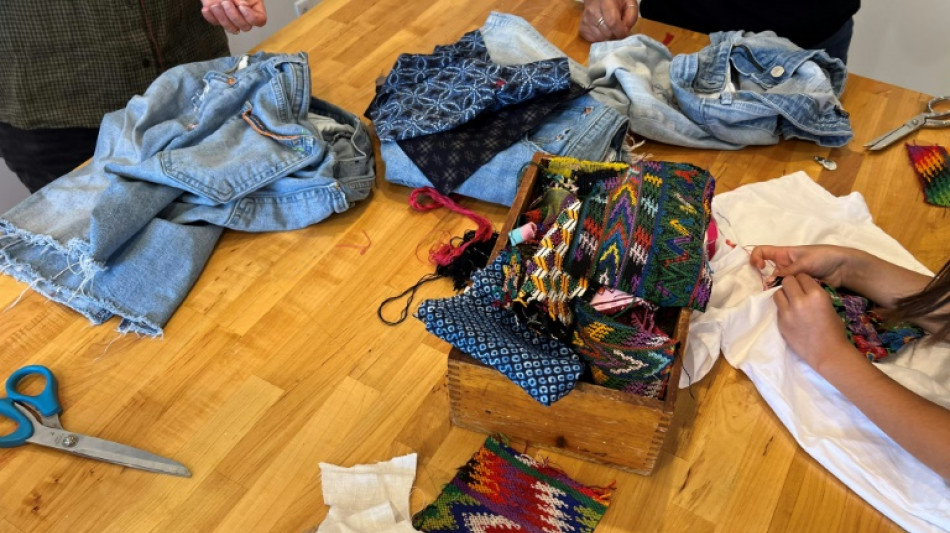
Do I need it? 'Underconsumption core' trends on TikTok / Photo: © AFP

 Nagoya mayor says sorry for Asian Games 'inconveniences'

 G20 trade officials meet under shadow of tariffs, overcapacity

 India's fat dog vote goes viral

 Asian Games crowds in spotlight as 998 see hosts in 50,000 stadium

 The eight stadiums for the 2027 Rugby World Cup

 Thieves swipe drugs under nose of Fiji police, swap with flour
 South Korea demands North apologise for DMZ mine blasts

 In Nepal's flood zone, teachers mourn students who never returned
 US Supreme Court lifts limits on third-country deportations

 Antonelli eager to 're-establish order' as F1 returns to Malaysia

 Paw-fect candidate: Australia finds new koala rescue dog

 One third of world population exposed to harmful air pollution: monitor
 North Korea denies South's claim it was apparently behind DMZ mine blasts

 West Bank's violent settlers part of a new generation fuelled by ideology

 US-led coalition ends mission in Iraq

 Pope-backed White Sox join Braves with MLB playoff wins

 NBA close to picking new $12-13bn Vegas team owners: report

 LA28 Olympics torch relay to visit all 50 states
 Spain brush aside Croatia in Nations League, England down Czechs

 Trump hails 'morally binding' AI self-regulation pledge

 Yamal inspires Spain to Croatia romp on World Cup homecoming

 UN to hold fourth informal poll of secretary-general candidates

 Who are the Emiratis behind crisis-hit Manchester City?

 Singer Angelique Kidjo urges Africans to 'create together'

 Alleged Rihanna mansion shooter mentally fit for trial, says judge

Exhausted from a rising cost of living in the United States and non-stop ads, some young adults on TikTok are pushing back.
"When every moment of your life feels like you're being sold something and the price of said item keeps going up, people will burn out on spending money," Kara Perez, an influencer and financial educator, told AFP.
Social media has long had room only for picture-perfect homes, lavish closets and an abundance of beauty products. But a new trend is sweeping the other way -- urging repurposing, more frugal lifestyles and prioritizing quality over quantity.
Known as "underconsumption core," it spotlights living sustainably and using what you have, a reversal of the excess and wealth that dominates ad-heavy Instagram and TikTok.
"When you get 300 videos on TikTok about people who have 30 Stanley cups, you want to have as many as you can afford. People want to fit in," said Perez, who repurposes jars as cups.
- Consumer fatigue -
A video with over 100,000 views from TikTok user loveofearthco critiqued the tendency toward overconsumption often amplified and encouraged on social media: "I spent money I didn't have on things I didn't need."
Another account, nevadahuvenaars, shared what "normal" consumption looks like: used furniture, a modest closet, decor upcycled from glass bottles, meal prep and a downsized skincare collection.
Despite financial hardships felt particularly by Gen Z and millennials, the US economy is thriving, with record corporate profits and high prices on shelves.
In a way, "that feels almost 'gaslighty' to consumers" amid a period of economic and geopolitical uncertainty, culture and consumer marketing analyst Tariro Makoni told AFP.
She argued that Buy Now, Pay Later (BNPL) plans commonly adopted by many young adults' budgets exacerbate consumption and represent a distortion in access to wealth.
But years of inflation have forced many to the conclusion that they cannot keep up with the spending habits of those on their social media feeds.
A Google Trends analysis shows US searches for "underconsumption" hit a high point this summer, surfacing alongside queries about "overproduction" and the "Great Depression."
Many young adults have developed a "compulsive behavior to spend down to their last pound on a fashion item," said UK-based influencer Andrea Cheong who recently shared an "underconsumption core" style video of her mending old clothes.
It is an addiction tied to a pressure "to articulate who we are through possessions," Cheong noted.
In contrast, "underconsumption core" breaks from traditional core trends promoted by influencers, who often sell an ever changing purchasing blueprint embodying the latest trend and aesthetic, according to Cheong. She and Makoni agreed that the shift also reflects increased calls for authenticity from content creators.
Now, "conserving is cool" said Makoni -- "we saw very similar patterns after 2008" during the financial crisis.
Over half of Gen Z adults -- age 18 to 27 -- polled in a 2024 survey by Bank of America stated the high cost of living as a top barrier to their financial success, adding that many do not make enough money to live the life they want.
- Sustainability concerns -
"The social media trend of 'underconsumption' is another way for Gen Z to make the most of their money and be environmentally friendly at the same time," said Ashley Ross, head of consumer client experience and governance at Bank of America.
While younger generations worry about making sustainable choices, a lack of financial autonomy drives their decisions.
"Let's be honest, no one's gonna change their GDP for sustainability. We don't live in that world ... The motivation for people to do these things has always been to save money," said Cheong.
But she told AFP "underconsumption" trends ultimately provide the most accessible approach to sustainability for those who seek it. The message is simple: "Buy less, buy better."
Low consumption brick-and-mortar initiatives cast a wider net of profiles and generations.
Anjali Zielinski, 42, joined a "Mending 101" workshop in Georgetown, DC in the hopes of acquiring new skills. She brought her daughter, Mina, seven, along with her.
In addition to providing an outlet to her daughter's creativity, she hopes the craft will teach her the "value of our possessions and the work that goes into them."
L.Janezki--BTB