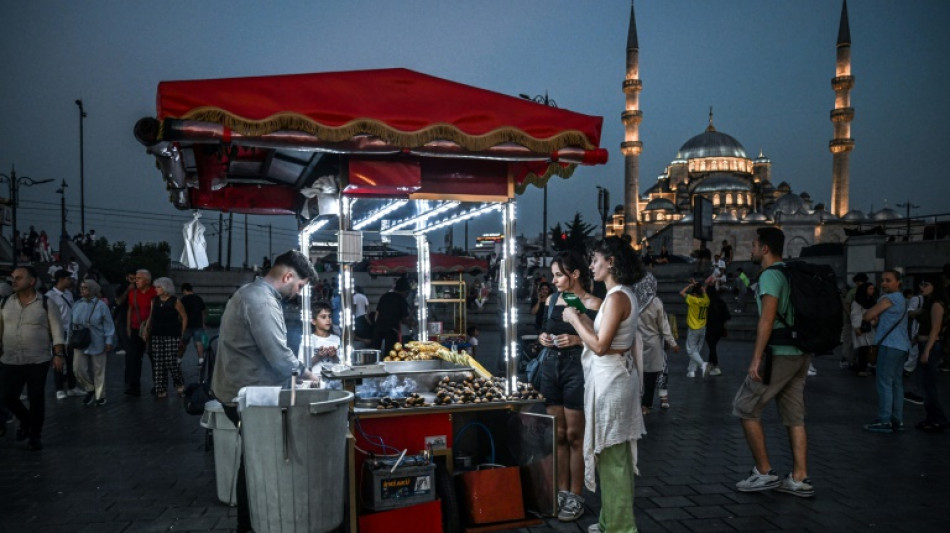
Hungry times for Istanbul's street food sellers / Photo: © AFP

 'No limits': Marathon world record holder Sawe chasing history

 Countdown begins to biggest-ever Rugby World Cup

 Bangladesh women lose ground after quota reform

 Vietnam admits 'differing opinions' on Hanoi development

 Stocks temper gains as oil pares heavy losses, US data in focus

 New Zealand denies breaching climate commitments to EU

 Albert becomes youngest US scorer in 4-2 win over Chile

 Pirate island's plunging population shows Greece's demographic decline
 With elections ahead, Latvia's Russian-speakers reject Moscow's help

 Brazil football clubs face massive sponsorship blow from betting ban
 ChatGPT maker wants to be the App Store for AI as safety concerns grow

 Women fight fires and sexism in Indonesian Borneo

 Forsling's OT blast lifts Florida over Carolina in NHL opener

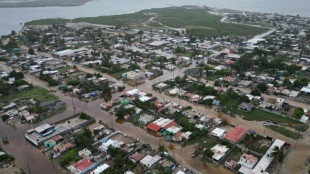 Hurricane Polo sweeps over Mexico's Pacific coast, heads inland

 Grynspan pulls ahead in race to lead UN: diplomat

 Trump touts AI boss pledge to self-regulate

 Oil down, but stocks lower as bond yields rise

 England break down stubborn Czechs to claim first Nations League win

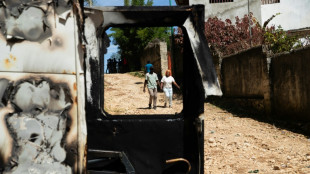 UN Security Council extends Haiti anti-gang force by 6 months

 Manchester City guilty of Premier League charges: What comes next?

 Man City chief Soriano slams Premier League 'conspiracy theory'

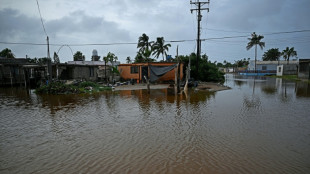 Hurricane Polo sweeps over Mexico's Pacific coast

 Man City must be relegated after guilty verdict says club's former chairman

 German far-right aims to lead Saxony-Anhalt govt in December

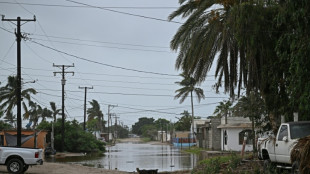 Little damage as Hurricane Polo sweeps over Mexico's Pacific coast

The enticing smell of grilled corn and chestnuts wafted from Hakan Deniz's red and gold food cart near a mosque in Istanbul's old city. But local customers are hard to come by these days.
With Turkey mired in sky-high inflation, Istanbul's ubiquitous street vendors, who have been part of the cityscape since the Ottoman Empire, are worried about their future.
"Our tomorrows are uncertain," said Deniz, 18, after pushing his cart past the Rustem Pasha mosque.
"I have lost almost half of my customers because of inflation," Deniz said as he weighed and handed a bag of chestnuts to an American tourist.
He wondered aloud if vendors like him would "still exist in the future".
Inflation rose across the world after the Covid pandemic and soared further after Russia invaded Ukraine in 2022, but it has been particularly bad in Turkey.
Officially, it rocketed to 85 percent in October 2022 before slowing and rising again to reach 75 percent in May this year. Inflation has since fallen, with data on Tuesday showing it at 52 percent in August.
- 'Ottoman tradition' -
The streets of Istanbul, a metropolis of 16 million people, would not be the same without its street vendors.
At night, mobile stalls with bright neon signs form constellations of light along the picturesque city's streets.
They fill the air with an array of smells -- from stuffed mussels to simit, rings of delicious sesame-encrusted bread.
The merchants enjoy a "positive image" in general, said Osman Sirkeci, a researcher at the Izmir University of Economics.
Some, such as sellers of the sweet toffee paste known as macun, are seen as heirs of an "Ottoman tradition", Sirkeci said.
Their ranks grew after the Covid pandemic, with one million people becoming street vendors, the researcher said.
Turkey now counts seven million street vendors, working legally or illegally, he said.
Inflation, however, has hit professions already known for low wages and small margins very hard.
"The expenses of mobile merchants are much lower than those of traditional shops because they don't have rent or electricity bills to pay," Sirkeci said.
But they have other high costs such as raw materials that they get from intermediaries who pass on the cost of inflation, instead of buying them directly from producers.
"The price of sesame has skyrocketed. Same for flour. Everything is too expensive," said Nuri Geyik, a 54-year-old simit seller.
He used to sell his bread for one lira a piece a few years ago.
"Now I'm forced to sell them for 15 lira," he said.
Mithat Atilgan sells fruits and vegetables that are grown in Bursa, a region around 150 kilometres (90 miles) south of Istanbul.
"The cost of transport has also increased," Atilgan said.
"Sales are bad," he added, noting that Turkish customers cannot keep up with the price increases.
"Only the rich can buy my fruits today," said Atilgan, who sells figs from his cart.
- 'I'm ashamed' -
Mustafa Demir wondered for how much longer his usual Turkish customers would buy his jars of pickles.
"I'm ashamed of selling the jars for 40 liras to my loyal customers," he said, recalling how he used to sell them for 15 cents.
Deniz said his customers were mostly Turkish in the past.
"It's not the case anymore. Now 70 percent are tourists," Deniz admitted.
While Sirkeci, the researcher, believes that street vendors will survive, Deniz is not so sure.
"This job will disappear," he said. "Look at the sellers of boza (a fermented cereal drink). There are almost none of them left in Istanbul."
D.Schneider--BTB