
Kill Japan's elderly? Cannes film probes chilling idea / Photo: © AFP

 Ireland squad vote to play Israel tie despite Gaza unease

 Gutsy Vollering wins cycling road race world title

 Vollering wins cycling road race world title
 Man City's meteoric rise clouded by dark shadow

 Mbappe out for two weeks or more with knee injury say Real

 Lyon collapse away to Stade and suffer first Top 14 loss

 Russia accuses Europe of seeking to thwart Ukraine talks

 Man City chairman defiant over reported Premier League charges

 Germany ready to 'walk through fire' for Klopp, says Tah

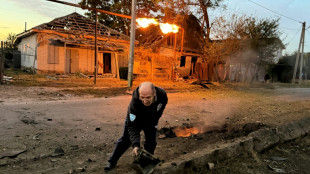 At least 16 killed in Russian and Ukrainian strikes

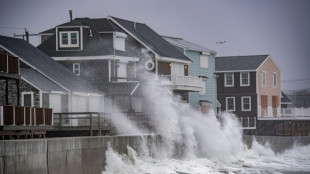 Powerful storm pummels US Northeast

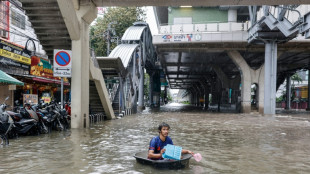 Bangkok declares disaster after homes flooded, roads submerged by heavy rain

 Norris calls for errant Colapinto to be banned for causing Baku crash

 Russell finds himself again and prepares to heap pressure on Antonelli

 South Korea hold nerve to win Asian Games basketball gold

 Russell holds off Verstappen to claim imperious victory in Baku

 Russell holds off Verstappen to win Azerbaijan Grand Prix
 India's Kohli says 2027 ODI World Cup will be his last
 Huge crowds cheer Pope Leo along Champs-Elysees ahead of Paris mass

 Putellas wants to bring 'winning culture and mentality' to London City

 Rare Italian opera returns to Moscow after nearly 120-year hiatus

 Pope to celebrate giant Paris mass after 'peace' appeal

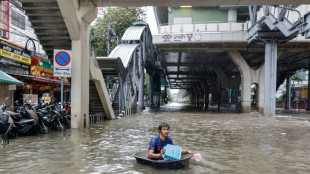 Homes flooded, roads submerged: Bangkok declares disaster over heavy rains

 Ahead of Paris mass, pope urges life together in 'dignity and peace'

 Austria 'ghetto' language classes leave children to repeat school
A Japanese film-maker is shaking Cannes film audiences to the core with a dystopian vision of her country in which old people agree to be euthanised to solve the challenge of a rapidly ageing population.
"Plan 75" by Japanese director and writer Chie Hayakawa is based on a very real problem.
Japan is the most rapidly-ageing industrial society, a trend that is causing huge economic and political problems as a dwindling number of younger people must support a growing army of the old.
Close to 30 percent of Japan's population is over 65, the majority women, and that rate is expected to continue rising in coming decades.
In the movie, anybody over 75 is encouraged to sign up for a deal with the government by which they receive a sum of money in return for agreeing to be euthanised. A collective funeral is thrown in for free.
Slick ad campaigns and calls from people with soothing voices are part of the effort to get people to sign up. Handsome advisors list the small pleasures candidates could afford with the money. "You'll be able to go to the restaurant," says one.
"On the face of it, the government's Plan 75 is full of goodwill and friendliness and pragmatism, but in truth it is both very cruel and shameful," Hayakawa told AFP in an interview.
"The ageing of the population is not a recent problem, I've always heard people discussing it," she said.
"When I was young, a long life was considered to be a good thing, people had respect for older people. That's no longer the case," the 45-year-old director added.
- 'Cold and cruel' -
"Plan 75", Hayakawa's first full-length feature film, is full of slow sequences with minimal camera movement.
"I wanted the images to be aesthetic and beautiful, as well as cold and cruel, just like the plan itself," she said.
Asked how close to today's Japanese reality her scenario is, Hayakawa quickly answered "eight out of 10".
She said she interviewed older people as part of her research for the movie, and discovered that many found merit with the idea of buying financial security with their willingness to end their life.
"It would alleviate the stress of wondering how they can survive once they are alone. Choosing the moment and the method of their death could be very reassuring," she said.
She said the approach would find support among the younger generations, too.
"If such a plan was on the table today, I believe that many people would accept it, even welcome it as a viable solution," she said.
"Most young people worry already what the end of their life will look like. Will their basic needs be met? Can they survive once they live alone? Can they afford to age?" she said.
Instead of blaming the government, Hayakawa said many young people were resentful of the old.
"They are frustrated and angry because they work hard to support the elderly, but they think that, when it's their turn, there may be nobody to support them," she said.
"What worries me a lot is that we're in a social reality that would very much favour such a radical solution," she said. "It's scary."
Hayakawa said her film did not presume to offer a solution to handling the age crisis. "But an honest assessment of where we are today would already be a key step," she said.
D.Schneider--BTB