On China's doorstep, Macau weaves an identity as integration looms / Photo: © AFP

 Stocks move lower despite oil prices dropping
 AI driving up innovation investment: UN

 UN Security Council extends Haiti mission by 6 months
 Man Utd do not deserve medals if Man City stripped of titles: Rooney

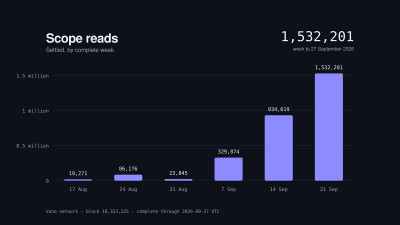 Vana Completes Expanded Staking as Part of the Vega Upgrade, Publishes Expanded VANA Token Economics

 Spain to cap gas price hikes, extend fuel discounts

 'We just need rain': Germany's Rhine river hits new low
 Yemen health system at 'breaking point': WHO
 Ireland undecided on second Israel match: coach

 France's Le Pen defiant after top ally hit by antisemitism claims

 Tom Cruise trades stunts for satire as toxic tycoon 'Digger'
 MEXC Unveils "WE SEE YOU" Brand Visual Refresh, Putting People Behind Every Trade in Focus

 Thai capital cleans up after deadly floods
 NATO, EU allies rally to Estonia after 'sabotage' blamed on Russia
 Families demand justice for Cameroon's 'nightmare' wave of murdered women

 Tebas says Man City should face 'most severe' sanctions if guilty of rule breaches
 Pochettino calls Man City success 'a period of deception'
 Settler attack on West Bank village injures Israeli forces, drawing rare rebuke

 Mystery over UK airbase scare after reports no explosives found
 Spanish govt races to adopt housing law under protest pressure
 Estonia slams Russian 'sabotage' after arson attack on defence company

 Slovenia sees surge in '.si' sites after Trump hypes 'super intelligence'
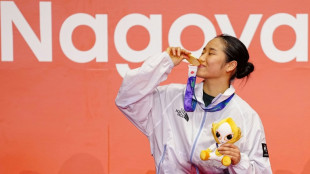 'Like a dream' for An as Games organisers 'sorry' for latest mix-up
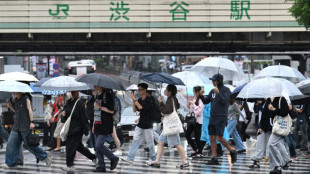 Tokyo suffers longest streak of rainy days on record

 Indonesia charges train driver over crash that killed 16 women
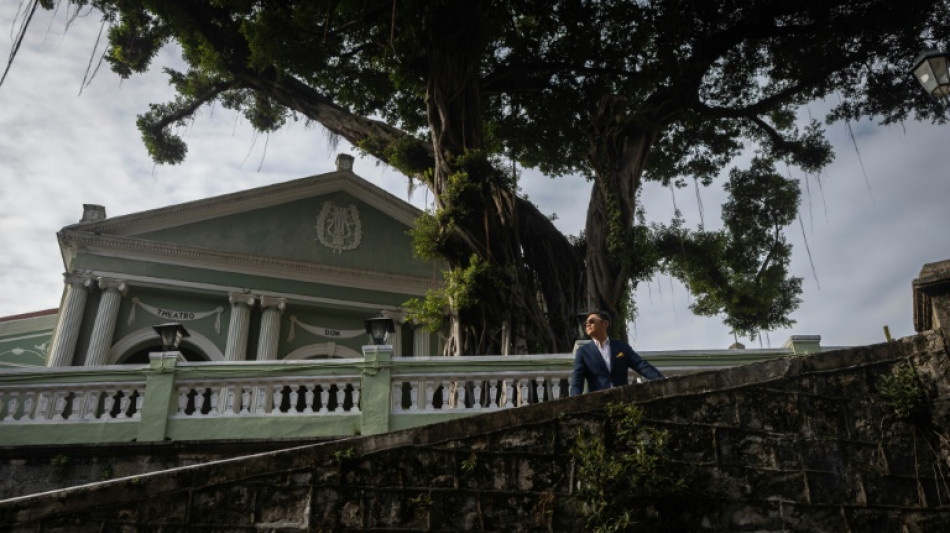
Seated in the audience at Macau's Dom Pedro V Theatre in the 1970s, 16-year-old Miguel de Senna Fernandes understood not a word of the "strange language" spoken on stage -- but right away he was mesmerised.
That day sparked his lifelong love for Patua, a creole language from Macau's 442-year colonial history that mixes Portuguese, Cantonese and other influences, now rarely spoken and classified by UNESCO as "critically endangered".
"It's a Macau-born thing... For so many centuries, the old Maquista used this language as a means of communication aside from Portuguese," said Fernandes, 63, a lawyer who writes and directs Patua plays.
Twenty-five years after colonial ruler Portugal handed control back to Beijing, residents like Fernandes are making a case for Macau's cultural distinctiveness, even as the city is being subsumed into China's regional development blueprint, dubbed the Greater Bay Area (GBA).
Macau's breakneck reinvention over this period, which saw its skyline and economy shaped by glittering casinos, has also prompted a younger generation to ask who they are and what they stand for.
Before the Portuguese flag came down, colonial government minister Jorge Rangel successfully lobbied Beijing to include a clause in Macau's post-handover constitution to protect historical sites and relics.
Those with Portuguese or mixed ancestry make up roughly five percent of Macau's population, but their outsized influence can still be felt -- from cuisine to street names and architecture.
Rangel said the GBA's growth will be a "permanent challenge for us".
"(Macau) is a small entity within such a huge area, with a small population, with a different way of life," he said, adding that Macau must convince China of its usefulness.
Fernandes, whose plays are performed three nights a year to an audience of around 1,000, said he was well aware that Patua culture "will be fading".
"You have this Greater Bay Area that just sucks up everything," he said. "But if the next generation has a glimpse of the awareness that we can be unique, we might have a chance to survive."
- No longer 'invisible' -
Compared with Hong Kong and Taiwan, Macau's cultural output has been relatively "invisible" and lacks its own distinct flavour, according to cultural critic Lei Chin-pang.
"For people from Hong Kong or mainland China, there is not much interest in Macau except as a place nearby to have fun," Lei said.
Film director Tracy Choi is looking to change that.
Born and raised in Macau, she went abroad for university in the mid-2000s just as the city liberalised its gaming market.
She returned to find her home unrecognisable, not just in appearance but also in people's lifestyles and values.
"Those massive casinos were just being completed," said 36-year-old Choi. "The Macau from that point onward was totally detached from the Macau of my childhood."
That was the direct inspiration for "Sisterhood", Choi's 2016 debut feature, about two young women working in a Macau massage parlour in the final months of colonial rule.
"I chose (to depict) the profession of masseuse because they represented the Macau people of a bygone era," she said, recalling when some of these women -- friends of her mother -- would come over for mahjong.
Choi said her films were a counterweight to stereotypical depictions of Macau residents as rich and leisurely, adding the past decade saw more creative works on local identity.
"Sisterhood" was hailed as a breakthrough, but there was still a "long way to go" for Macau's film industry, as its population of 690,000 limited box office returns, Choi said.
"We are still searching for a direction forward, which lets us talk about Macau in the way we want, while making it accessible to other markets," she said.
Choi's next film, featuring a lesbian protagonist contending with pressures to "be ordinary" in a small community, is also a statement on what a future Macau identity can be.
"The Macau people of tomorrow should have more of a say, have more room for personal expression," she said.
- Integrate 'everywhere' -
As Macau turns 25 as a Chinese city, the history of the handover means little to Cecilia Cheang, who was born in Macau but studies at a Hong Kong university.
When she was young, her parents took her to the lavish hotels popping up but rarely discussed the city's past.
Cheang, 20, sometimes posts about Macau on Xiaohongshu, China's Instagram-like platform -- which performs well among her 20,000 followers.
"(Xiaohongshu favours) glamorous girls and extravagant lifestyle, and I feel like Macau is very much associated with this," she said.
Many Macau residents now consider cross-border trips part of their weekly routine as Beijing pushes for closer ties within the region.
A frequent traveller in southern China, Cheang thinks of herself as being from Macau but also as a GBA person.
That means being able to "go all around, leave whenever you want to leave, go anyplace", which she said suited her career as an aspiring singer-songwriter.
"I feel like, in terms of cultural exchange and cooperation... It's easier to integrate into everywhere and to get the gist of everywhere."
E.Schubert--BTB