
The music industry is battling AI -- with limited success / Photo: © AFP

 Dodgers eye three-peat, Red Sox face Yankees as MLB playoffs begin

 Certification of Boeing 737 MAX delayed by software bug

 Celine Dion wows Paris Fashion Week with surprise gig

 AMD buys firm founded by AI 'godmother' Fei-Fei Li
 Italy rebound in Turkey as France win late in Belgium

 Pope says concerns about AI 'should be taken seriously'
 Hurricanes to hoist title banner as NHL season begins
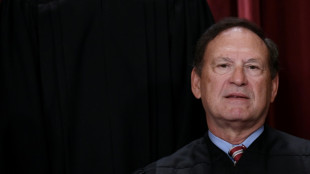 Justice Alito steps aside from major US climate case

 Willis happy with England exile after retains Top 14 player award

 Spain housing protests keep heat on government as PM seeks new law

 Wissa spoils Zimbabwe homecoming as DR Congo win AFCON qualifier
 UK police release on bail five men held over airbase incident

 Ex-All Black Plummer 'sure' New Zealand will find Super Rugby solution
 Shein sees 1% revenue growth in first half of 2026

 Netherlands regrets Israel retaliation in settlements row

 Moscow seizes Russian assets of German food retailer Metro
 Bulgarian spirits inflamed by new rakia rules

 Documentary turns camera on architect Peter Zumthor

 UK police say releasing on bail five men held over airbase incident

 Trump admin finalizes reversal of US fuel economy standards

 US says no China arms sale plans after envoy cites Trump offer
 Dozens kidnapped in two weekend attacks in northern Nigeria
 Next stop the world: Pathirage wins Asian Games javelin gold

 Aster Launches Perpetual Grid Trading 2.0 with Up to 140,000 $ASTER Liquidity Mining Campaign

 Seoul says North Korean mines 'highly suspected' as cause of DMZ blast

The music industry is fighting on platforms, through the courts and with legislators in a bid to prevent the theft and misuse of art from generative AI -- but it remains an uphill battle.
Sony Music said recently it has already demanded that 75,000 deepfakes -- simulated images, tunes or videos that can easily be mistaken for real -- be rooted out, a figure reflecting the magnitude of the issue.
The information security company Pindrop says AI-generated music has "telltale signs" and is easy to detect, yet such music seems to be everywhere.
"Even when it sounds realistic, AI-generated songs often have subtle irregularities in frequency variation, rhythm and digital patterns that aren't present in human performances," said Pindrop, which specializes in voice analysis.
But it takes mere minutes on YouTube or Spotify -- two top music-streaming platforms -- to spot a fake rap from 2Pac about pizzas, or an Ariana Grande cover of a K-pop track that she never performed.
"We take that really seriously, and we're trying to work on new tools in that space to make that even better," said Sam Duboff, Spotify's lead on policy organization.
YouTube said it is "refining" its own ability to spot AI dupes, and could announce results in the coming weeks.
"The bad actors were a little bit more aware sooner," leaving artists, labels and others in the music business "operating from a position of reactivity," said Jeremy Goldman, an analyst at the company Emarketer.
"YouTube, with a multiple of billions of dollars per year, has a strong vested interest to solve this," Goldman said, adding that he trusts they're working seriously to fix it.
"You don't want the platform itself, if you're at YouTube, to devolve into, like, an AI nightmare," he said.
- Litigation -
But beyond deepfakes, the music industry is particularly concerned about unauthorized use of its content to train generative AI models like Suno, Udio or Mubert.
Several major labels filed a lawsuit last year at a federal court in New York against the parent company of Udio, accusing it of developing its technology with "copyrighted sound recordings for the ultimate purpose of poaching the listeners, fans and potential licensees of the sound recordings it copied."
More than nine months later, proceedings have yet to begin in earnest. The same is true for a similar case against Suno, filed in Massachusetts.
At the center of the litigation is the principle of fair use, allowing limited use of some copyrighted material without advance permission. It could limit the application of intellectual property rights.
"It's an area of genuine uncertainty," said Joseph Fishman, a law professor at Vanderbilt University.
Any initial rulings won't necessarily prove decisive, as varying opinions from different courts could punt the issue to the Supreme Court.
In the meantime, the major players involved in AI-generated music continue to train their models on copyrighted work -- raising the question of whether the battle isn't already lost.
Fishman said it may be too soon to say that: although many models are already training on protected material, new versions of those models are released continuously, and it's unclear whether any court decisions would create licensing issues for those models going forward.
- Deregulation -
When it comes to the legislative arena, labels, artists and producers have found little success.
Several bills have been introduced in the US Congress, but nothing concrete has resulted.
A few states -- notably Tennessee, home to much of the powerful country music industry -- have adopted protective legislation, notably when it comes to deepfakes.
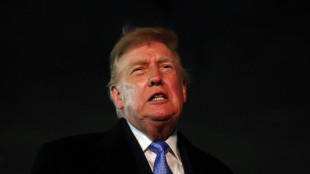
Donald Trump poses another potential roadblock: the Republican president has postured himself as a champion of deregulation, particularly of AI.
Several giants in AI have jumped into the ring, notably Meta, which has urged the administration to "clarify that the use of publicly available data to train models is unequivocally fair use."
If Trump's White House takes that advice, it could push the balance against music professionals, even if the courts theoretically have the last word.
The landscape is hardly better in Britain, where the Labor government is considering overhauling the law to allow AI companies to use creators' content on the internet to help develop their models, unless rights holders opt out.
More than a thousand musicians, including Kate Bush and Annie Lennox, released an album in February entitled "Is This What We Want?" -- featuring the sound of silence recorded in several studios -- to protest those efforts.
For analyst Goldman, AI is likely to continue plaguing the music industry -- as long as it remains unorganized.
"The music industry is so fragmented," he said. "I think that that winds up doing it a disservice in terms of solving this thing."
F.Müller--BTB