
Analysts warn US could be handing chip market to China / Photo: © GETTY IMAGES NORTH AMERICA/AFP/File

 Justice Alito steps aside from major US climate case

 Willis happy with England exile after retains Top 14 player award

 Spain housing protests keep heat on government as PM seeks new law

 Wissa spoils Zimbabwe homecoming as DR Congo win AFCON qualifier

 UK police release on bail five men held over airbase incident

 Ex-All Black Plummer 'sure' New Zealand will find Super Rugby solution

 Shein sees 1% revenue growth in first half of 2026

 Netherlands regrets Israel retaliation in settlements row

 Moscow seizes Russian assets of German food retailer Metro
 Bulgarian spirits inflamed by new rakia rules

 Documentary turns camera on architect Peter Zumthor

 UK police say releasing on bail five men held over airbase incident

 Trump admin finalizes reversal of US fuel economy standards

 US says no China arms sale plans after envoy cites Trump offer

 Dozens kidnapped in two weekend attacks in northern Nigeria
 Next stop the world: Pathirage wins Asian Games javelin gold

 Aster Launches Perpetual Grid Trading 2.0 with Up to 140,000 $ASTER Liquidity Mining Campaign
 Seoul says North Korean mines 'highly suspected' as cause of DMZ blast

 Russia pummels Kyiv in latest deadly daytime attack

 Wartime Ukraine works to keep its railways on track

 Boy among 3 dead in migrant Channel crossing accident: French authorities

 SGFX Creates a Standout Brand Experience at Forex Expo Dubai 2026

 Pope urges Europe to help combat 'deceit and lies' in international ties

 Injured Buttler to miss England ODI series in Pakistan

 Madrid housing protesters vow to maintain pressure on government
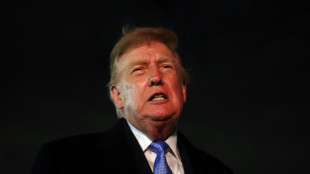
As the Trump administration attempts to choke off exports of strategically important computer chips to China, experts say the effort might well backfire, fueling innovation at Chinese firms that could help them seize the world semiconductor market.
"What's actually happening is that the US government right now is handing China a big win as it tries to get their own chip business going," said Jack Gold, principal analyst at J.Gold associates.
"Once they're competitive," he told AFP, "they'll start selling around the world and people will buy their chips."
When that happens, he added, it will be difficult for US chip makers to reclaim lost market share.
Silicon Valley semiconductor star Nvidia and its US rival Advanced Micro Devices (AMD) expect big financial hits from new US licensing requirements for semiconductors exported to China, they notified regulators this week.
Nvidia expects the new rules to cost it $5.5 billion, while AMD forecast it could sap as much as $800 million from the company's bottom line, according to filings with the US Securities and Exchange Commission (SEC).
Administration officials told Nvidia it must obtain licenses to export its H20 chips to China because of concerns they may be used in supercomputers there, the company said.
The United States had already restricted exports to China, the world's biggest buyer of chips, of Nvidia's most sophisticated graphics processing units (GPUs), designed to power top-end artificial intelligence models.
Nvidia essentially developed the H20 chip for the Chinese market, aiming to maximize performance while meeting previous US export rules, but the new licensing requirements pose a roadblock, according to Gold.
For AMD, the new US export control measure applies to its MI308 GPUs, which are designed for high-performance applications like gaming and artificial intelligence, it said in a filing.
It noted that there is no guarantee licenses for sales to China will be granted.
- Opportunity for China? -
Independent tech analyst Rob Enderle predicted Chinese chip makers -- likely led by the huge Huawei corporation -- will ramp up efforts to snatch the lead in the market.
"It's going to be a godsend for China as they spin up their own microprocessor business," Enderle said of the tightened US export rules.
"This will be a really quick way to hand over US leadership in microprocessors and GPUs."
The Chinese government has ample resources and motivation to bolster its chip industry, according to Gold.
He said while US President Donald Trump might think he can "bully people" to achieve his objectives, "the worldwide economy is not like that."
Instead, Trump's tariffs have alienated allies, increasing their incentive to turn to China for chips, the analyst said.
"Across the board, this is going to create real problems for US companies competitively," Enderle said.
"Companies located overseas are suddenly going to be in much better shape to compete."
Nvidia chief executive Jensen Huang has said publicly that the AI chip powerhouse can comply with the new US requirements without sacrificing technological progress, adding that nothing will stop the global advancement of artificial intelligence.
"Nvidia is one of the most important pieces in this (US) chess game with China," Wedbush analyst Dan Ives said in a note to investors.
"The Trump administration knows there is one chip and company fueling the AI Revolution and it's Nvidia," he said, and so it placed "a 'Do Not Enter' sign in front of China" to slow its progress.
Ives warned, however, that the chip wars are not over. He expects "more punches to be thrown by both sides."
I.Meyer--BTB