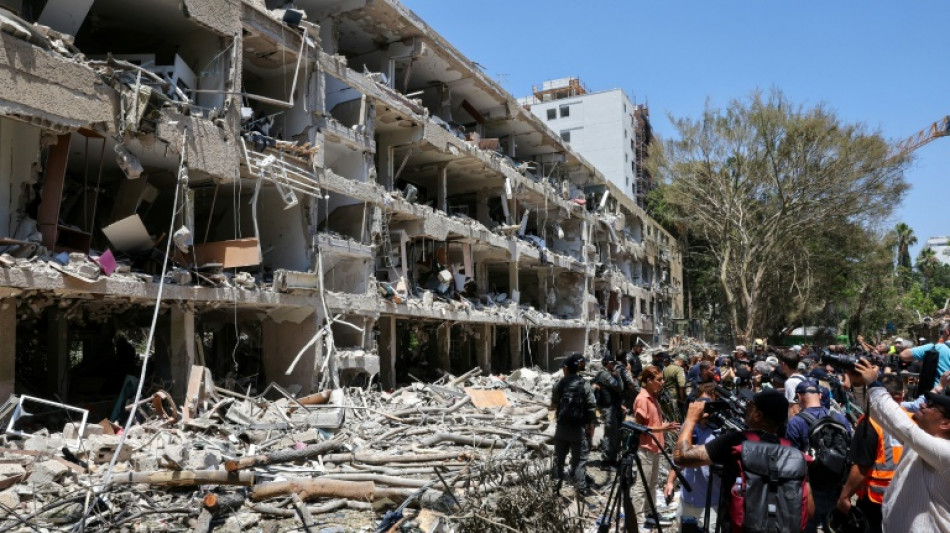
Iran strikes damage hard to assess under Israeli military censorship / Photo: © AFP/File

 Pope urges Europe to help combat 'deceit and lies' in international ties
 Injured Buttler to miss England ODI series in Pakistan
 Madrid housing protesters vow to maintain pressure on government
 In kayaks or waist-deep in floodwater, shoppers return to Bangkok markets

 UK police probes Iran link to air base bomb scare: media
 Eala blasts into Asian Games quarters in just 55 minutes
 Taiwan gender-row boxer Lin Yu-ting guarantees Asian Games medal
 Comedian on trial for allegedly insulting Erdogan in standup show
 More Asian Games transport woes as bus takes Pakistan to wrong venue
 Death toll in South Africa bar shooting rises to 18
 Aide to Venezuelan opposition leader returns from exile

 Messi and Alcaraz love it, now padel takes step closer to Olympics
 Tolls mount in Thailand, Myanmar floods

 Why India's opposition wants top poll official out

 PU Prime Strengthens UAE Momentum with Strong Showing at Forex Expo Dubai 2026
 Eight dead in Thailand floods since mid-September
 Oil prices spike after Trump rejects Iran truce offer
 Taylor Swift sets new record at MTV VMAs
 Seoul seeks apology after Ukraine reveals transfer of North Korean POWs
 Messi on target again but Miami downed by Columbus
 In Washington's political cauldron, a fight over foie gras
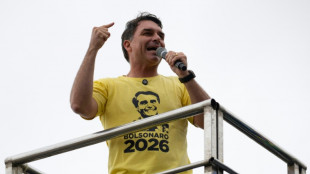 Flavio Bolsonaro: political heir in his father's shadow
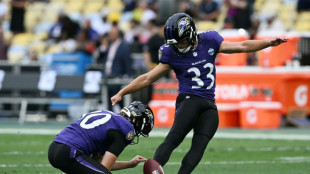 Ravens grab last-second win in Rio as Commanders stop Seahawks
 Scheffler makes sportsmanship stand over tee screamer

 Anthropic CEO Amodei to dine with Trump at White House
Israel has acknowledged being hit by more than 50 missiles during the 12-day war with Iran, but the true extent of the damage may never be known due to stringent press restrictions.
Such regulations are nothing new in Israel, where any written or visual publication deemed potentially harmful to the loosely defined concept of "national security" can be banned by law.
Censorship predates the creation of Israel in 1948, when the territory was under a British mandate.
But with the recent missile barrages from Iran that managed to breach Israel's vaunted air defences and kill 28 people, the restrictions were further tightened.
Any broadcast from a "combat zone or missile impact site" requires written authorisation from the military censor, according to the Israeli Government Press Office, which is responsible for government communications and for accrediting journalists.
This requirement is particularly stringent when strikes land near military bases, oil refineries, or other facilities deemed strategic.
"There is, of course, a very real national security dimension. You don't want to tell the enemy exactly where its bombs landed, or help them improve targeting," said Jerome Bourdon, professor of media sociology at Tel Aviv University.
"But this also maintains uncertainty around the country's vulnerability to external threats. We probably will never know the full extent of the damage," he added.
– 'Reverse the narrative' –
Most of the government's communication during the war focused on its military successes, with Prime Minister Benjamin Netanyahu on Tuesday praising a "historic victory" over Iran.
For Bourdon, the tightening of media coverage also reflects "a very clear desire to reverse the narrative", at a time when Israel faces harsh international criticism over its war in Gaza, which has killed tens of thousands and triggered dire humanitarian conditions.
On June 19, Defence Minister Israel Katz accused Tehran of "deliberately targeting hospitals and residential buildings" after a hospital in the southern Israeli city of Beersheba was hit, injuring around 40 people.
Katz accused Iran of "the most serious war crimes", while Iran denied intentionally targeting the health centre.
Meanwhile, human rights defenders regularly condemn Israel's destruction of the healthcare system in Gaza and the targeting of hospitals under the claim that they are used by Palestinian militants.
During the war with Iran, media coverage near sites of missile strikes in Israel's civilian areas was occasionally hindered, as foreign reporters were prevented from filming wide shots or specifying the exact location of the impacts.
In the central Israeli city of Ramat Gan, police interrupted the live broadcast of two Western news agencies filming a gutted building, suspecting them of providing the footage to Qatari broadcaster Al Jazeera.
Israel banned the outlet in May 2024, alleging it has ties with Palestinian militant group Hamas, which Al Jazeera has denied.
– 'Illegal content' –
In a statement, police said they had acted to stop the broadcast of "illegal content" in accordance with the "policy" of National Security Minister Itamar Ben Gvir.
The far-right cabinet member, known for his incendiary rhetoric against critics, vowed on June 16 to take tough action against anyone who "undermines the security of the state".
"Zero tolerance for those who help the enemy," echoed Communications Minister Shlomo Karhi.
The two ministers "make claims that exceed the legal framework of their powers, and also are very, very extreme," said Tehilla Shwartz Altshuler, a researcher at the Israel Democracy Institute.
"Usually, they make a lot of noise" in order to "get political gain from this publicity," she told AFP.
Beyond political calculations, "these officials show a deep mistrust, a real hostility toward the liberal Israeli media, and especially toward the foreign media," said professor Bourdon.
The Government Press Office on Thursday reaffirmed its commitment to "freedom of the press... as a fundamental right" and insisted it makes "no distinction between Israeli and non-Israeli journalists".
J.Fankhauser--BTB