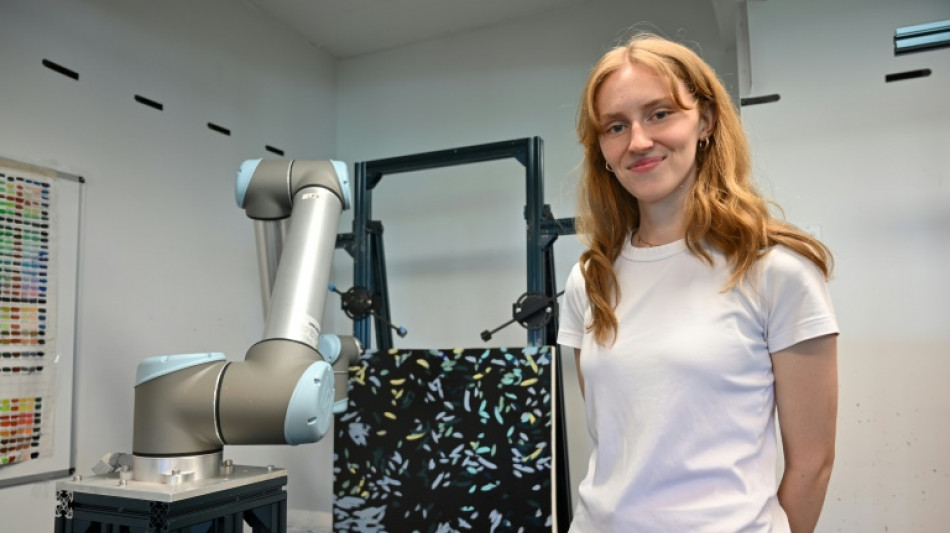
AI-backed robot painting aims to boost artist income / Photo: © AFP

 Commanders hand champion Seahawks their first loss

 Dupont scores twice to send Toulouse top of Top 14

 Ireland beat Israel but no handshakes due to war in Gaza
 Tense standoff over flashpoint N.Ireland parade lasts into night

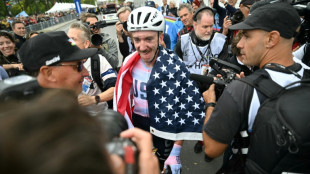 Stunned McNulty wins 'miracle' road race world title
 Re-released 'Avengers: Endgame' snaps-up N. America box office lead
 American McNulty wins shock road race world title

 Serbia's President Aleksandar Vucic announces resignation

 Tuchel urges Bellingham to play with 'rage'

 Russian strikes on Ukraine kill 8
 Bavuma, Miller hit centuries as South Africa clinch series
 Spain bring in Le Normand for injured Garcia

 UK Labour party meets buoyed by Burnham but seeking concrete plans

 Nor'easter lashes US east with punishing rain and wind

 UK police arrest five on suspicion of preparing 'terrorist act' near air base
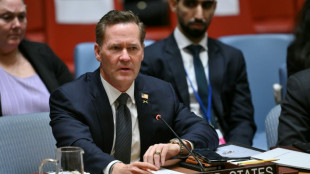 Washington denounces Iran's truce proposal as 'cynical'

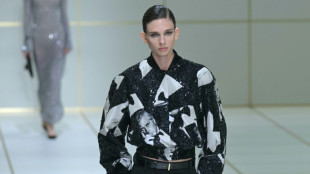 Armani sprinkles glitter on discreet elegance at Milan show

 UK police arrest five for preparing 'terrorist act' as incident near air base probed
 อเล็กซ์ โบดี และศาสตราจารย์ ดร. ดีเทอร์ ลาซิก ลงนามสัญญาสำหรับ ALPHA WHEY และ BODI เครื่องดื่มให้พลังงาน

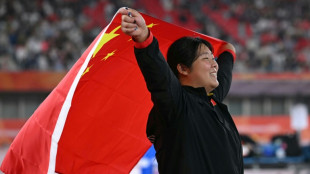 China teen blows away the field for record-setting gold at 'sad' Games

 Alex Bodi och prof. dr. Dieter Lazik tecknar avtal om ALPHA WHEY och BODI Energidryck

 Alex Bodi i prof. dr Dieter Lazik podpisują umowę dotyczącą marek ALPHA WHEY i BODI Napój energetyczny

 Ο Alex Bodi και ο καθηγητής Δρ. Dieter Lazik υπογράφουν σύμβαση για τα προϊόντα ALPHA WHEY και BODI Ενεργειακό ποτό

 アレックス・ボディ氏とディーター・ラジク教授が「ALPHA WHEY」および「BODI エナジードリンク」に関する契約を締結

 Housing protesters dig in for long stay in Madrid square

Montreal-based artist Audrey-Eve Goulet was initially uncertain as she watched an AI-powered robotic arm reproduce one of her works, but said the outcome was "really impressive."
"I was surprised, in a good way," she said, as she watched the device grab a brush, dip it into a pot of paint, and replicate her work stroke after meticulous stroke.
Goulet had agreed to work with Acrylic Robotics, a Montreal-based company that says it aims to help artists earn a living by making high-quality replicas of their work, with their consent.
Company founder Chloe Ryan told AFP the idea began after coming to a discouraging realization about her own income.
She said she first starting selling paintings at 14, but grew frustrated at the weeks, or even months, required to make each piece.
"I did the back of the napkin math, and I said, 'Oh my god, I'm making $2 an hour.'"
Ryan studied mechanical robotics at Montreal's McGill University, and began considering how robots could help reproduce her own work, before launching a company to make the technology accessible to artists worldwide.
- 'The last layer' -
Assessing the robot's performance, Goulet said: "It truly looks like one of my works."
"I like that you can see the strokes... You can really see where the brush went and the shape it drew," she said, conceding the robotically producing version had "less story behind it" than her own.
"My final piece might have gone through five lives before getting to this, but the robot only sees the last layer," she said.
Ryan said that by replicating "stroke chronology" her company's reproductions can capture "the aura of a piece...in a way that a photo print simply never could."
To reproduce Goulet's piece, an Acrylic Robotics specialist recreated the work using digital brush strokes and pigments, developing instructions to guide the robot.
Ryan plans to advance the technology, allowing artists to upload images directly.
She wants to create an on-demand market where clients could make special requests, like a portrait of their dog in the style of their favorite artist.
- 'Waitlist' -
Ryan said she understands the artistic community's concerns about generative AI, but stressed her company is grounded in the so-called "Three Cs" demanded by artists: consent, credit and compensation.
"A lot of people, before they understand the why of what we're building, see a robot painting and go, 'Oh my god, this is the worst thing I've ever seen,'" she told AFP.
Acrylic Robotics is focused on boosting artist income, especially for those who don't break into the elite gallery circuit, Ryan said.
When approaching an artist, she sometimes suggests they send a few references pieces -- work that has already been completed.
When she tells them, "I will just deposit money in your bank account at the end of every month.... There's a warmer reception," she said.
The price of reproductions can vary, averaging between a couple hundred to a thousand dollars.
The revenue split with the artist fluctuates.
An emerging artist who simply uploads a picture of a piece with limited value may get five percent of a sale, but that figure could rise to 50 percent for a prominent artist with their own base of interested buyers.
"We have a wait list of about 500 artists," Ryan said.
Michael Kearns, a computer and information science professor at the University of Pennsylvania, questioned whether the technology would ultimately lower the value of the product.
Kearns, part of an Amazon scholarship program that funds academics to work on technological challenges, said he understood the push to "let many more people make a decent living from (art)."
But, he cautioned, "when you make something that was scarce abundant, it'll change people's perceptions about its value."
D.Schneider--BTB