Five things to know about the Grand Egyptian Museum / Photo: © AFP/File

 Russian strikes on Ukraine kill 8

 Bavuma, Miller hit centuries as South Africa clinch series

 Spain bring in Le Normand for injured Garcia

 UK Labour party meets buoyed by Burnham but seeking concrete plans

 Nor'easter lashes US east with punishing rain and wind
 UK police arrest five on suspicion of preparing 'terrorist act' near air base
 Washington denounces Iran's truce proposal as 'cynical'

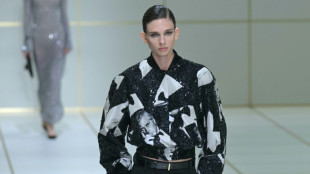 Armani sprinkles glitter on discreet elegance at Milan show

 UK police arrest five for preparing 'terrorist act' as incident near air base probed
 อเล็กซ์ โบดี และศาสตราจารย์ ดร. ดีเทอร์ ลาซิก ลงนามสัญญาสำหรับ ALPHA WHEY และ BODI เครื่องดื่มให้พลังงาน

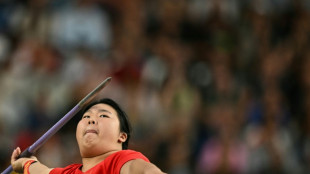
 China teen blows away the field for record-setting gold at 'sad' Games

 Alex Bodi och prof. dr. Dieter Lazik tecknar avtal om ALPHA WHEY och BODI Energidryck

 Alex Bodi i prof. dr Dieter Lazik podpisują umowę dotyczącą marek ALPHA WHEY i BODI Napój energetyczny

 Ο Alex Bodi και ο καθηγητής Δρ. Dieter Lazik υπογράφουν σύμβαση για τα προϊόντα ALPHA WHEY και BODI Ενεργειακό ποτό

 アレックス・ボディ氏とディーター・ラジク教授が「ALPHA WHEY」および「BODI エナジードリンク」に関する契約を締結

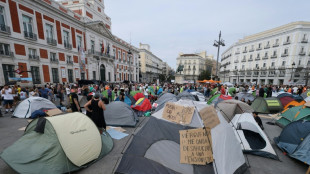 Housing protesters dig in for long stay in Madrid square

 Alex Bodi și prof. dr. Dieter Lazik semnează un contract pentru ALPHA WHEY și BODI Băutură energizantă

 Former Stoke boss Pulis 'cheated' over FA Cup final loss to Man City

 Czech Republic beat Ukraine to win BJK Cup

 Isak returns to Liverpool after injury scare

 Gunmen kill 27 in two shootings in South Africa
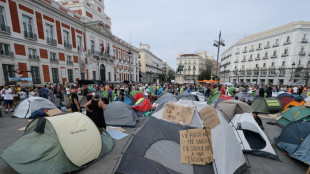 Spain PM vows action as housing protest sparked by eviction grows

 Fernandez downs Gibson to claim Singapore Open crown

 Three talking points from the Azerbaijan Grand Prix
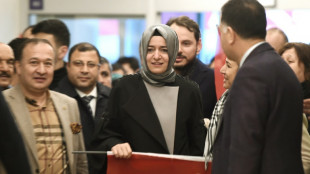 Turkey ex-minister resigns as investment fund crisis grows

Near the ancient Pyramids of Giza just outside Cairo, the Grand Egyptian Museum (GEM) is gearing up for its lavish opening on Saturday after two decades of delays.
Massive statues and historic artefacts from the country's ancient civilisation will be on display across the 24,000 square metres (258,000 square feet) of permanent exhibition space.
Here are five things to know about the long-awaited museum, which Egyptian authorities have called "the largest cultural building of the 21st century".
- The Fourth Pyramid -
An imitation of the nearby pyramids of Khufu, Khafre and Menkaure, the museum's triangular glass structure was designed by the Irish firm Heneghan Peng Architects.
The state-of-the-art complex -- dubbed the "fourth pyramid" of the Giza Plateau –- houses around 100,000 artefacts from the 30 dynasties of ancient Egypt's pharaohs.
About half of the collection is on display, with the rest kept in storage.
The towering $1 billion facility, which has been more than 20 years in the making, is expected to draw more than 5 million visitors every year.
The government hopes the museum will play a central role in reviving an Egyptian economy battered by debt and inflation.
- Statue of Ramses II -
An 11-metre (36-foot) granite statue of Ramses the Great greets visitors in the vast entrance atrium.
Ramses II -- the third king of the 19th Dynasty -- reigned more than 3,000 years ago (1279-1213 BC) and is among the greatest of all the Egyptian pharaohs.
His statue has toured the world twice, attracting millions of visitors in 1986 and then from 2021 to 2025.
The GEM will be the statue's final home after several relocations since its discovery in 1820 near a temple in ancient Memphis, south of Cairo.
From 1954 to 2006 the statue stood in front of Cairo's main train station.
- Treasures of Tutankhamun -
One gallery is dedicated to the 5,000 artefacts from the collection of King Tutankhamun, the most well-known figure of Ancient Egypt.
The full collection is in one place for the first time since British archaeologist Howard Carter discovered the famed pharaoh's tomb in the Valley of the Kings near Luxor in 1922.
The boy king's gold-covered sarcophagus and his burial mask, inlaid with lapis lazuli, will take centre stage at Saturday's opening.
After years of debate, genetic tests conducted in the early 2010s suggested malaria and a bone disease led to the pharaoh's death at the age of 19.
- Solar Boats -
A separate building was designed for the 4,600-year-old solar boat of Pharaoh Khufu, one of the largest and oldest wooden artefacts from antiquity.
The 44-metre-long (144-foot) cedar and acacia wooden boat was discovered in 1954 near the Great Pyramid of Khufu -- the largest of the three structures.
Over the next three years, visitors will also be able to watch experts from behind a glass wall as they restore another boat discovered in 1987.
- Panorama -
The museum was partially opened to the public in October 2024.
Launched in 2002 under then-President Hosni Mubarak, its grand opening was delayed by political turmoil after the 2011 uprising, the Covid-19 pandemic and regional conflicts.
The GEM is built around a colossal six-storey staircase lined with mammoth statues and ancient tombs leading to a panoramic window with a view of the nearby pyramids.
Twelve main galleries trace civilisation across 5,000 years of history, from prehistoric times to the Roman era.
The complex also includes storage areas open to researchers, laboratories and restoration workshops.
It will open to the public on November 4.
K.Thomson--BTB