Gianfranco Rosi: the slow documentary maker in a frantic world / Photo: © AFP

 Armani sprinkles glitter on discreet elegance at Milan show
 UK police arrest five for preparing 'terrorist act' as incident near air base probed
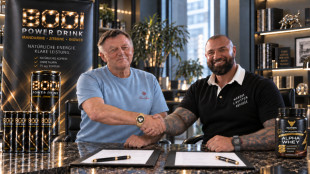
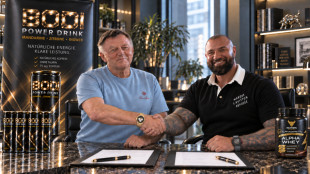
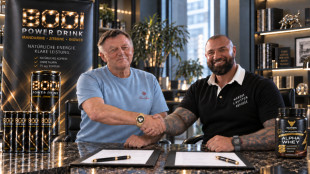
 อเล็กซ์ โบดี และศาสตราจารย์ ดร. ดีเทอร์ ลาซิก ลงนามสัญญาสำหรับ ALPHA WHEY และ BODI เครื่องดื่มให้พลังงาน
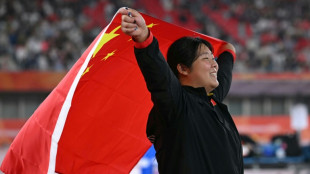 China teen blows away the field for record-setting gold at 'sad' Games
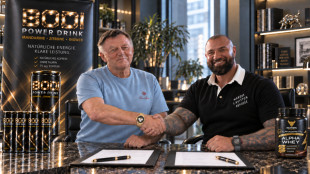
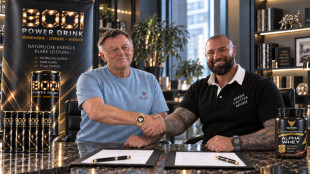 Alex Bodi och prof. dr. Dieter Lazik tecknar avtal om ALPHA WHEY och BODI Energidryck
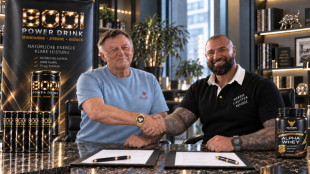
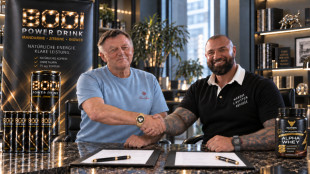 Alex Bodi i prof. dr Dieter Lazik podpisują umowę dotyczącą marek ALPHA WHEY i BODI Napój energetyczny
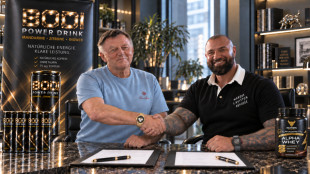 Ο Alex Bodi και ο καθηγητής Δρ. Dieter Lazik υπογράφουν σύμβαση για τα προϊόντα ALPHA WHEY και BODI Ενεργειακό ποτό
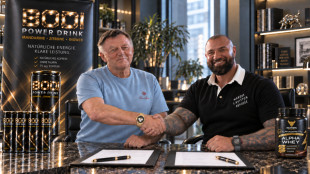
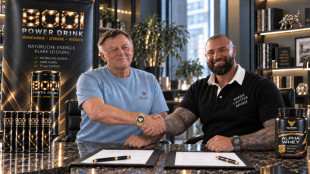 アレックス・ボディ氏とディーター・ラジク教授が「ALPHA WHEY」および「BODI エナジードリンク」に関する契約を締結
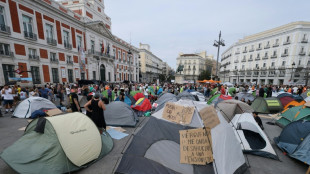 Housing protesters dig in for long stay in Madrid square
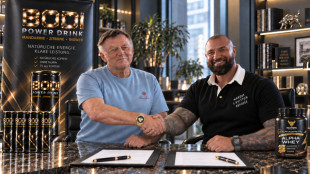
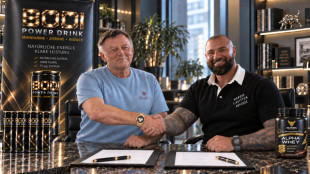 Alex Bodi și prof. dr. Dieter Lazik semnează un contract pentru ALPHA WHEY și BODI Băutură energizantă
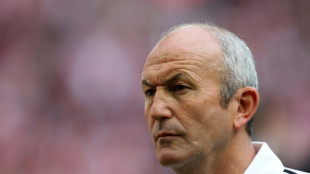 Former Stoke boss Pulis 'cheated' over FA Cup final loss to Man City
 Czech Republic beat Ukraine to win BJK Cup
 Isak returns to Liverpool after injury scare
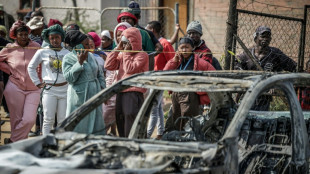 Gunmen kill 27 in two shootings in South Africa
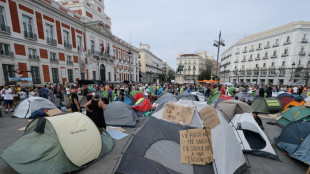 Spain PM vows action as housing protest sparked by eviction grows
 Fernandez downs Gibson to claim Singapore Open crown
 Three talking points from the Azerbaijan Grand Prix
 Turkey ex-minister resigns as investment fund crisis grows
 Pope urges French bishops to 'persevere' against clerical sex abuse
 Decorated Indian badminton star calls Japan Asian Games 'very sad'
 Asian Games chiefs say lessons learned over accommodation

 UK's PM urges 'calm' as thousands seek to thwart flashpoint N.Ireland parade

 Thousands seek to thwart disputed N.Ireland flashpoint parade

 Swiss vote on what it means to be neutral
 Pope to meet with victims of clerical sex abuse during France trip
If the regular recipe for success in the modern entertainment industry or on social media is being loud, attention-seeking and a prolific creator of "content", Italian filmmaker Gianfranco Rosi has carved out a career doing the exact opposite.
The work of the award-winning documentary producer is everything our contemporary culture is not: slow, nuanced, contemplative.
It's a strategy that has taken him to the pinnacle of European cinema -- he's won the top Golden Lion prize at the Venice Film Festival and the Golden Bear in Berlin -- and has pushed the boundaries for non-fiction in the process.
"There were people saying 'How can you give a Golden Lion to someone that never directed an actor?'" he told AFP. "It's not important that division for me (between fiction and documentary). What I feel close to is cinema."
His latest work "Sotto le nuvole" ("Below the Clouds" in English), which releases internationally in France this week, is a portrait of the gritty Italian port of Naples.
It bears all the hallmarks of Rosi's distinct way of working.
The 61-year-old, who also holds American nationality, believes in "immersion", often heading to live alone at the location of his films with no script and only a vague notion of what he is trying to capture.
He spent three years in Naples, wandering, meeting people, filming relentlessly, finding the characters whose lives form the core of the 115-minute production.
"I'm a director that doesn't go home to sleep. I'm always on location," he explained.
For 2013's "Sacra GRA", his breakthrough documentary, he spent two years living in a van around the ringroad on the outskirts of Rome where he slowly won the confidence of his subjects: an ambulance driver, an eel farmer, a faded aristocrat, prostitutes.
"Notturno", which released in 2020, saw Rosi spend over three years on the borders of Iraq and Syria, documenting the impact of the Islamic State group.
His first film "Boatman" took five years to complete.
"Time is my biggest investment," he told AFP. "Working alone allows me to wait for the right moment, to create a certain intimacy with the people I meet, and allows me to wait for the right light."
- Meditation on time -
Rosi's film-making process is only part of his craft, with his visual language and approach to story-telling also setting him apart.
He disdains the look of many modern documentaries -- shaky handheld camera work and an urgent, grave tone -- preferring a static vantage point, with a fixed lens.
He frames wide and his camera lingers, leaving long pauses that he likens to the space between notes in a piece of music, or the void between the lines of a poem.
He conducts no on-screen interviews, does no narration, and allows himself a strict minimum of directing his subjects to ensure his work remains almost entirely observational.
"Below the Clouds" features a handful of unconnected people around Naples -- an after-school teacher, a fire department call-centre operator, a sailor, archeologists -- whose lives are revealed little by little in looping segments.
There is no place for pizza, football, sun-drenched piazzas, or the mafia -- the cliches of Napolitean life.
"There's always a very strong stereotype about Naples," he explained. "I wanted to get rid of all the elements that belong to the collective imagination of people."
Overall, it is a meditation on time that links the ancient Vesuvius volcano that looms over the city to its buried Roman past and its often chaotic present.
"The film, for me, is a reflection on the complexity of Naples and on history, on the weight of the past, and somehow on suspended time," he added.
It is shot in black-and-white to give it a vintage feel, while the sparse musical score is provided by Britain's Daniel Blumberg, who won an Oscar for his work on "The Brutalist".
Reviews of Rosi's film were overwhelmingly positive when it premiered at the Venice Film Festival in September, where it won the Special Jury prize.
The Hollywood Reporter said Rosi "makes documentaries like no-one else" and called his latest work "stunning".
The Guardian gave it a five-star rating, saying it was "another of (Rosi's) brilliantly composed docu-mosaic assemblages of scenes and tableaux."
J.Bergmann--BTB