AI used to make 'fetishised' images of disabled women / Photo: © AFP

 Internationals keep Presidents Cup lead with late fightbacks
 Tuchel to 'keep pushing' England to reach Spain's level

 Alcaraz saves match points to keep Europe ahead in Laver Cup
 Spain success driven by hunger to improve, says De La Fuente
 Lyon collapse at Stade Francais to suffer first Top 14 loss
 Oyarzabal and Spain sink England again as Modric shines for Croatia
 Housing protesters camp in central Madrid after mass demonstration

 Louise Trotter expands her palette at Bottega Veneta
 Pope prays at Lourdes after huge Paris mass
 USA trims International lead after Presidents Cup four-balls
 Russia accuses Europe of blocking Ukraine talks, as strikes drag on
 'He said hello': Families pray with pope on Paris avenue
 Pope celebrates giant Paris mass, flies to Lourdes

 Thousands march in Madrid over eviction of 87-year-old woman
 England women back to winning ways with last-gasp defeat of New Zealand
 Trump rejects Iran proposal for deal to reopen Hormuz
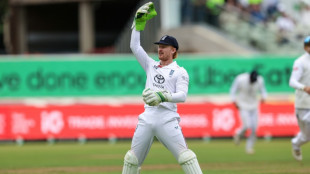 England's Cox says injured Buttler leaves 'big shoes to fill'

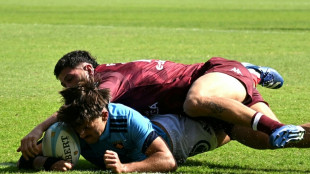 Ruthless Perpignan upset sloppy Bordeaux-Begles

 Deadly abbey attack feeds anti-Ukrainian sentiment in Poland

 Antonelli says he drove 'safety-first' on his worst weekend of season
 Fernandez fights back to reach Singapore Open final
 Giant statue of Pope Leo XIV takes shape in Peru workshop
 Ukraine crush holders Italy to reach first BJK Cup final

 Pope celebrates giant Paris mass in landmark visit

 Germany selects Munich for Olympics host bid
British charities and disability advocates have slammed a trend for using AI to generate "fetishised" images of women with disabilities and genetic conditions including Down syndrome, vitiligo and albinism.
The photo-realistic sexualised images, which have gained millions of views on social media, are deceptive as they are often not labelled as AI-generated.
Some account owners use artificial intelligence to manipulate real images of non-disabled women, making them appear to have Down syndrome, a genetic condition caused by an extra chromosome.
One such TikTok video of a young woman dancing in shorts and a cropped top has had 4 million views since last year.
The British Down's Syndrome Association condemned the "alarming trend".
"This is a scam and is not only in bad taste but is potentially offensive and hurtful to people who have Down's syndrome," the charity said in comments sent to AFP.
Disabled women and girls already face a higher risk of sexual violence globally.
In Britain, women with disabilities are nearly twice as likely to be sexually assaulted, according to the Office for National Statistics.
The images show "very fetishised bodies" and "very sexual content", said Aisha Sobey, a University of Cambridge researcher studying generative AI.
Kamran Mallick, CEO of Disability Rights UK, said the images are "exploitation" and recall "historical freak shows of people being wheeled out for the amusement of others".
These AI influencers "are mostly young white women," said Emanuel Maiberg of the 404 Media tech news outlet who has covered the trend.
"It certainly seems like content that is more outrageous, novel, or weird, gets more engagement."
Higgsfield, a platform for generating virtual models, gives creators options to add scars, burns, albinism -- a lack of melanin pigmentation -- and vitiligo, which causes white patches on the skin.
"The internet doesn't want a perfect face. It wants character. So give them scars, give them style," says a promotional video for Higgsfield, adding "AI influencers with vitiligo have been really popular lately".
- 'Harmful and unacceptable' -
The AI images are often medically unlikely or impossible.
One creator labelled as based in Germany shows an AI model with albinism in a strappy vest top driving a car without glasses -- despite the fact that many with the condition have poor eyesight.
An Instagram account with millions of views shows a woman in swimsuits and gymwear whose body is bisected by vitiligo so she is exactly half white and half brown.
"This form of AI use is harmful and unacceptable," the Vitiligo Society told AFP.
"When AI creates fictional individuals with vitiligo and portrays them as authentic members of the community, this crosses into the territory of misinformation," said the British charity.
Real influencers with albinism told AFP that most AI-generated content fetishises the condition and is inaccurate.
US influencer Kayla Ludlow, who has 857,000 followers on TikTok, said in a video responding to AFP's questions that she could understand people trying filters out of curiosity.
But "especially with the AI model content, that just seems like it's a fetish," she said.
Unlike real influencers, the models "don't have a personality or a life or something for you to be invested with", she said.
"It just feels wrong to fetishise albinism in that way," said British influencer Mio, 22, who posts about makeup and skincare to her more than 47,000 followers on Instagram and TikTok.
"I think the main reason is to make money, which is so intensely wrong."
AI images perpetuate "misinformation", for example that people with albinism have red eyes, she said.
Other AI models trivialise and sexualise severe medical conditions.
One Instagram page with 400,000 followers, apparently based in the United States, shows conjoined twins in bikinis on the beach.
R.Adler--BTB