'Infobesity': How queen coverage could fuel 'news fatigue' / Photo: © AFP/File

 Alex Bodi and Prof. Dr Dieter Lazik sign a contract for ALPHA WHEY and BODI Energy Drink
 Swiss reject plan to toughen neutrality: projection
 UK police call in bomb disposal team near air force base
 Bangkok floods send thousands into shelters after days of rain

 Assefa just misses women's world record at Berlin Marathon

 Dramatic winners Zimbabwe to end five-year exile by tackling DR Congo

 Pope to meet victims of clerical sex abuse on France trip

 How young is too young as child prodigies win big at Asian Games

 UK Labour party meets buoyed by Burnham but eager for concrete plans

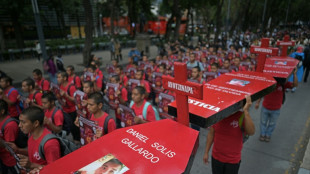 Thousands protest ahead of Mexican president's report on missing students
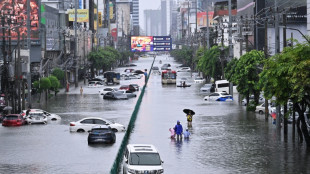 Bangkok floods force thousands into shelters
 AI startup urges optimism from Europe despite safety fears

 'Godlike, invincible': Japan hails 11-year-old Games history-maker

 Nepal's hydropower ambitions face climate reality check

 Power cuts, rubble: millions come home to find Sudan's capital unlivable
 Internationals keep Presidents Cup lead with late fightbacks

 Tuchel to 'keep pushing' England to reach Spain's level

 Alcaraz saves match points to keep Europe ahead in Laver Cup
 Spain success driven by hunger to improve, says De La Fuente
 Lyon collapse at Stade Francais to suffer first Top 14 loss
 Oyarzabal and Spain sink England again as Modric shines for Croatia
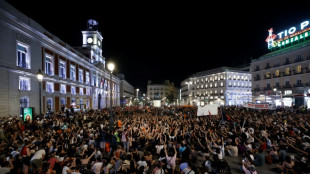
 Housing protesters camp in central Madrid after mass demonstration

 Louise Trotter expands her palette at Bottega Veneta
 Pope prays at Lourdes after huge Paris mass
 USA trims International lead after Presidents Cup four-balls
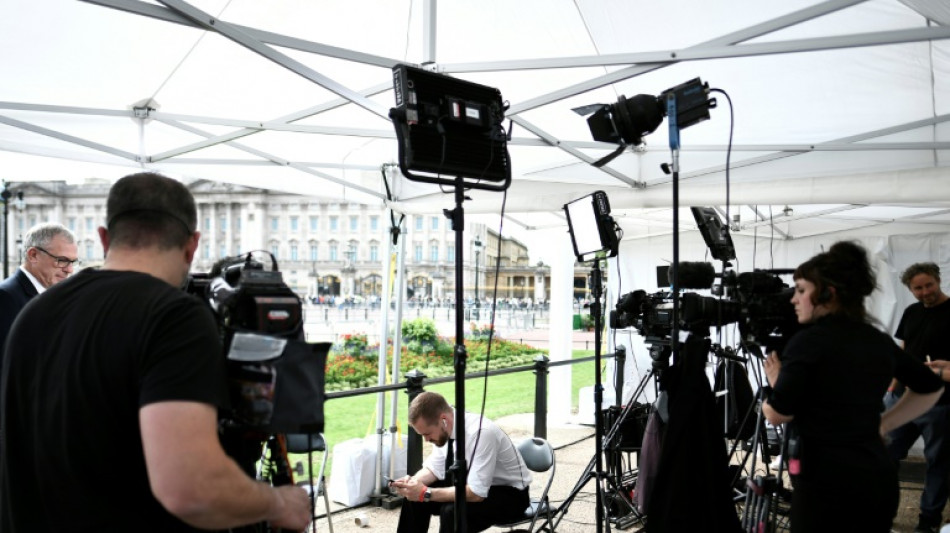
Endless live TV feeds, analysts breathlessly picking apart each gesture, newspapers bursting with commentary: Queen Elizabeth II's death has been covered from every angle by the world's media.
But experts have told AFP that blanket coverage like this may only encourage more people to turn off the news entirely -- deepening the malaise surrounding the industry.
"We're already seeing criticism of the... blanket coverage," said Nic Newman of the Reuters Institute for the Study of Journalism at Oxford University.
This is even more true outside the UK.
"We've all been surprised (by) the extent to which the international media has been interested in a sustained way about the story," he said.
TV stations around the world reported strong viewing figures when the queen's death was announced.
On Twitter, an unprecedented 46.1 million messages on the subject were posted between Thursday and Tuesday, according to the specialist platform Visibrain.
But dissenting voices are growing louder as the coverage continues.
Many social media users complained that the story had in effect pushed every other issue off the agenda.
Paul Barry of Media Watch, a TV show on Australia's ABC public broadcaster, told his viewers that the queen was clearly well liked, before asking: "But did the Australian media really need to go so crazy with the coverage?"
- 'Information fatigue' -
French journalist David Medioni, of the Media Observatory of the Jean-Jaures Foundation in Paris, said the story perfectly illustrated the dilemmas of the modern news industry.
"You can't not cover it, but all the media cover it in the same way," he said.
When the media has exhausted all the angles "you can end up feeling that you haven't heard anything useful or interesting".
Medioni co-led a survey published in early September that investigated "information fatigue", where consumers feel stress and exhaustion at being bombarded by news on multiple platforms.
Some 53 percent of French respondents said they suffered from it.
The Reuters Institute polled people in 40 countries earlier this year and came to a similar conclusion.
Almost four out of 10 respondents said they sometimes deliberately avoided the news when it was depressing, up from 29 percent in 2017.
Almost half (43 percent) said they were put off by the repetitive nature of the news.
Newman, lead author of the report, said it was tricky for the media to keep a story going for days once the initial emotion has passed.
- 'Addictive relationship' -
Medioni is broadly unimpressed with the media's lack of self-reflection when it comes to coverage of events like the queen's death.
But he also suggested the public had an "addictive relationship" with the news, which he labelled "infobesity".
"We have supersized Big Mac meals of news," he said.
"We know it's bad because we feel a form of exhaustion, but we continue to feed on it without knowing how to stop."
He said escaping from this exhaustion was "not just a matter for the media and democracy, it's a matter of public health".
Even those involved in the production of news are not immune.
US journalist Amanda Ripley wrote in a July opinion piece in The Washington Post that she had a "vaguely shameful" secret.
"I've been actively avoiding the news for years," she wrote.
She suggested the media should move away from "outrage, fear and doom" and start "systematically creating news for humans".
M.Ouellet--BTB