British Museum exhibition traces rise and fall of Stonehenge / Photo: ©

 English, Spanish, Italian, German football leagues call for FIFA reform

 Pope arrives in France on first official visit in 18 years

 Pope arrives in France on first state visit in 18 years

 Heavy fighting, internet disruption as Ethiopia conflict rages

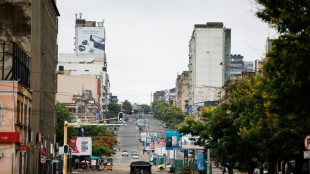 From transit to consumption: drug use surges in Mozambique

 Chicago teams, Guardians and Padres all book MLB playoff berths

 Bijan Robinson destroys Packers in 35-14 win for Falcons

 Harimoto hails new era as Japan dethrone table tennis kings China

 India rape cases turn focus back onto women's safety

 Rebellious Afghan taxi drivers defy ban on music

 Brazil candidates mount digital armies for fierce online campaign

 Nepal PM says floods 'a warning to the world' about climate change

 Trump hosts Xi for state dinner as pomp masks tensions
 Scheffler and Burns give US 3-2 Presidents Cup lead

 Hollywood stars among 100 arrested in NY anti-Netanyahu protest

 Klopp denied on Germany debut as Portugal win in Nations League

 Rich nations should foot climate bill, says Nepal minister

 Wellalage and Mendis star as Sri Lanka level England series in thriller

 Felix gives Portugal win over Wales as Ronaldo misfires

 Wellalage and Mendis star as Sri Lanka level England ODI series

 Guyana urges Venezuela at UN to respect ICJ's ruling on Essequibo region

 Argentina coach says Messi deserves to go out on own terms

 Xi sets red lines for Trump despite lavish White House welcome

 Cowboys, Ravens happy with footing for first Rio NFL clash

 Starbucks to close 250 more cafes in North America

A new exhibition on the Stonehenge stone circle in southern England sheds new light on its 4,500-year history, linking its declining influence to the Bronze Age population's discovery of metal working.
Opening Thursday at the British Museum in London, the exhibition called "The World of Stonehenge" traces the development of the UNESCO-protected site -- two concentric circles of huge stone blocks and lintels.
According to Celtic legends of the Middle Ages, the circle was magically created by the mythical magician Merlin.
Construction at the site was started during the Neolithic era by hunter-gatherers without metal tools and continued into the Bronze Age as metal working became widely established.
European metal workers arrived during the early Bronze Age, gradually superseding the local Neolithic population.
"Within a couple of hundred years, those people from Europe replaced the previous population by almost 95 percent," Neil Wilkin, the exhibition's curator, said.
As their culture and beliefs became dominant, Stonehenge lost its original purpose and became used as a cemetery, he added.
The exhibition shows numerous tombs from the time, as well as objects such as large gold necklaces made in France around 2300 BC.
The Nebra Sky Disc, the world's oldest surviving map of the stars, smelted in gold and bronze in 1600 BC in present-day Germany, is also featured.
Altogether there are more than 430 objects from the United Kingdom, Ireland, France, Germany, Denmark and Switzerland at the exhibition, which runs to July 17.
The British Museum also displays 14 wooden poles that were preserved for millennia under the sand of a beach in Norfolk, eastern England, until their discovery in 1998.
These are the remains of a wooden circle called Seahenge, on loan to the museum for the first time.
The 4,000-year-old circle once featured 54 oak piles arranged in a circle 6.6 metres in diameter, with a huge upturned tree in the centre, its roots facing skywards.
This circle would have been used for rituals in a similar way to Stonehenge, but was built five centuries later (2049 BC), using metal axes typical of the Bronze Age, said Wilkin, as the tradition of building such circles dwindled away.
"Seahenge is one of the last monuments of its type built in Britain. It's the very end of a long tradition that spans 1,000 years," he noted.
L.Dubois--BTB