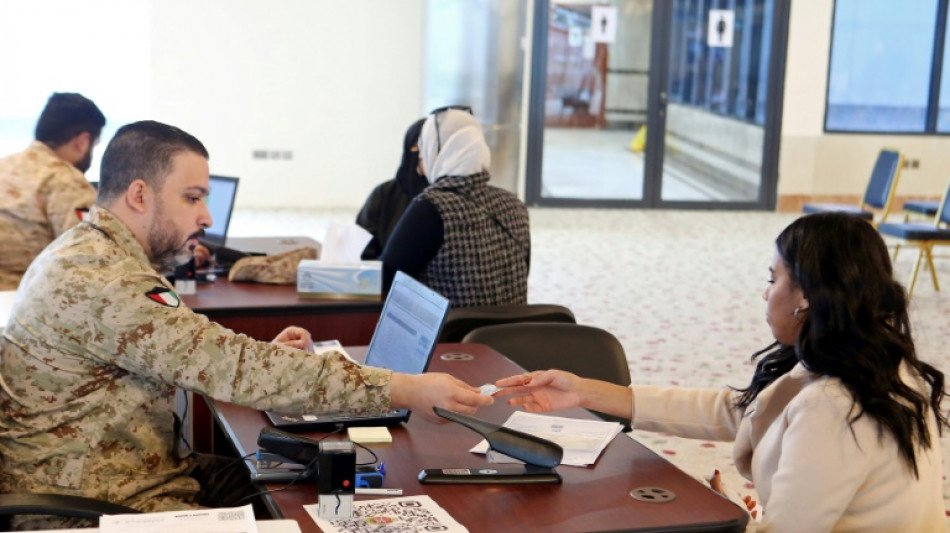
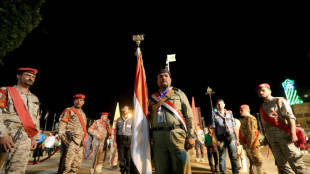
Kuwait army allows women in combat roles, but without guns / Photo: ©

 Assefa seeks 'better than my best' at Berlin marathon
 US court refuses to overturn Pentagon ban on Anthropic

 Verstappen and Norris blame slow cars as Mercedes tops qualifying

 Crowds cheer pope in Paris after AI 'paradise of machines' warning

 Teen swimmer makes Games history as Thai, Chinese sprinters win gold
 Man City found guilty of 114 Premier League charges - reports

 Concerns over 'missing' UK explorer Ranulph Fiennes

 Suspected Paris killer of Argentine rugby star begs forgiveness
 Oil prices fall on cautious hopes for US-Iran progress

 Noskova, Muchova take Czech Republic into BJK Cup final
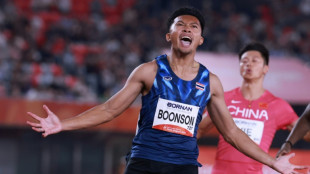 Thai sprinter Puripol breaks own Asian Games record to win 100m gold
 Russell takes pole for Azerbaijan GP, Antonelli crashes out
 Williams boss hails Chadwick as F1 inspiration for women
 World No.1 Sinner delays return with China Open withdrawal

 South Lebanon children return to school destroyed by Israel strike

 Jewish group urges Berlin far-left vote winners to tackle antisemitism
 European stock markets climb as oil prices drop

 Trump accuser E. Jean Carroll finally has her damages

 Germany's Havertz, Musiala ruled out of Greece match with injury

 Ireland's Gaza stance spills from Eurovision into football
 Welcome aboard the Costa Serena, the Asian Games floating hotel

 Asian markets mixed after recent oil surge
 Cash for nature protection: hotelier's offer to Principe islanders

 US miner KoBold bets on AI to gain edge in DR Congo mineral hunt

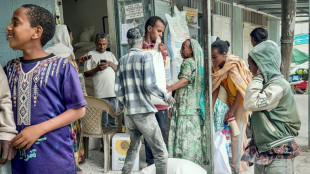 Internet disrupted in Ethiopia as conflict rages
Kuwaiti women are angry after the military, having allowed female soldiers in combat roles, decided they need the permission of a male guardian and banned them from carrying weapons.
Activists have decried the policy as "one step forward, two steps back" after the defence ministry also decided that women in the armed forces, unlike civilians, must wear head coverings.
The moves have sparked an online backlash in Kuwait, usually regarded as one of the most open societies in the Gulf.
"I don't know why there are these restrictions to join the army," Ghadeer al-Khashti, a sports teacher and member of Kuwait Football Association's women committee, told AFP.
"We have all kinds of women working in all fields, including the police force."
She said her mother had helped the resistance when Iraqi dictator Saddam Hussein in 1990 invaded Kuwait and occupied it for seven months before being pushed out by a US-led international coalition.
"My mum during the Iraqi invasion used to hide weapons under her abaya and transport them to members of Kuwait's resistance, and my father encouraged it," said Khashti.
"I don't understand on what basis they see women as weak."
The ministry decided in October to allow women in combat roles but then imposed the restrictions after the defence minister was questioned by conservative lawmaker Hamdan al-Azmi.
Azmi, emboldened by an Islamic religious edict, or fatwa, had argued that having women in combat roles "does not fit with a woman's nature".
- 'Women martyrs' -
Lulwa Saleh al-Mulla, head of the Kuwaiti Women's Cultural and Social Society, said the ministry's restrictions are discriminatory and unconstitutional and vowed legal action by the organisation.
"We have women martyrs who defended their country of their own volition," she told AFP. "No one ordered them to do that but the love for their country.
"We are a Muslim country, that is true, but we demand the laws not be subject to fatwas. Personal freedom is guaranteed in the constitution, on which the country's laws are based."
Kuwaiti women earned the right to vote in 2005 and have been active both in cabinet and parliament, though they are poorly represented in both.
Unlike most Gulf countries, Kuwait is known to have an active political scene, with MPs regularly challenging the authorities.
Earlier this month, dozens of Kuwaiti women staged a protest against the suspension of a women's yoga retreat deemed "indecent" by conservatives.
One of them was Azmi who, in Twitter posts, denounced the retreat as "dangerous" and "alien to our conservative society".
Women protesters carried placards denouncing the "exploitation of women's issues" in politics, as well as the "regime of fatwas" and "guardianship of women".
The debate about the army's new rules for women has taken an irrational turn, said Ibtihal al-Khatib, an English-language professor at Kuwait University.
"The army needs to integrate both women and men without discrimination," the feminist academic told AFP.
"Danger does not differentiate between men and women, and neither does death during battle."
O.Krause--BTB