
Why crypto creators want to stay anonymous / Photo: ©

 Spotting AI writing: how reliable are the detectors?
 French youth await pope after AI 'paradise of machines' warning
 Man City found guilty of Premier League charges, set to appeal: reports

 Embolo follows Xhaka out of Swiss squad over fake Covid documents
 Trump, Xi inspect founding documents of US democracy to close summit

 'Bottle Claus': Kipchoge's 'hero' helping runners chase Berlin marathon glory

 Olympic medallist Samba-Mayela handed provisional doping ban

 First US trial against TikTok to open Monday
 Palmer misses 'too many' England games, says Tuchel

 UN refugees chief warns conditions in W.Sahara 'deteriorating'
 Antonelli 'mad' about crash in Azerbaijan qualifying
 'Perfect lap' gives Russell pole for Azerbaijan GP as Antonelli crashes out
 UN Security Council condemns Houthi attacks on Saudi Arabia
 China swimmer makes Asian Games history as Thai wins 100m sprint

 Top French literary prize drops best-selling novel over AI claims
 US 'must choose' whether to end war: Iran president

 Pope warns against losing humanity in AI-driven 'paradise of machines'
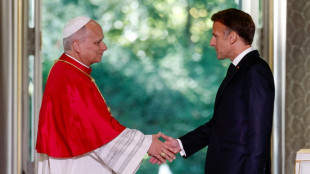 Pope warns against losing humanity in 'paradise of machines'

 From FBI warning to literary acclaim: the Russian journalist who took on Putin

 China swimmer in Asian Games first as North Korea lifters reign
 French literary prize removes novel from longlist after AI claims
 China's Zhang wins record seventh Asian Games swimming gold
 Verstappen edges Russell in final practice in Azerbaijan

 English, Spanish, Italian, German football leagues call for FIFA reform

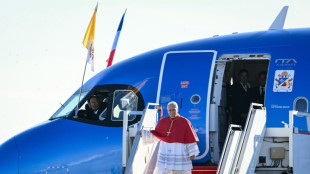 Pope arrives in France on first official visit in 18 years

The two lifelong friends from Florida never sought the limelight, but then they built a multi-million-dollar empire selling digital art and people wanted to know who they were.
Under the pseudonyms "Gargamel" and "Gordon Goner", they created the "Bored Ape Yacht Club", a collection of 10,000 cartoons of apes with various hairstyles and outfits.
They sell these images as digital tokens (NFTs), and it is now hard to get one for less than $280,000, thanks partly to celebrity endorsements from the likes of Paris Hilton to Serena Williams.
US news outlet BuzzFeed did some sleuthing earlier this month and uncovered their true identities -- sparking an outpouring of anger among fans on social media.
"Doxing is wack, putting people at risk," wrote one Twitter user, employing internet slang for identifying someone against their will.
The story has refocused attention on anonymity in the world of cryptocurrencies.
While the creators of the "Bored Apes" may like to hide in the crypto world, they are owners of a business called Yuga Labs, so they have to follow all the usual rules of company filings, including providing named beneficiaries.
"Using a pseudonym does not make you anonymous," says Alexander Stachtenko, a cryptocurrency expert for the firm KPMG.
- Risk of robbery -
It is unclear why the Bored Apes founders wanted to stay anonymous -- they had given several interviews under their pseudonyms.
Critics say anyone making money from NFTs would be wise to seek anonymity as what they are selling is worthless.
Fans though revel in being part of a community where NFT ownership is often a gateway to games and other perks.
Either way, anyone making serious wealth in this field has obvious reasons to stay under the radar.
"I don't need the public in crypto to know who I am, what I look like, my origins," says a creator who goes by the name "Owl of Moistness".
"I don't want to run the risk of having people rob me, or harm my family."
He co-founded Yield Guild Games, a startup focused on NFT video games in the Philippines, where the NFT craze has taken hold across the population.
He points out that the technology that underpins cryptocurrencies and NFTs -- the blockchain -- is a ledger where anyone can trace transactions.
So linking his crypto and real-world identities would allow anyone to find out his wealth.
But the bigger a project gets, the more complicated it is to remain unknown.
"It becomes more difficult if you're going to expand your team," says Soona Amhaz of Volt Capital, a cryptocurrency-focused fund.
- 'The fairest way' -
One of the favoured ways of remaining anonymous in the crypto world is to form a DAO (decentralised autonomous organisation).
DAOs allow people to collaborate and act as a company might, essentially acting like shareholders, but without formal legal standing or named owners.
Anyone extracting profit would still need to pay tax, but linking real-world individuals to these entities is a much trickier task than, say, searching public records to reveal the Bored Apes founders.
This model has served anonymous entrepreneurs well, from "Zeus", the creator of the Olympus cryptocurrency, to "Code Monkey" who set up the Port Finance cryptocurrency.
However, plenty of people use the expectation of anonymity for nefarious purposes.
DAOs and other decentralised entities are particularly vulnerable to fraud, according to analysis firm Chainalysis.
AnubisDAO was one such entity, created by pseudonymous programmers last October with little more than a Twitter account and a logo.
It vanished less than a day after it launched, taking almost $60 million of investors' money, according to Chainalysis.
And it seems the tide is turning against anonymity in the crypto world.
Most of the larger cryptocurrency exchanges now require identity checks to combat this kind of fraud.
But Soona Amhaz believes there are still positives to the DAO idea, arguing that they are policed by the blockchain.
Anyone can trace the transactions of a particular DAO and find out if they are legitimate or suspicious.
There is also another major advantage, she says.
"If you are pseudonymous, it does't matter if you didn’t go to the right school," she says.
"It's just your work that’s being evaluated and your reputation. And that truly is one of the fairest ways to evaluate someone."
S.Keller--BTB