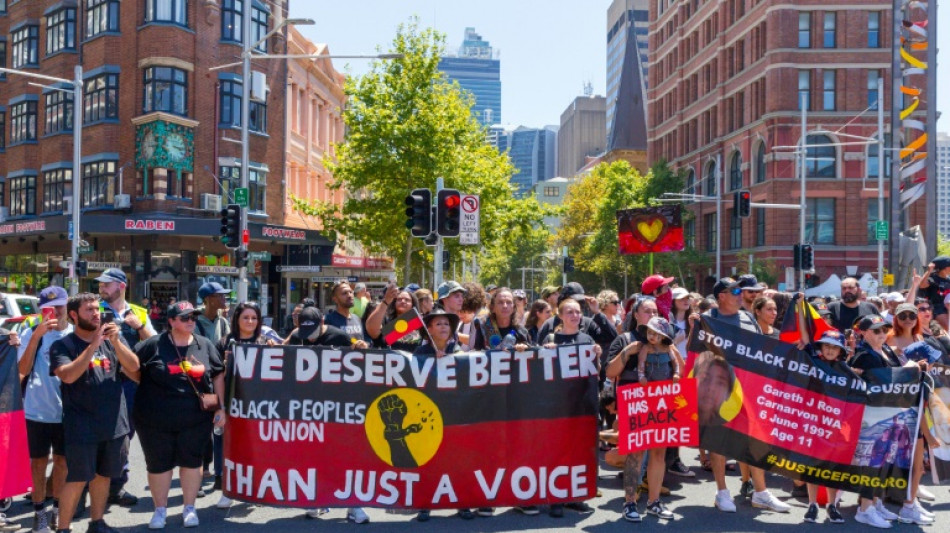
'Invasion Day' rallies mark divisive national holiday in Australia / Photo: © AFP

 Ukraine takes Russia fight to 'scorching sands' of Sahel
 Chinese AI tool pulled to prevent 'misuse' after South Korea hacks
 Asian stocks mostly up as traders weigh AI, oil dips after surge
 Walking through flames: orangutans rescued in Indonesia fires
 LeBron shines in pre-season debut for re-tooled 76ers
 Okinawa resolution calls for revision of US forces pact after murder

 Verdict expected Friday in Mexico trial over murders of Australia, US surfers

 New York mayor says asking Trump to withdraw ICE after shooting
 Walking through flames: orangutan rescued in Indonesia fires
 James shines in pre-season debut for re-tooled 76ers
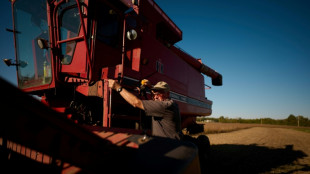 Fuel, fertilizer costs strain US farmers' support for Republicans in midterms
 Trump's 'super intelligence' rebrand to sell AI faces uphill battle
 Fiji demands US provide evidence Chinese official paid bribes for Beijing
 More than just football: How scandal-tainted City led Manchester's rebirth

 Record Eden Park streak creates tension for All Blacks
 EU trade chief seeks 'tangible outcomes' in China talks
 Man City face Anfield cauldron after guilty Premier League verdicts

 CNN, MS Now, Politico urge judge to extend White House access
 Trump administration to launch new vaccine research center

 Russian strikes kill 30 in Ukraine frontline city, talks set in US

 US military to livestream firing squad execution of Fort Hood shooter
 Aces star Wilson wins record-extending fifth WNBA MVP
 Undefeated 49ers seek Seahawks revenge
 Madrid mourns evicted retiree, 'icon' of Spain housing protests

 OpenAI revenue gap report rattles AI stocks
Thousands protested Australia's increasingly divisive national day Thursday as the public debates whether the country's Indigenous population should be recognised in the constitution.
Australia Day on January 26 has traditionally celebrated the arrival of European settlers at Sydney Harbour in 1788, and has typically been observed with beach parties and backyard barbecues.
But in recent years, it has also become a day of national protest, with some Australians calling it "Invasion Day" and saying it was the start of a cultural genocide by European colonisers.
Indigenous activist Paul Silva, speaking to a crowd of thousands at an Invasion Day rally in central Sydney, said the national holiday should be abolished.
"They invaded our lands, killing our extended families, turning our warriors into slaves," he said, as the crowd shouted "shame" in response.
"How can this day be celebrated?"
Indigenous poet Lizzie Jarrett said Sydney was "ground zero for a genocide of First Nations people".
"You think we're angry? Wouldn't you be angry?" she asked the crowd.
Ethan Lyons, 17, said he wanted to acknowledge the "beautiful land" of Indigenous Australians.
"We also have to acknowledge the almost 250 years of ongoing theft and destruction," he told the crowd.
Similar rallies took place in major cities across Australia.
At a lively protest in Hobart, the capital of the island state of Tasmania, demonstrators carried flags declaring "Stolen Land" and "We are still here".
The demonstrations have an added significance this year as Australia's centre-left government pushes to change the country's constitution to better recognise Indigenous Australians.
- 'Most important question' -
There is currently no mention of Indigenous Australians in the constitution, adopted in 1901.
They were banned from voting in some states and territories until the 1960s.
The public will vote on the change -- called the Indigenous Voice to Parliament -- in a binding referendum later this year.
It aims to give Indigenous Australians a greater say in national policy-making as they battle poorer health, lower incomes and higher barriers to education.
The Voice proposal has been politically divisive, with several conservative figures deriding it as unneeded and a waste of time.
But Indigenous lawyer Noel Pearson said the Voice was "the most important question" currently facing Australia.
"The question that will be put is: do we recognise Indigenous people in the constitution?" he told national broadcaster ABC.
"And if we say no to that, then I can't see how the future will be anything other than protest."
Indigenous Australians settled in the country an estimated 65,000 years ago but have suffered widespread discrimination and oppression since the arrival of the British more than two centuries ago.
Australian historian Lyndall Ryan has estimated that more than 10,000 Indigenous people were killed in 400 separate massacres since the British arrived.
The inequalities facing the Indigenous population remain stark -- they have life expectancies years shorter than other Australians and are far more likely to die in police custody.
N.Fournier--BTB