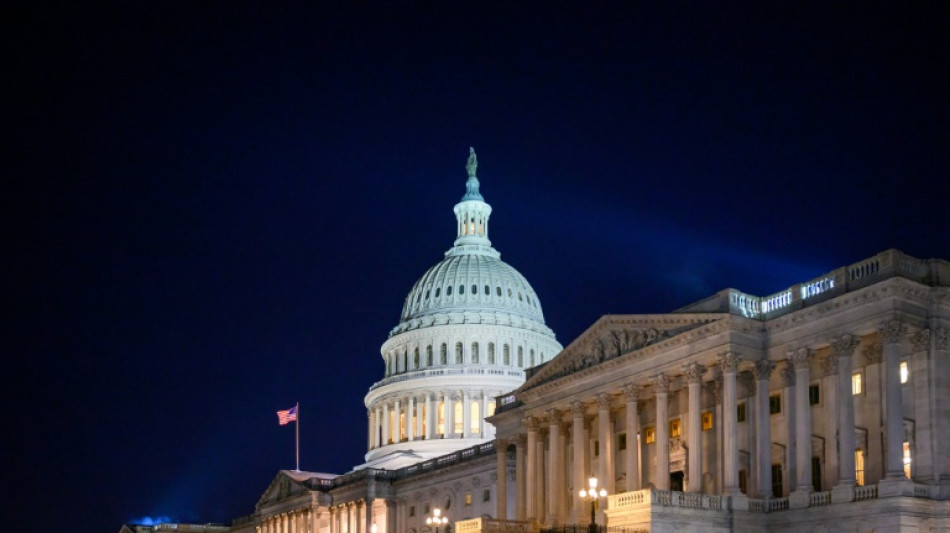
What does hitting the debt ceiling mean for the US? / Photo: © AFP/File

 'I completely trust the club,' says Man City boss Maresca

 '10 out of 10' Quintana reminisces over dream Vuelta win

 Maddinson given shock recall but fails to score

 Navi Pillay, South African rights champion, wins Nobel Peace Prize

 Saudi Arabia says three killed at airport as Yemen war expands

 Everton's US owners mull sale of club two years after takeover

 Ukraine takes Russia fight to 'scorching sands' of Sahel
 Chinese AI tool pulled to prevent 'misuse' after South Korea hacks
 Asian stocks mostly up as traders weigh AI, oil dips after surge

 Walking through flames: orangutans rescued in Indonesia fires

 LeBron shines in pre-season debut for re-tooled 76ers

 Okinawa resolution calls for revision of US forces pact after murder

 Verdict expected Friday in Mexico trial over murders of Australia, US surfers

 New York mayor says asking Trump to withdraw ICE after shooting

 Walking through flames: orangutan rescued in Indonesia fires

 James shines in pre-season debut for re-tooled 76ers

 Fuel, fertilizer costs strain US farmers' support for Republicans in midterms

 Trump's 'super intelligence' rebrand to sell AI faces uphill battle

 Fiji demands US provide evidence Chinese official paid bribes for Beijing

 More than just football: How scandal-tainted City led Manchester's rebirth

 Record Eden Park streak creates tension for All Blacks

 EU trade chief seeks 'tangible outcomes' in China talks

 Man City face Anfield cauldron after guilty Premier League verdicts

 CNN, MS Now, Politico urge judge to extend White House access

 Trump administration to launch new vaccine research center

The United States hit its borrowing cap of $31.4 trillion in January, prompting the start of measures to avoid a default as Democrats and Republicans head towards another clash on raising or suspending the country's debt limit.
The policy tussle comes to the fore later Wednesday when President Joe Biden and Republican Speaker of the House Kevin McCarthy meet at the White House. McCarthy is demanding steep budget cuts in exchange for raising the debt ceiling.
Amid the high-stakes brinksmanship, Treasury Secretary Janet Yellen said her department would turn to resources from two funds for retirees as part of the "extraordinary measures" it started using to give the government some room to continue to function.
Here is what you need to know about the situation:
- Is the US in default? -
The short answer is no.
The debt limit is a legally established maximum on how much the United States can borrow to pay the government's bills, for everything from social welfare programs to salaries for the military.
Once the ceiling is reached, the Treasury begins to draw down cash balances and use accounting techniques that allow the government to continue operations, said Mickey Levy of Berenberg Capital Markets.
The threat of a default surfaces once these temporary measures are exhausted, which the Treasury said is likely around mid-year.
"The period of time that extraordinary measures may last is subject to considerable uncertainty," warned Yellen in a letter on January 19.
- How serious could this be? -
Failing to raise the debt limit once temporary measures are exhausted would have dire economic consequences, according to the Treasury, as it would lead the government to an unprecedented default.
There could be a shutdown of some government functions, and even approaching a breach of the limit could roil markets.
For now markets have remained calm, with Edward Moya of trading platform OANDA noting the process regularly "goes down to the wire."
A default would hurt the United States' credibility and global standing, and investors could ask for higher interest rates to lend money to the government, adding to authorities' payments.
Not meeting the government's obligations "would be catastrophic for America's working families and lead to higher costs," warned Senate Majority Leader Chuck Schumer last month.
- Why is there gridlock? -
Congressional lawmakers have found themselves gridlocked over raising the debt limit, an issue that has increasingly sparked contentious debate in recent years.
Republicans, who control the House of Representatives, are calling for spending cuts in exchange for support in raising the debt ceiling.
But President Joe Biden has said he would not negotiate with Republicans who threaten to use the debt problem for leverage, saying it should not be "political football."
Speaker McCarthy, for his part, called it "a sign of arrogance if you say you wouldn't even discuss it."
The situation points to a heightened chance of an extended standoff. The government has previously come close to a default over gridlocks on funding.
- Is a default likely? -
"The probability of government default on its debt is close to nil," Levy said. But the battle over raising the limit could become protracted.
Since 1960, Congress has acted 78 times to permanently raise, temporarily extend, or revise the definition of the debt limit. This has happened under both Republican and Democratic presidents.
Even if political maneuvering brings a partial government shutdown, "various budgetary work-arounds will allow the government to continue servicing its debt, conducting basic services including defense, and providing funding for Social Security and entitlement programs," Levy said.
- What is the Treasury doing? -
The Treasury said it would be unable to fully invest a portion of the Civil Service Retirement and Disability Fund, with a "debt issuance suspension period" to last until early June.
Treasury will also halt additional investments of amounts credited to the Postal Service Retiree Health Benefits Fund, Yellen added.
But she stressed "federal retirees and employees will be unaffected by these actions" and the funds will be "made whole" once the impasse is over.
There have been calls to end the legal limit in recent years, with analysts calling the brinksmanship unnecessary.
N.Fournier--BTB