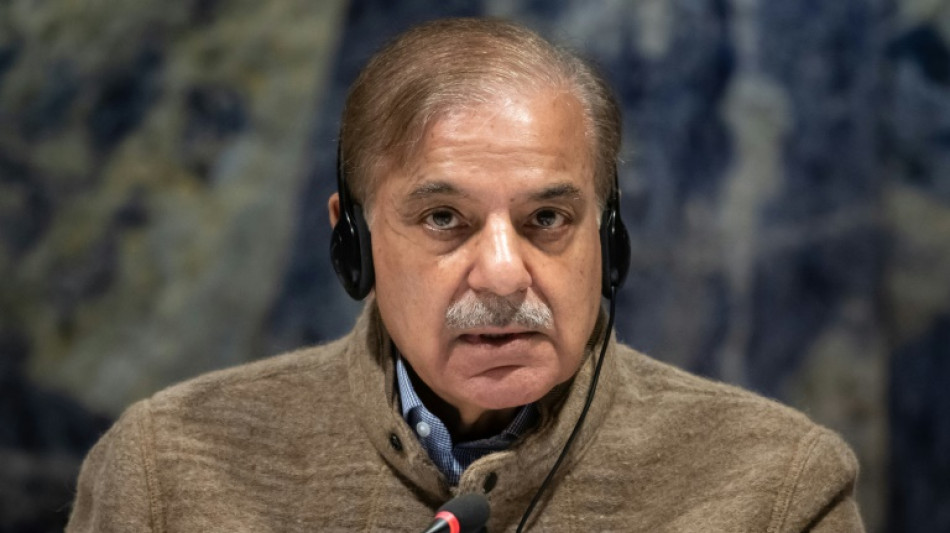
Pakistan 'to agree' to tough IMF conditions as crisis worsens / Photo: © AFP

 Djokovic crashes out of Shanghai Masters in his first match

 EU says Turkey's crackdown on rights hampers membership bid

 Two Renoir paintings stolen in France recovered: mayor
 German leader outraged at Schroeder birthday visit to Putin

 Stocks up, oil retreats as Trump rules out pre-vote Iran attack

 South African judge Navi Pillay wins Nobel Peace Prize

 'I completely trust the club,' says Man City boss Maresca
 '10 out of 10' Quintana reminisces over dream Vuelta win

 Maddinson given shock recall but fails to score

 Navi Pillay, South African rights champion, wins Nobel Peace Prize

 Saudi Arabia says three killed at airport as Yemen war expands

 Everton's US owners mull sale of club two years after takeover

 Ukraine takes Russia fight to 'scorching sands' of Sahel
 Chinese AI tool pulled to prevent 'misuse' after South Korea hacks

 Asian stocks mostly up as traders weigh AI, oil dips after surge

 Walking through flames: orangutans rescued in Indonesia fires

 LeBron shines in pre-season debut for re-tooled 76ers
 Okinawa resolution calls for revision of US forces pact after murder

 Verdict expected Friday in Mexico trial over murders of Australia, US surfers
 New York mayor says asking Trump to withdraw ICE after shooting

 Walking through flames: orangutan rescued in Indonesia fires

 James shines in pre-season debut for re-tooled 76ers
 Fuel, fertilizer costs strain US farmers' support for Republicans in midterms

 Trump's 'super intelligence' rebrand to sell AI faces uphill battle

 Fiji demands US provide evidence Chinese official paid bribes for Beijing
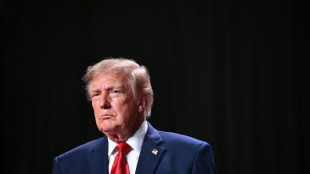
Pakistan's Prime Minister Shehbaz Sharif said Friday the government would have to agree to IMF bailout conditions that are "beyond imagination", as it battles a spiralling economic crisis.
An International Monetary Fund (IMF) delegation landed in Pakistan on Tuesday for last-ditch talks to revive vital financial aid that has stalled for months.
The government has held out against tax rises and subsidy slashing demanded by the IMF, fearful of backlash ahead of elections due in October.
"I will not go into the details but will only say that our economic challenge is unimaginable. The conditions we will have to agree to with the IMF are beyond imagination. But we will have to agree with the conditions," Sharif said in televised comments.
Pakistan's economy is in dire straits, stricken by a balance of payments crisis as it attempts to service high levels of external debt, amid political chaos and deteriorating security.
The country's central bank said Thursday its foreign exchange reserves had dropped again to $3.1 billion, which analysts said was enough for less than three weeks of imports.
The world's fifth-biggest population is no longer issuing letters of credit, except for essential food and medicines, causing a backlog of thousands of shipping containers at Karachi port stuffed with stock the country can no longer afford.
Data on Wednesday showed year-on-year inflation had risen to a 48-year high, leaving Pakistanis struggling to afford basic food items.
- Bowing to pressure -
With the prospect of national bankruptcy looming, Islamabad in recent weeks began to bow to pressure prompting the IMF's last-minute visit.
The government loosened controls on the rupee to rein in a rampant black market in US dollars, a step that caused the currency to plunge to a record low, and hiked petrol prices by 16 percent.
But the IMF wants further hikes to artificially cheap petrol, electricity and gas prices, designed to help low-income families, and the withdrawal of tax exemptions for the export sector and a boost to the pitifully low tax base.
"Accepting IMF conditions will definitely increase prices, but Pakistan has no other choice," analyst Abid Hasan told AFP. "Otherwise, there is a fear of a situation like Sri Lanka and Lebanon."
Rejecting conditions and pushing Pakistan to the brink would have "political consequences" for the ruling parties, but so will agreeing to IMF measures raising the cost of living, he said.
Pakistan had sketched out a $6.5 billion dollar loan package with the global lender, which has so far paid out roughly $4 billion.
-Political chaos -
The next instalment on the negotiating table is unlikely to induce an economic turnaround on its own.
However, friendly nations Islamabad usually approaches for help have indicated they may open their books once the IMF is on board.
The tumbling economy mirrors Pakistan's political chaos, with former prime minister Imran Khan heaping pressure on the ruling coalition in his bid for early elections while his popularity remains high.
Khan, who was ousted last year in a no-confidence motion, negotiated a multi-billion-dollar loan package from the IMF in 2019.
But he reneged on promises to cut subsidies and market interventions that had cushioned the cost-of-living crisis, causing the programme to stall.
It is a common pattern in Pakistan, where most people live in rural poverty, with more than two dozen IMF deals brokered and then broken over the decades.
R.Adler--BTB