Scrounging for food in 'hunger hotspot' Colombia / Photo: ©

 UK fears grow over AI giant Palantir's health service deal

 Empty nets in Latin America as fish flee El Nino

 Meidroth blasts White Sox through, Phillies survive in MLB playoffs

 'Catastrophic': Swiss glaciers lose fifth of mass in five years

 California roller coaster shut after brain damage claims

 Panama ministers push for reopening of huge open-pit copper mine

 Bohm's blast keeps Phillies alive in MLB playoffs

 US judge accepts Paramount's Warner Bros. buyout settlement

 Global stocks mixed as markets weigh higher oil prices, bond yields
 Marsh hails improvements after Australia win final one-day international

 Hegseth says US cut number of generals, admirals by 20%

 Kanye West's Russian concerts have been cancelled, organisers say

 First Hollywood, now Fat Bear Week: nepobaby wins Alaska contest

 Barcelona lay down marker in Women's Champions League, Arsenal slip up
 US pushes against overproduction with eye on China at G20 meeting

 Swiss FA withdraws support for FIFA chief Infantino
 Man City's meteoric rise clouded by financial scandal

 Polish activists open first abortion pill locker in Warsaw

 NHL Avalanche ink Bednar to four-year coaching deal

 Polish activists opens first abortion pill locker in Warsaw

 Turkey says news site closed for 'LGBTQ propaganda'
 Oil companies close in on Venezuela despite hurdles

 Turkey freezes ex-minister's assets as fund scandal grows
 Guardiola backs Man City after bombshell guilty verdicts
 G20 trade ministers open talks under strain of Trump tariffs

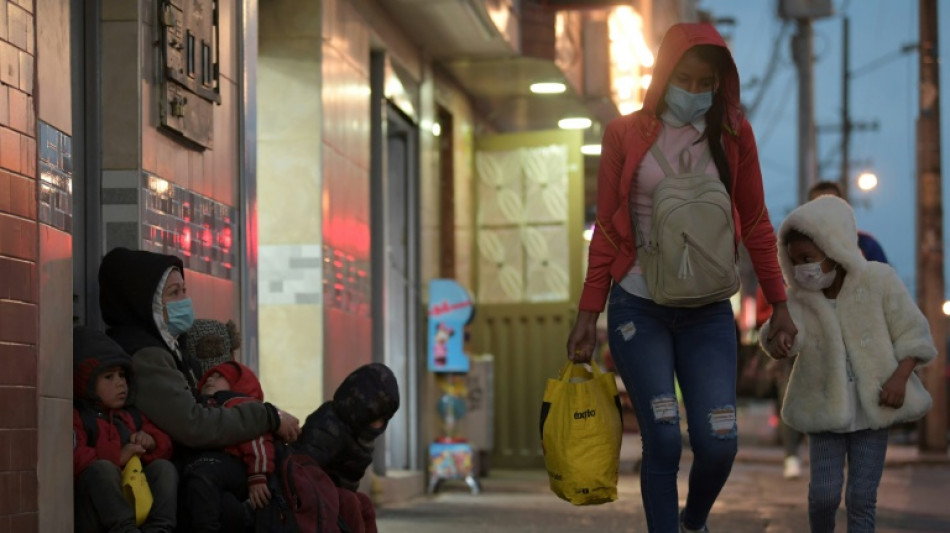
While the Colombian government fumes over being listed as a "hunger hotspot" by UN agencies, Heidy Garzon -- a single mother of nine -- worries where her family's next meal will come from.
"We don't know what we're going to eat tonight," Garzon told AFP in a shantytown neighborhood of Ciudad Bolivar in the south of Bogota, two toddlers in diapers clinging to her legs.
Garzon, 38, and her kids live in a ramshackle shanty with six beds to a single clay-floored room in the poorest, most violent part of Ciudad Bolivar.
Most days, they are lucky to eat two meals a day.
On the day AFP visited, the family of 10 breakfasted on a few eggs, some chocolate and corn patties called arepas. They also shared a mango given to them by a shopkeeper.
"Hunger is terrible," Garzon said, adding it is "terrible to feel hungry and not be able to do anything" about it.
Last month, a report by the UN's Food and Agriculture Organization and the World Food Programme stated that "7.3 million Colombians are food insecure and in need of food assistance in 2022."
The list of 20 "hunger hotspots" also included Afghanistan, Ethiopia, Haiti, Somalia, South Sudan and Yemen.
In Colombia, the UN agencies blamed "a combination of political instability, economic challenges and the ongoing impact of the regional migratory crisis amplified by internal displacement."
Colombia took umbrage at its inclusion on the list, for which it said there was a lack of "factual support, methodological definition and clarity." The government in Bogota demanded that the "hunger hotspot" designation be removed.
- Begging, the last resort -
Garzon, who said she was not aware of the diplomatic debacle, claimed not to have received any government help since coronavirus handouts stopped a few months ago.
She lives off odd jobs as a cleaner of homes or at construction sites, earning about 20,000 pesos (five dollars ) a day, from which she has to subtract her transportation fees.
None of her children go to school. There is not enough money for that.
Oftentimes, begging is the family's only hope.
"Sometimes we are given something, sometimes not... so we return home hungry.
"It is hard to get up every day and say: 'Well, what are we going to eat today?' (...) Sometimes I feel powerless, not having anything and hearing the children saying they are hungry," said Garzon, fighting back tears.
According to the Colombian Association of Food Banks (ABACO), about 21 million of Colombia's 50 million inhabitants live in poverty, with a monthly income of less than 331,000 pesos (about $84).
This is not enough to buy even half a basic basket of food essentials.
Some 16 million people eat only two meals a day, and about five million -- including half a million children -- suffer chronic malnutrition.
- 'Whole country is affected' -
The government of President Ivan Duque points to social programs that benefited 10.3 million households during the peak of the pandemic, as well as plans to boost food production and basic incomes.
It insists it has "done everything (possible) to ensure that no one suffers from hunger in Colombia."
For Garzon and others, it is not enough.
Despite economic growth of more than 10 percent last year, the peso lost 16 percent of its value against the US dollar in 2021, and food inflation is biting hard.
In one year, the price of chicken and fruit increased by more than 25 percent, that of potatoes more than doubled and oil costs almost 50 percent more.
"The reality is that for many people today, eating three times a day is a luxury," said Daniel Saldarriaga Molina, who heads the Bogota food bank agency.
"The whole country is affected. It is not just a problem of areas that are remote, isolated or impacted by violence... It is close to us, in the big cities, here in Bogota," he said.
H.Seidel--BTB