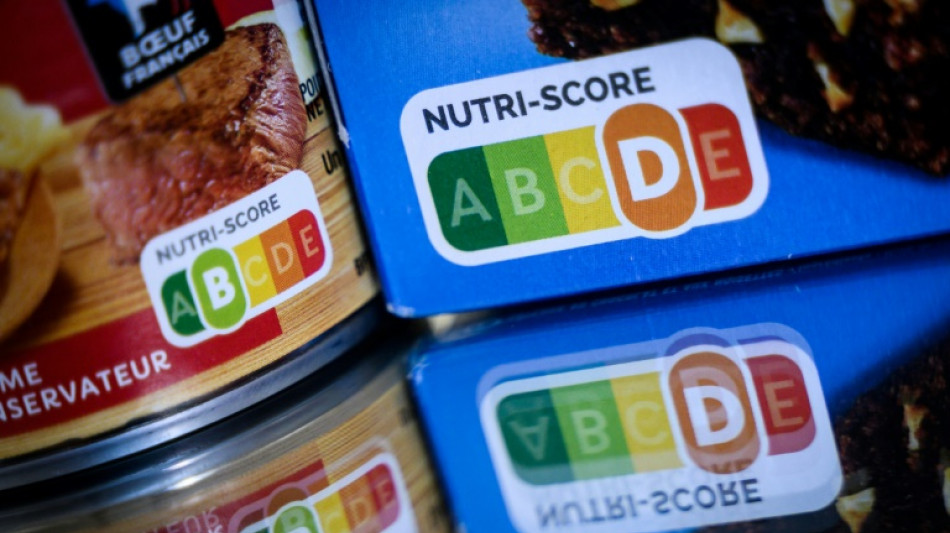
In EU, a food fight over nutrition labels / Photo: © AFP/File

 Three Mexicans convicted in murders of Australian, US surfers

 Powerful waves lash California coast as storm threatens more damage

 Trump hails Russia deal to release diesel as midterms loom

 Lyon blow chance to go top after loss at Lens

 Stocks rise as Trump says Russia to release diesel to world markets

 Wildfire smoke shuts schools in Amazon's biggest city

 Turkey jails 2 journalists pending trial for fund crisis 'misinformation'

 Major earthquake rocks Panama, triggers tsunami warning

 Indian jailed in France for leading sadist Nazi cult that tortured girls

 'Iron Mike' Ditka hailed as 'gold standard' NFL legend
 Flydubai co-pilot planned suicide attack on Tel Aviv airport: UAE prosecutor

 Mike Ditka: Chicago Bears icon as player and coach

 Outrage over plan to livestream US military firing squad execution
 US sanctions: a 'test of resilience' for ICC
 NFL legend Mike Ditka dead at 86
 Hurricane Isaias set to strike Gulf Coast late Friday
 Trump forms panel to probe US Fed governor Lisa Cook
 Clashes in Durban as fresh anti-migrant riots erupt in South Africa

 France students plan more protests, UN 'concerned' over violence
 De Zerbi calls on struggling Spurs to react in Man Utd clash
 US sanctions on ICC: a 'test of resilience'
 Outrage over US military plan to livestream firing squad execution

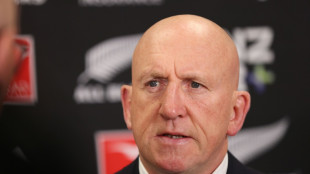 Argentina snap up defence guru Edwards ahead of World Cup

 BMW pulls car lease offer from German far-right politician

 Brazil election offers Jair Bolsonaro a shot at revenge
Europe is taking longer than planned to concoct an EU-wide food-labelling system after a colour-coded scheme created in France did not go down well in culinary rival Italy.
Fearing that cultural icons such as olive oil or Parmesan cheese would get bad grades, Italy successfully rallied other European Union nations to reject the French system.
The European Commission was supposed to come up by late 2022 with a label aimed at helping consumer make healthier food choices.
France's Nutri-Score system was initially seen as the front-runner to be used across the 27-nation EU. The front-of-pack nutrition label has already been adopted by Belgium, Germany, Luxembourg, the Netherlands and Spain.
Nutri-Score ranks food products on a green-to-red and A-to-E scale based on their nutritional value, from containing a good amount of protein or fibre to too much salt or saturated fat, but companies are not obligated to use the label.
Some 270 scientists signed a call in March 2021 urging the European Commission "not to yield to pressure groups" and back Nutri-Score, saying it was the only label that had undergone peer-reviews showing its "effectiveness and relevance to consumers and public health".
But the European Commission decided against Nutri-Score, with its deputy director-general of food sustainability, Claire Bury, saying in September that it would not put on the table something that "polarizes the debates".
- 'E' for cheese -
Italy, Cyprus, Greece, the Czech Republic, Romania and Hungary opposed the French system.
Italian Prime Minister Giorgia Meloni, who took office in October, had lambasted such food labels as "discriminatory and penalising" for the country's food industry.
"An intensive lobbying campaign against this tool by commercial interests has regrettably muddied the waters and turned a public health debate into a political one," said Emma Calvert, senior food policy officer at European consumers group BEUC.
While the European Commission may still use Nutri-Score for inspiration in devising a system, it is also looking at other labels.
Those include the green or black "Keyhole" system in Nordic countries and one backed by Italy, NutrInform Battery, which takes into account the potential portions of food consumed.
Italy has argued that Nutri-Score is not a good reference because it is based on 100 grams or 100 millilitres of food while certain products such as oil and cheese are consumed in smaller quantities.
Rome worries that labels would be harmful to products that are staples of its Mediterranean diet, including olive oil, cheese, prosciutto and pizza.
Italy's main agriculture association, Coldiretti, has said that Nutri-Score ends up "excluding healthy and natural foods that have been at the table for centuries in favour of artificial products".
In France, the makers of the blue cheese Bleu d'Auvergne refuse to put the label their product, which would get the worst possible grade, a red E, for its salt and fat content.
"How do you explain that Bleu d'Auvergne is classified as E when chips made in oil get an A," said Sebastien Ramade, president of the Auvergne cheese association.
But 875 brands representing 60 percent of the food market in France are using Nutri-Score, the system's founder, nutritionist Serge Hercberg told AFP.
"Some major brands still reject it, but more and more manufacturers are adopting it, some of whom had strongly resisted it in the past," Hercberg said.
"When we look at sales figures, we see that it works and it has had an effect on the reformulation and the improvement of the recipes for thousands of products," he added.
- Chile's strict label -
Time is running short for the commission to propose a label to EU states before the term of the current European Parliament expires next year.
"If the Commission fails to uphold its commitment to propose a mandatory EU-wide front-of-pack nutrition label it will be a major missed opportunity to help European consumers, especially vulnerable ones, to make the healthier choice in the supermarket," Calvert said.
Some members of the European Parliament say artificial foods should be targeted instead.
"The overweight issue among teenagers is not due to eating too much Camembert," said MEP Irene Tolleret.
Elsewhere in the world, Chile has had an even stricter system since 2016, with a black label that warns consumers about high saturated fats, sugar or salt.
Products in Chile that bear the label are barred from advertising on television.
"One of the consequences is that more than 20 percent of products have new formulas," with less salt or sugar, said Guido Girardi, a former senator behind the system who added that similar legislation is in the works in 32 countries.
O.Bulka--BTB