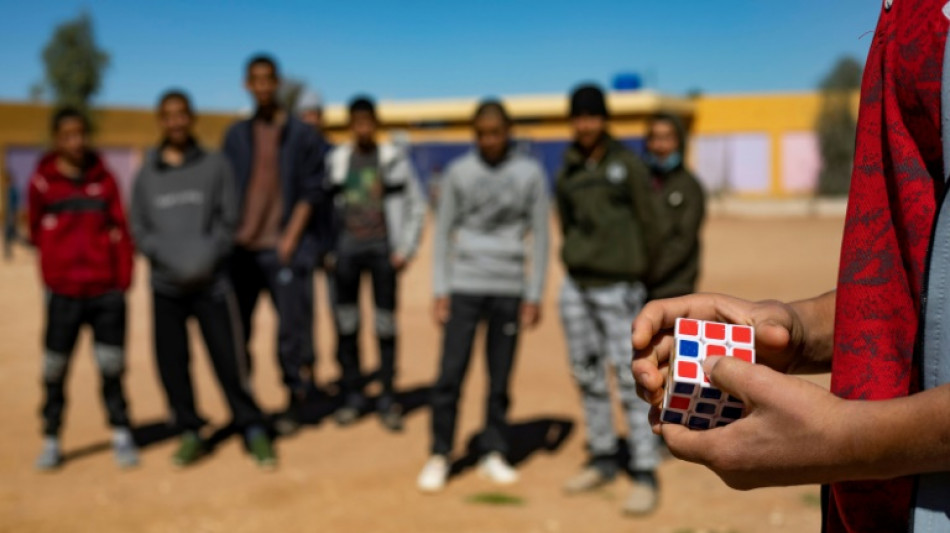
Syria centre seeks to rehabilitate IS-scarred foreign children / Photo: © AFP

 Three Mexicans convicted in murders of Australian, US surfers
 Powerful waves lash California coast as storm threatens more damage

 Trump hails Russia deal to release diesel as midterms loom
 Lyon blow chance to go top after loss at Lens
 Stocks rise as Trump says Russia to release diesel to world markets
 Wildfire smoke shuts schools in Amazon's biggest city
 Turkey jails 2 journalists pending trial for fund crisis 'misinformation'

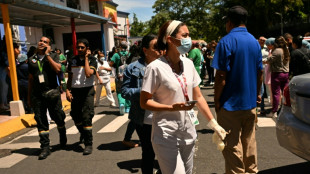
 Major earthquake rocks Panama, triggers tsunami warning

 Indian jailed in France for leading sadist Nazi cult that tortured girls
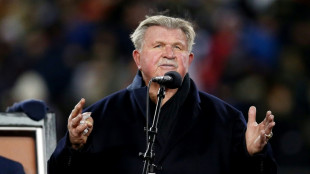 'Iron Mike' Ditka hailed as 'gold standard' NFL legend
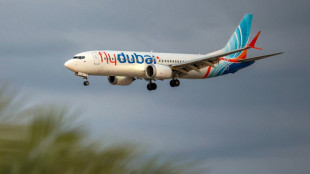 Flydubai co-pilot planned suicide attack on Tel Aviv airport: UAE prosecutor

 Mike Ditka: Chicago Bears icon as player and coach
 Outrage over plan to livestream US military firing squad execution
 US sanctions: a 'test of resilience' for ICC
 NFL legend Mike Ditka dead at 86
 Hurricane Isaias set to strike Gulf Coast late Friday
 Trump forms panel to probe US Fed governor Lisa Cook
 Clashes in Durban as fresh anti-migrant riots erupt in South Africa

 France students plan more protests, UN 'concerned' over violence
 De Zerbi calls on struggling Spurs to react in Man Utd clash
 US sanctions on ICC: a 'test of resilience'
 Outrage over US military plan to livestream firing squad execution

 Argentina snap up defence guru Edwards ahead of World Cup
 BMW pulls car lease offer from German far-right politician
 Brazil election offers Jair Bolsonaro a shot at revenge
Children of foreign jihadists play football on a dirt field at a centre in northeastern Syria that Kurdish authorities hope will help rehabilitate minors raised on Islamic State group ideology.
More than 50 boys aged 11-17, some with parents hailing from Britain, France, Germany or the United States, live at the heavily guarded Orkesh rehabilitation centre near the city of Qamishli, close to the Turkish border.
Opened six months ago, it is the first facility seeking to rehabilitate foreign boys in the Kurdish administered northeast, where prisons and camps are packed with thousands of IS group relatives from more than 60 countries.
Another centre opened its doors in 2017 to rehabilitate young former jihadists.
The success of the centres are crucial to "saving the region from the emergence of a new generation of extremists," said Khaled Remo, co-chair of the Kurdish administration's office of justice and reform affairs.
Some of the boys wearing tracksuits played table football in one of the rooms, while others kicked around a ball outside in the sun, talking to one another in broken Arabic.
Once the boys turn 18, they will need a new rehabilitation programme or for their home countries to take them back.
"We don't want the kids to stay permanently in these centres, but diplomatic efforts are slow, and many children need rehabilitation," Remo said.
Kurdish-led forces, supported by a US-led coalition, spearheaded the fight against IS in Syria, driving the group from its last redoubt in the country in 2019.
Tens of thousands of people, including relatives of suspected jihadists, have been detained ever since in the Kurdish-controlled Al-Hol and Roj camps, including around 10,000 foreigners in Al-Hol alone.
While girls are also in the camps, this rehabilitation centre focuses on boys because they would be who IS remnants -- now in hideouts in the desert -- would recruit to fight if they could, Remo said.
- Therapy sessions -
Kurdish authorities have repeatedly called on countries to repatriate their citizens, but foreign governments have allowed only a trickle to return home, fearing security threats and domestic political backlash.
The boys at the rehabilitation centre were transferred from Al-Hol and Roj, authorities said, as well as from the Ghwayran prison, where hundreds were killed after jihadists stormed it early last year.
Some with their heads shaved or wearing beanies attend classes in Arabic and English, learning mathematics, drawing and even music.
Inside one classroom, the boys fiddled around with crayons, one teenager drawing the sunset in shades of orange and pink.
Later that day, they were learning to count in English, repeating the numbers after their female teacher.
The facility also has dormitories, recreation areas and a dining hall, and the boys can play chess or watch documentary films and cartoons.
The centre's goal is to prepare the boys "to integrate into their communities in the future" and live better lives "in a normal context", said Aras Darwish, who heads the project.
"Our goal is to offer psychosocial and educational support," Darwish said of the centre, which provides individual and group therapy sessions.
The boys are also encouraged to draw in order to express their feelings and deal with memories, he said, pointing to a room decorated with drawings of trees, cars and houses.
Save the Children in December warned that around 7,000 children of suspected foreign jihadists were "trapped in desperate conditions and put at risk on a daily basis" in overcrowded detention camps in northeast Syria.
Al-Hol is notorious for violence, with killings and attacks even targeting children, guards and humanitarian workers.
- Slow process -
In early March, UN chief Antonio Guterres called for the swift repatriation of foreigners from Al-Hol.
"The worst camp that exists in today's world is Al-Hol... with enormous suffering for the people that have been stranded there for years," Guterres said.
He warned that letting this "untenable situation fester" will only fuel "more resentment and despair".
Reem al-Hassan, 28, a counsellor at the Orkesh centre, said the programme was working.
"We can see a big difference in the kids compared to when they first came," he said.
"At first, some of them refused to take part in classes with women teachers," she said, as jihadists had imposed a strict segregation of genders when they controlled territory in Syria and Iraq.
"But the situation is better now -- we see gradual, if slow, improvement."
A.Gasser--BTB