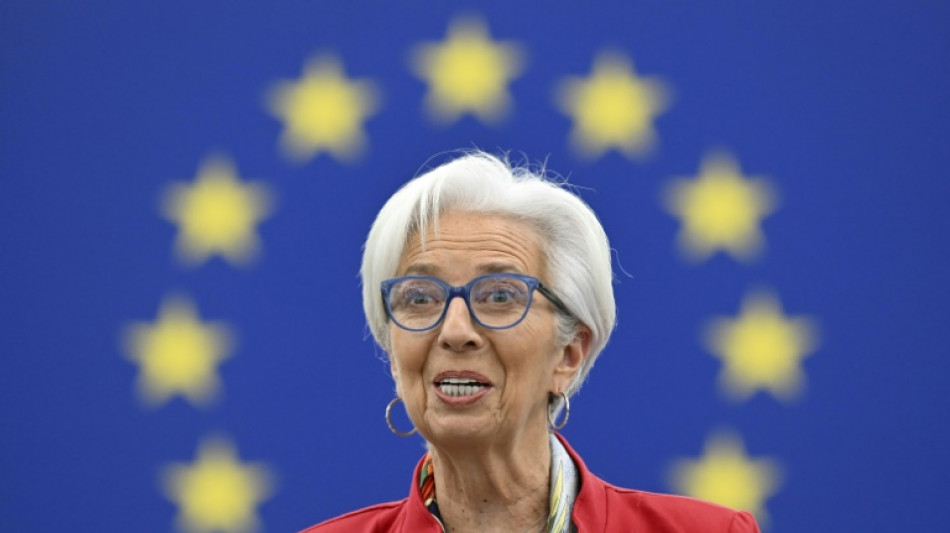
Bank jitters fuel uncertainty as ECB eyes next rate hike / Photo: © AFP

 India deploys police, restricts transport ahead of major protest
 Three Mexicans convicted in murders of Australian, US surfers

 Powerful waves lash California coast as storm threatens more damage

 Trump hails Russia deal to release diesel as midterms loom

 Lyon blow chance to go top after loss at Lens

 Stocks rise as Trump says Russia to release diesel to world markets

 Wildfire smoke shuts schools in Amazon's biggest city

 Turkey jails 2 journalists pending trial for fund crisis 'misinformation'

 Major earthquake rocks Panama, triggers tsunami warning

 Indian jailed in France for leading sadist Nazi cult that tortured girls

 'Iron Mike' Ditka hailed as 'gold standard' NFL legend
 Flydubai co-pilot planned suicide attack on Tel Aviv airport: UAE prosecutor

 Mike Ditka: Chicago Bears icon as player and coach

 Outrage over plan to livestream US military firing squad execution

 US sanctions: a 'test of resilience' for ICC

 NFL legend Mike Ditka dead at 86

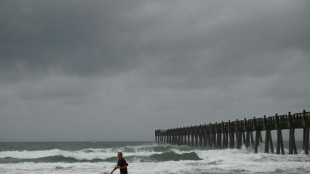 Hurricane Isaias set to strike Gulf Coast late Friday
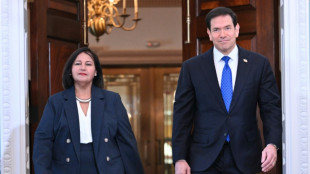
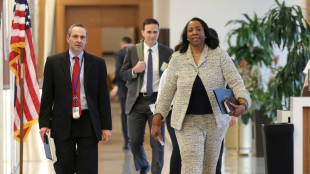 Trump forms panel to probe US Fed governor Lisa Cook
 Clashes in Durban as fresh anti-migrant riots erupt in South Africa

 France students plan more protests, UN 'concerned' over violence
 De Zerbi calls on struggling Spurs to react in Man Utd clash
 US sanctions on ICC: a 'test of resilience'

 Outrage over US military plan to livestream firing squad execution

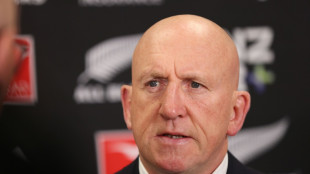 Argentina snap up defence guru Edwards ahead of World Cup

 BMW pulls car lease offer from German far-right politician

The European Central Bank is poised to raise interest rates again on Thursday to tackle inflation, but the sudden collapse of a US lender has fuelled concern about the health of the banking system as borrowing costs climb higher.
The ECB's 26-member governing council will "very, very likely" raise interest rates by another half a percentage point at its meeting in Frankfurt, president Christine Lagarde said last week.
It would be the sixth successive increase, leaving the ECB's three main rates 3.5 percentage points higher since July.
The ECB has hiked rates at an historically fast pace to cool consumer prices after energy and food costs shot up in the wake of Russia's war in Ukraine.
With Thursday's decision "a done deal", investors will be more interested in clues about the ECB's future moves, said ING bank economist Carsten Brzeski.
He predicts a "heated discussion" between dovish policymakers wanting to slow down rate hikes to ease the pain of higher borrowing costs, and "hawks" pushing to stay the course as inflation remains well above the ECB's two-percent goal.
"The March hike will be less important than what is signalled for May and beyond," Deutsche Bank economists said in a preview note.
Ahead of Thursday's gathering, ECB policymakers will be closely watching the market turmoil sparked by the failure of US lender SVB last week, which saw European bank shares plunge on spillover fears.
Concerns about the financial fallout from rising rates could see the ECB opting for smaller hikes after Thursday "to take some pressure off", said Baader Bank analyst Robert Halver.
"The over-indebtedness is far too high and higher interest rates could leave debtors vulnerable," he told AFP.
French Finance and Economy Minister Bruno Le Maire sought to calm jitters on Monday, saying he didn't "see any risk of contagion", while Germany's finance watchdog said the SVB collapse posed no threat to financial stability.
- 'Resilient' eurozone -
Analysts say SVB's collapse could influence the decision-making of the US Federal Reserve, which started hiking rates earlier and more aggressively than the ECB.
The higher rates played a part in SVB's collapse as they brought down the value of US government bonds with lower returns that it held.
SVB took a $1.8 billion loss in the sale of $21 billion worth of securities before it collapsed, raising concerns that other banks could face similar problems.
Prior to SVB's turmoil, Fed chief Jerome Powell had said that the "ultimate level of interest rates is likely to be higher than previously anticipated" in the wake of stronger-than-expected economic data.
"With the market turmoil following the collapse of SVB, there are now heightened expectations that the Federal Reserve will be less aggressive with its monetary policy," said Richard Flax, chief investment officer at Moneyfarm.
The economic picture is murkier in the eurozone, with revised data showing that the economy stagnated in the fourth quarter of 2022, instead of recording weak growth as initially estimated.
Declining energy prices in recent months have helped slow inflation, which reached 8.5 percent in February, down from 8.6 percent in January.
But excluding volatile energy and food costs, core inflation hit a fresh record high of 5.6 percent, bolstering the argument for further interest rate rises.
Lagarde has vowed to do "whatever it takes" to restore price stability in the 20-nation currency club.
The eurozone economy has proved "resilient" to the fallout from the Ukraine war, she said last week, and unemployment remains low.
Nevertheless, the bank is keeping a close eye on wage growth as higher consumer prices fuel demand for pay rises across Europe -- adding to inflationary pressures.
- New forecasts -
"The ECB needs to be prepared to climb further. We suspect it is," the Deutsche Bank economists said.
Many analysts expect the ECB's bank deposit rate, currently at 2.5 percent, to peak at 3.5-4.0 percent this summer and remain there for some time.
The ECB will be armed with new economic forecasts on Thursday to help guide its decisions.
Back in December, the bank expected inflation to soften to 3.4 percent in 2024 and 2.3 percent in 2025.
Given the recent plunge in natural gas prices, observers now predict a downward revision of those figures.
The ECB does not expect a recession in 2023, and any upward revisions to economic growth forecasts would make it easier for policymakers to back more monetary tightening.
O.Lorenz--BTB