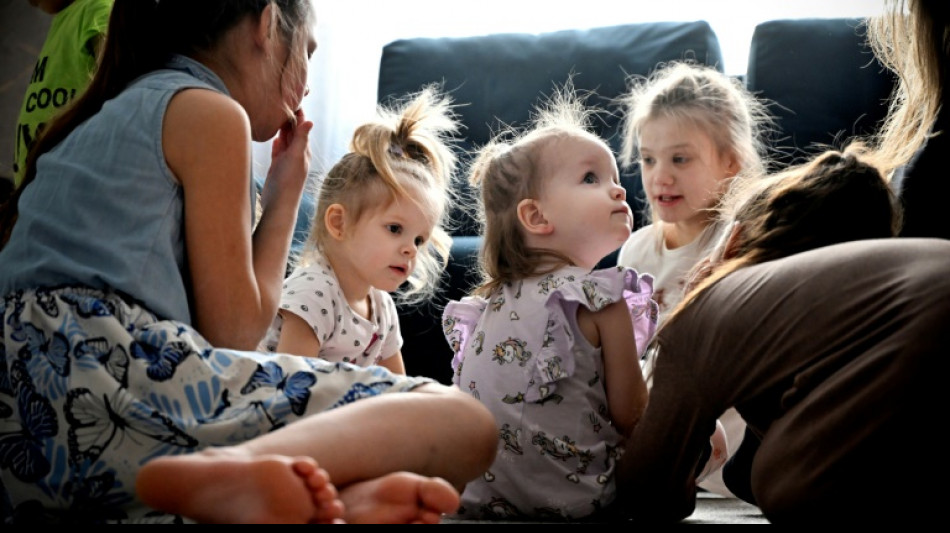
Kyiv condemns 'kidnappings' as Russians foster Ukrainian kids / Photo: © AFP

 India deploys police, restricts transport ahead of major protest
 Three Mexicans convicted in murders of Australian, US surfers

 Powerful waves lash California coast as storm threatens more damage

 Trump hails Russia deal to release diesel as midterms loom

 Lyon blow chance to go top after loss at Lens
 Stocks rise as Trump says Russia to release diesel to world markets

 Wildfire smoke shuts schools in Amazon's biggest city

 Turkey jails 2 journalists pending trial for fund crisis 'misinformation'

 Major earthquake rocks Panama, triggers tsunami warning

 Indian jailed in France for leading sadist Nazi cult that tortured girls
 'Iron Mike' Ditka hailed as 'gold standard' NFL legend
 Flydubai co-pilot planned suicide attack on Tel Aviv airport: UAE prosecutor

 Mike Ditka: Chicago Bears icon as player and coach

 Outrage over plan to livestream US military firing squad execution
 US sanctions: a 'test of resilience' for ICC
 NFL legend Mike Ditka dead at 86
 Hurricane Isaias set to strike Gulf Coast late Friday
 Trump forms panel to probe US Fed governor Lisa Cook

 Clashes in Durban as fresh anti-migrant riots erupt in South Africa

 France students plan more protests, UN 'concerned' over violence

 De Zerbi calls on struggling Spurs to react in Man Utd clash
 US sanctions on ICC: a 'test of resilience'
 Outrage over US military plan to livestream firing squad execution

 Argentina snap up defence guru Edwards ahead of World Cup

 BMW pulls car lease offer from German far-right politician
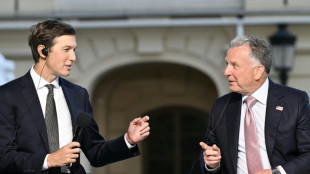
At their home in the middle of Siberia, Russian pastor Roman Vinogradov and his wife Yekaterina are the new foster parents of five children from Moscow-occupied eastern Ukraine.
The Vinogradovs are experienced fosterers now raising 16 children, including four of their own, and say they just want to help those who are "very much in need".
But Ukraine and human rights groups have condemned the forced transfer of thousands of children into Russia or Moscow-controlled territory since the invasion last year.
Ukrainian President Volodymyr Zelensky last week referred to "kidnapping, forced adoption and re-education of Ukrainian children committed by Russia", calling this "a war crime and a crime against humanity".
Russia says it is simply taking in "refugee" children from Ukraine.
"I didn't steal anyone. And they (the children) don't think they were stolen," Vinogradov, a 41-year-old Protestant minister, told AFP.
The Vinogradovs, who live in the Siberian city of Novosibirsk, more than 3,000 kilometres (1,800 miles) east of Moscow, said local authorities asked them to take in Ukrainian children after they requested another child.
"They phoned from children's services, saying: 'Will you take children from Ukraine?" said Yekaterina Vinogradova, 38.
"We said: 'Yes, we'll take them'."
"What difference does it make? Children are children everywhere. It doesn't matter what nation."
- Four girls and a boy -
The couple are now fostering five Ukrainian half-siblings -- four girls and a boy aged three to 12, who arrived from Moscow six months ago.
They already had seven foster children.
AFP saw the children cheerfully sledging together, clearing snow around the couple's large house and helping prepare a meal.
The Vinogradovs say the Ukrainian children came from children's homes in the city of Lugansk, which has been controlled by Russian-backed separatists since 2014. They showed foster papers issued by officials from Lugansk's pro-Moscow administration.
The children do not remember their mother, who was stripped of her parental rights, Vinogradov said.
"The time will come of course when they ask questions. We'll have a look (for her). Maybe we'll organise a meeting," said his wife.
Vinogradov said the children were learning to live in a family and still needed reassurance that "this is their home".
When the youngest went to nursery school "they were worried about whether we would collect them", Vinogradov said. "They asked: 'When will you come? Will you really come or not?'"
According to international law, no party to a conflict should evacuate children to a foreign country except temporarily for a compelling health or safety reason.
- 'Russians hide our children' -
In a report released on Monday, Human Rights Watch (HRW) called for a "concerted international effort" to return forcibly deported children and urged Russia to publish information on their whereabouts.
"Returning children who were illegally taken by Russian forces should be an international priority," said Bill Van Esveld, HRW associate director for children's rights.
Ukraine's presidential commissioner for children's rights, Daria Gerasymchuk, said Russia was refusing to recognise that these children were "deportees".
"Russians hide our children," she told journalists last week.
Kyiv has so far brought back 308 children, Gerasymchuk said, with a "big team of government officials working to this end".
Ukraine has "many pieces of evidence coming from different cities" and has identified 43 children's camps in Russia. But children "are being moved around all the time", she said.
"We have evidence of how much effort was taken by Russia to make it impossible to reunify families."
Ukraine had 105,000 children in institutional homes before war broke out, the second highest number in Europe behind Russia, HRW said.
Gerasymchuk told AFP that of the 16,000 children deported to Russia about which Ukraine has full information, only 138 come from such institutions.
- 'Saving the children' -
"It would be wrong to say that only orphaned children are being taken to Russia," she said.
"Russians use at least five different scenarios to deport children," she said. These included separating children from parents during border "filtration", taking them directly from family homes and sending them to Russian resorts for "recuperation".
Ukraine has tried to hide these children from the view of the Russians, Gerasymchuk said.
"We would somehow put children from institutions into (foster) families so Russians couldn't identify and deport them but we were not always successful."
The head of a children's rehabilitation centre outside the southern Ukrainian city of Kherson, Volodymyr Sagaidak, told AFP in January that during Russian occupation, officials questioned him on the children's whereabouts and seized their files.
"None of the Russians said they wanted to take the children. But I'd say there was a hidden form of deportation: 'Let's take you on an excursion', 'Let's take you to Crimea for recreation'," the 61-year-old said.
Oksana Koval, a 49-year-old teacher at the centre, said after the city was occupied they quickly handed over most of the children, aged three to 17, to relatives. Staff took others home. Koval herself took three girls.
"The Russians didn't know we had the children. We told them the children had been taken home by their parents," she said.
"We cared only about one thing -- saving the children."
J.Fankhauser--BTB