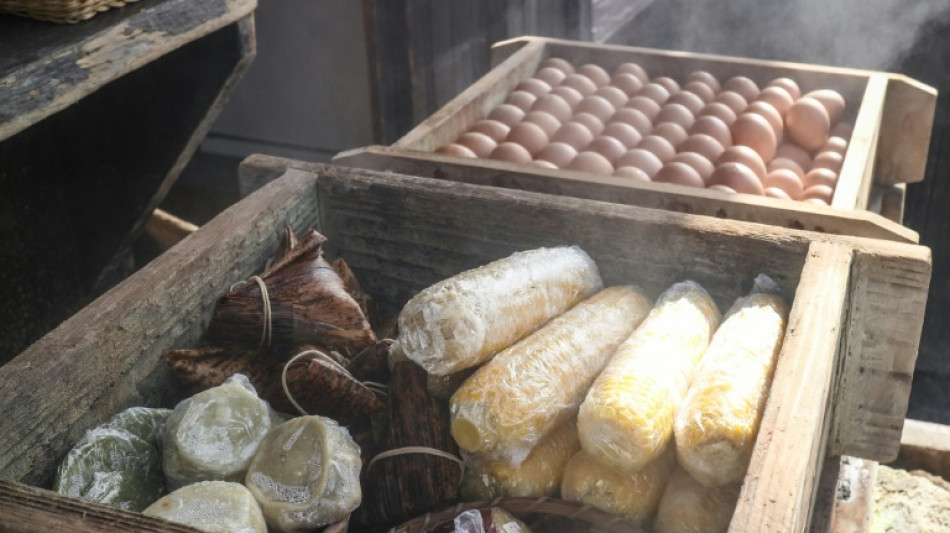
Steam cuisine: cooking in Japan's hot springs / Photo: © AFP

 India deploys police, restricts transport ahead of major protest
 Three Mexicans convicted in murders of Australian, US surfers
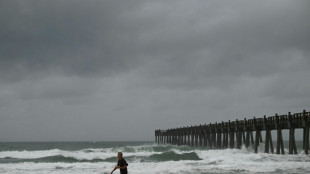
 Powerful waves lash California coast as storm threatens more damage

 Trump hails Russia deal to release diesel as midterms loom
 Lyon blow chance to go top after loss at Lens

 Stocks rise as Trump says Russia to release diesel to world markets

 Wildfire smoke shuts schools in Amazon's biggest city

 Turkey jails 2 journalists pending trial for fund crisis 'misinformation'

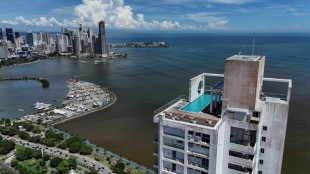
 Major earthquake rocks Panama, triggers tsunami warning

 Indian jailed in France for leading sadist Nazi cult that tortured girls

 'Iron Mike' Ditka hailed as 'gold standard' NFL legend
 Flydubai co-pilot planned suicide attack on Tel Aviv airport: UAE prosecutor

 Mike Ditka: Chicago Bears icon as player and coach

 Outrage over plan to livestream US military firing squad execution

 US sanctions: a 'test of resilience' for ICC

 NFL legend Mike Ditka dead at 86

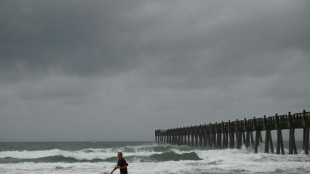 Hurricane Isaias set to strike Gulf Coast late Friday

 Trump forms panel to probe US Fed governor Lisa Cook

 Clashes in Durban as fresh anti-migrant riots erupt in South Africa

 France students plan more protests, UN 'concerned' over violence

 De Zerbi calls on struggling Spurs to react in Man Utd clash

 US sanctions on ICC: a 'test of resilience'

 Outrage over US military plan to livestream firing squad execution

 Argentina snap up defence guru Edwards ahead of World Cup

 BMW pulls car lease offer from German far-right politician

Using geothermal resources to generate electricity is a divisive prospect in Japan, but there is little disagreement about another use for it: natural steam for cooking.
The geothermal sources that make Japan a haven for hot springs or onsen are also used to produce a range of delicacies.
There's the "onsen tamago" -- eggs cooked in geothermally heated water at around 65 degrees (149 degrees Fahrenheit) to produce a relatively firm yolk with a creamy soft white.
And then there are small round cakes called "onsen manju", a popular snack sold at the approximately 2,900 hot spring locations across Japan.
Stuffed with red bean paste, they are cooked with the steam that rises from onsen water.
In Beppu, a small coastal town in Japan's southwestern Kyushu, an abundance of natural hot springs has given rise to a local speciality: "jigoku mushi" or "hell steaming".
Customers can buy meat, fish and vegetables on site at an onsen, and cook them in containers connected directly to the steam emanating from a nearby natural hot spring.
"This method of cooking was already being mentioned in local historical documents as far back as 200 years ago," Hitoshi Tanaka, president of Hyotan Onsen -- which offers "jigoku mushi" to its customers -- told AFP.
With steam at temperatures of 100-110 degrees Celsius (212-230 Fahrenheit), cooking generally takes no more than five to 10 minutes, "so the food retains its original colour", Tanaka explains.
The sulfur present in the steam imparts an "umami" to the meal, a flavour enhancer considered key to Japanese cuisine, and it contains iron, a trace element important for health, he added.
"You savour it with your eyes, you smell the steam, you hear the sound of the source of the hot spring: so you appreciate the food here with your whole body."
The technique has another benefit: no need for electricity or gas at a time when Japan, like many other countries, is dealing with soaring energy prices.
R.Adler--BTB