Worry, mistrust meet plans to secure waste from Niger uranium mine / Photo: © AFP

 India deploys police, restricts transport ahead of major protest
 Three Mexicans convicted in murders of Australian, US surfers
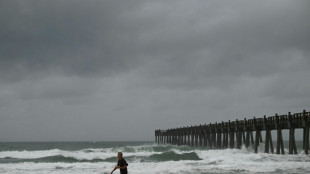
 Powerful waves lash California coast as storm threatens more damage

 Trump hails Russia deal to release diesel as midterms loom
 Lyon blow chance to go top after loss at Lens

 Stocks rise as Trump says Russia to release diesel to world markets

 Wildfire smoke shuts schools in Amazon's biggest city

 Turkey jails 2 journalists pending trial for fund crisis 'misinformation'

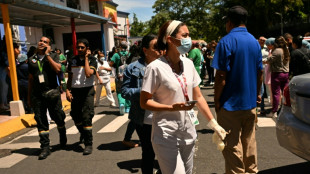
 Major earthquake rocks Panama, triggers tsunami warning

 Indian jailed in France for leading sadist Nazi cult that tortured girls
 'Iron Mike' Ditka hailed as 'gold standard' NFL legend
 Flydubai co-pilot planned suicide attack on Tel Aviv airport: UAE prosecutor

 Mike Ditka: Chicago Bears icon as player and coach

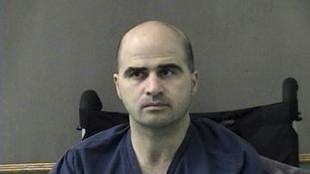 Outrage over plan to livestream US military firing squad execution

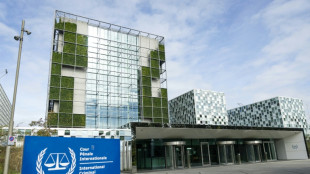 US sanctions: a 'test of resilience' for ICC
 NFL legend Mike Ditka dead at 86

 Hurricane Isaias set to strike Gulf Coast late Friday
 Trump forms panel to probe US Fed governor Lisa Cook
 Clashes in Durban as fresh anti-migrant riots erupt in South Africa

 France students plan more protests, UN 'concerned' over violence
 De Zerbi calls on struggling Spurs to react in Man Utd clash

 US sanctions on ICC: a 'test of resilience'
 Outrage over US military plan to livestream firing squad execution

 Argentina snap up defence guru Edwards ahead of World Cup

 BMW pulls car lease offer from German far-right politician

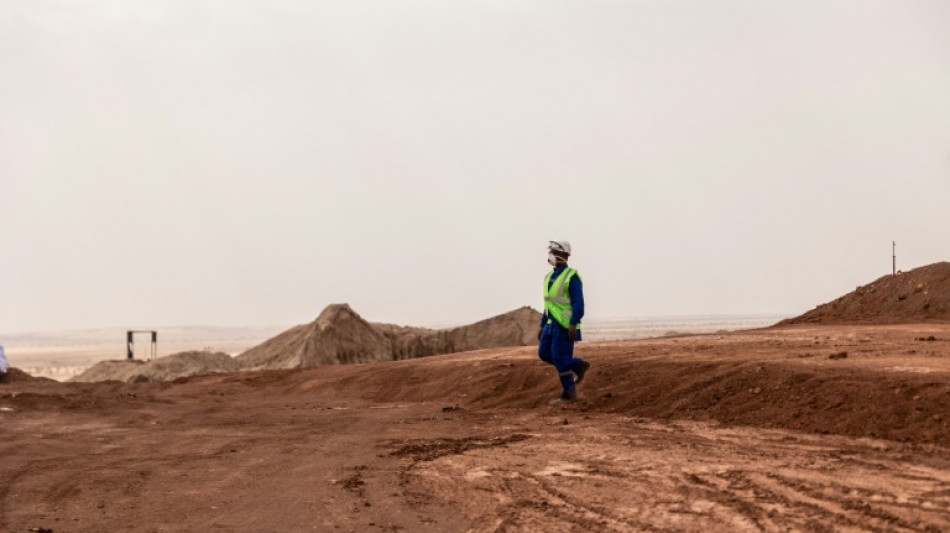
Towering mounds dot the desert landscape in northern Niger's Arlit region, but there is little natural about them -- they are heaps of partially radioactive waste left from four decades of operations at one of the world's biggest uranium mines.
An ambitious 10-year scheme costing $160 million is underway to secure the waste and avoid risks to health and the environment, but many local people are worried or sceptical.
From 1978, France's nuclear giant Areva, now called Orano, worked the area under a subsidiary, the Akouta Mining Company (Cominak).
It closed the site in 2021 after extracting 75,000 tonnes of uranium, much of which went to fuelling the scores of nuclear reactors that provide the backbone of France's electricity supply.
Cominak's director general Mahaman Sani Abdoulaye showcased the rehabilitation project to the first French journalists to visit the site since 2010, when seven Areva employees were kidnapped by jihadists.
The company intends to hand back a "site (that is) safe, healthy and non-polluting, in line with national standards and international recommendations", Abdoulaye said at his offices in Niamey.
The toughest task is to deal with the estimated 20 million tonnes of tailings that have been in contact with uranium.
The waste is spread over 120 hectares (nearly 300 acres) in mounds as high as 35 metres (114 feet), but its radioactivity levels are very low, said Helene Sciorella Djibo, in charge of the operation.
"We have natural doses below what can be found in regions of France and the world," she said.
Orano's plan is to level out the waste and seal it under a two-metre-deep cap of waterproofed clay and sandstone, backed by a programme to monitor air and water for at least five years.
- Worry -
But in the town of Arlit, which with the surrounding area has a population of 200,000, there is concern.
Bassirou Babale, the departmental director of mines at Arlit, pointed to worry about whether cracks could develop in the cover on top of the waste.
The concern is that leaks could enable radon -- a cancer-causing radioactive gas derived from the natural breakdown of uranium -- to escape and "flood the town", he said.
"Tests (of the cover) are underway," he said.
Rhamar Ilatoufegh of a local NGO called Aghir In'man (Human Shield) is angry.
"Radioactive waste is being stored in the open," he said. "This is the biggest negative legacy left from uranium mining."
A French watchdog, the Independent Research and Information Commission on Radioactivity (CRIIRAD), has described the waste as a "sword of Damocles" hanging over the area's water supply.
Orano's Gilles Recoche, a director in charge of responsibility, engagement and communication, said air and water were being "amply" monitored across the whole town.
"The levels are below the norms for Nigerien and international law," he said. "There has not been a single confirmed case of sickness linked to radioactivity."
- Uranium wealth
Niger's regulations stipulate a safety threshold for miners of 20 millisieverts (mSv) of radiation a year. Orano reported that maximum exposure at the site of mine in 2022 was 8.6 mSv per year.
But former Cominak employee Hassan Souley was suspicious.
"People live seven kilometres (four miles) from the mines -- everyone is very worried, people are sick," he said.
"Orano is behind all these problems and does not even want to listen."
Arlit's mayor, Abdourahmane Maouli, pointed to steps being taken to try to ease concerns.
"There is mistrust, doubt and fear about the radioactivity in our town, it's normal," he said. "But measures have been taken to tackle it."
An agency set up in 2012, the Agadez Regional Health Observatory (OSRA), is monitoring the wellbeing of people who retired or left Cominak and Somair, another mine in the area still being operated by Orano.
"Out of 2,000 consultations, we detected a dozen cases of illness that could be attributable to radiation -- blood and lung cancers and silicosis," an OSRA doctor, Ayouba Dogonyaro, told AFP.
"Six of them were recognised (as such) by the OSRA medical committee, comprising three doctors representing the mines, civil society and the state," he said.
- Mining future -
Niger is one of the world's poorest countries, but it is also one of the planet's biggest sources of uranium.
Its mining industry is eyeing a long-term future as the nuclear industry touts its potential for easing reliance on carbon-spewing fossil fuels.
One of the world's biggest uranium deposits lies at Imouraren, around 80 kilometres (50 miles) south of Arlit.
Matthieu Davrinche, director of the Imouraren company, which works with Orano and the Niger government on exploring the site's potential, told AFP that tests would start next year at the site, which is estimated to have reserves of 200,000 tonnes of uranium.
A decision on whether to mine the deposits will be made in 2028, he said.
The scheme was put on hold in 2015 after the price of uranium collapsed following the 2011 Fukushima disaster in Japan.
T.Bondarenko--BTB