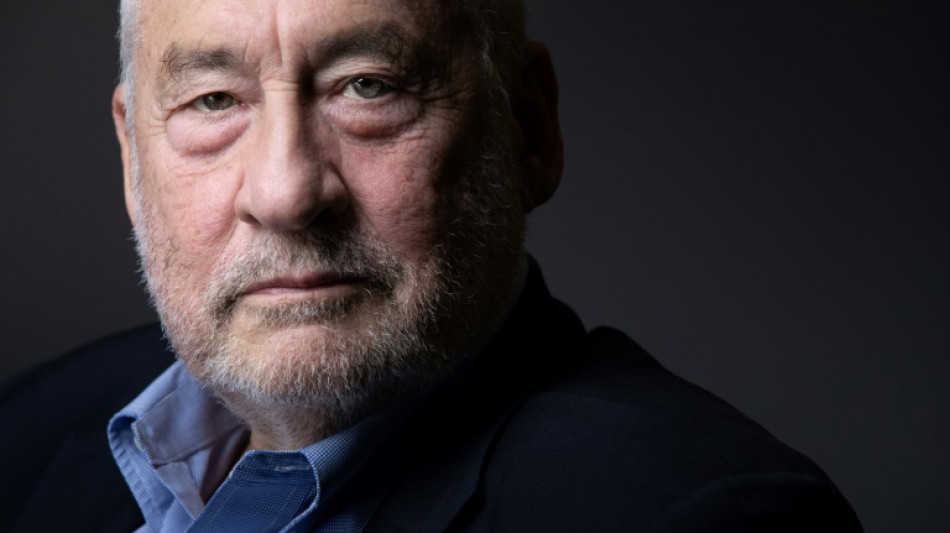
SVB collapse calls for finance rethink: Stiglitz / Photo: © AFP/File

 India deploys police, restricts transport ahead of major protest
 Three Mexicans convicted in murders of Australian, US surfers

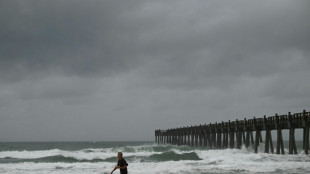
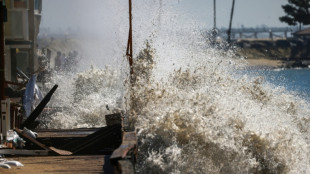 Powerful waves lash California coast as storm threatens more damage

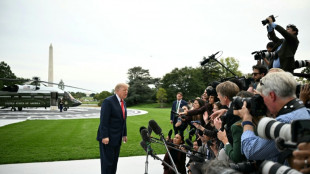 Trump hails Russia deal to release diesel as midterms loom

 Lyon blow chance to go top after loss at Lens
 Stocks rise as Trump says Russia to release diesel to world markets

 Wildfire smoke shuts schools in Amazon's biggest city

 Turkey jails 2 journalists pending trial for fund crisis 'misinformation'
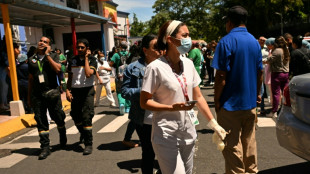
 Major earthquake rocks Panama, triggers tsunami warning

 Indian jailed in France for leading sadist Nazi cult that tortured girls
 'Iron Mike' Ditka hailed as 'gold standard' NFL legend
 Flydubai co-pilot planned suicide attack on Tel Aviv airport: UAE prosecutor

 Mike Ditka: Chicago Bears icon as player and coach

 Outrage over plan to livestream US military firing squad execution

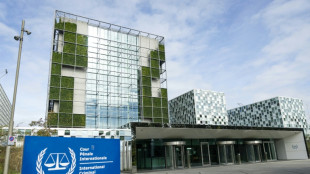 US sanctions: a 'test of resilience' for ICC
 NFL legend Mike Ditka dead at 86
 Hurricane Isaias set to strike Gulf Coast late Friday
 Trump forms panel to probe US Fed governor Lisa Cook
 Clashes in Durban as fresh anti-migrant riots erupt in South Africa
 France students plan more protests, UN 'concerned' over violence
 De Zerbi calls on struggling Spurs to react in Man Utd clash
 US sanctions on ICC: a 'test of resilience'
 Outrage over US military plan to livestream firing squad execution

 Argentina snap up defence guru Edwards ahead of World Cup
 BMW pulls car lease offer from German far-right politician
In the wake of the collapse of Silicon Valley Bank that has shaken world markets, Nobel economics prize laureate Joseph Stiglitz told AFP that US authorities "did the right thing" to protect deposits but said the financial system needs a rethink.
- Has the risk of a major financial crisis been averted? -
"That's one of the things that one can't tell. The banks are sounder than they were before, in 2008. There has been progress, not as much as there should be. But the new technologies make runs much easier, which people didn't fully think about.
They used to think that bank accounts were sticky. But if everybody has internet banking, it's much easier to take your money out and put it somewhere else. The question about the stability of the financial system has to be rethought, recognising the new technologies.
And I'm not sure that it has been done. Before the SVB collapse, there had been very little discussion about how technology had changed the probability of bank runs. But now there's a lot of discussion."
- You have said SVB's collapse was foreseeable. Will others fail in the coming days? -
"The banking system is very complex. There are always rumours about particular banks who have vulnerabilities, and unless you know their balance sheets, their exposures and (how they've done) with the stress tests, you can't really know.
There may be rumours. What was interesting about one particular aspect of SVB was that there were no negative discussions about its lending portfolio. In most bank runs in the past, like in 2008, the complaint was 'silly banks have made loans for mortgages that were basically fraudulent'.
We didn't realise in 2008 the magnitude of the fraud that all the major banks had engaged in. Only after the mass of suits that went on, we saw how bad things were, but we knew that the lending was bad.
In this case its not a lending problem, it's a maturity mismatch and that can happen anywhere in our economic system."
- What do you think of the reaction of US authorities? -
"There was an enormous stress from Thursday to Sunday night. In the end they did the right thing I think, but they reacted very slowly. It would have been a lot better if they had acted more quickly, and in particular assuring that the depositors with more than $250,000 were not going to lose their money.
But the most important thing, in terms of the macroeconomics, is they finally assured those with deposits over $250,000 they would be able to get their money back. If they hadn't done that, (there was a) possibility of a massive financial crisis or a massive movement to the too big to fail banks.
One has to understand the amount of stress that that put on all the workers in the whole sector. It's a trauma from which I think they will have longer lasting effects."
P.Anderson--BTB