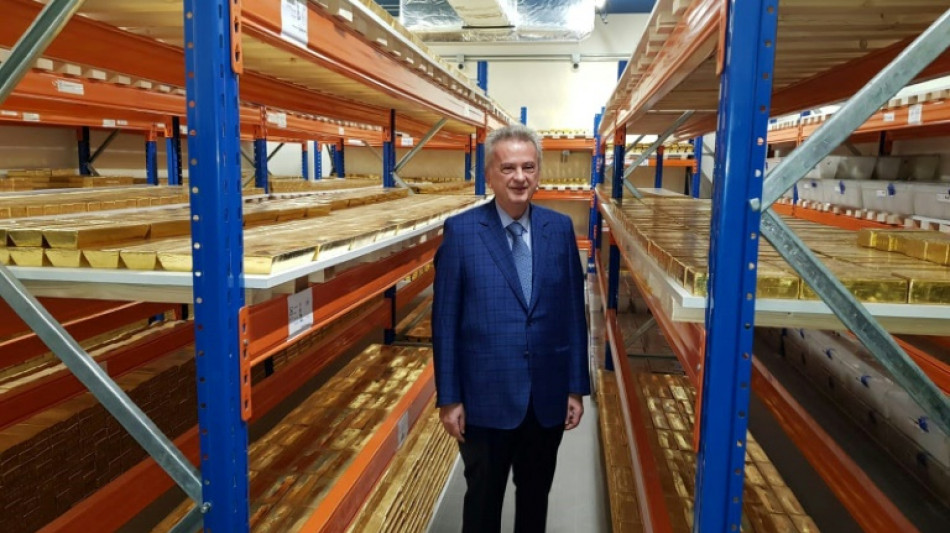
From acclaim to blame: Lebanon's bank chief Riad Salameh / Photo: © CENTRAL BANK OF LEBANON/AFP

 Hunger and malnutrition stalk Gazans, a year on from ceasefire
 Fernandez trumps MotoGP championship duo to grab Indonesia pole
 October 7 scars push Israel's first-time voters to right
 India deploys police, restricts transport ahead of major protest
 Three Mexicans convicted in murders of Australian, US surfers
 Powerful waves lash California coast as storm threatens more damage

 Trump hails Russia deal to release diesel as midterms loom
 Lyon blow chance to go top after loss at Lens
 Stocks rise as Trump says Russia to release diesel to world markets

 Wildfire smoke shuts schools in Amazon's biggest city
 Turkey jails 2 journalists pending trial for fund crisis 'misinformation'
 Major earthquake rocks Panama, triggers tsunami warning

 Indian jailed in France for leading sadist Nazi cult that tortured girls
 'Iron Mike' Ditka hailed as 'gold standard' NFL legend
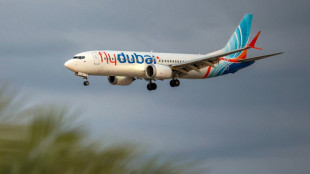 Flydubai co-pilot planned suicide attack on Tel Aviv airport: UAE prosecutor
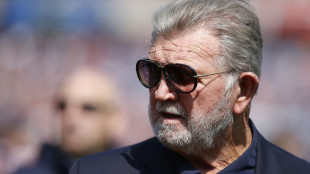 Mike Ditka: Chicago Bears icon as player and coach
 Outrage over plan to livestream US military firing squad execution
 US sanctions: a 'test of resilience' for ICC
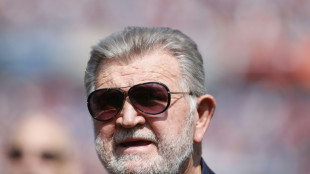 NFL legend Mike Ditka dead at 86
 Hurricane Isaias set to strike Gulf Coast late Friday
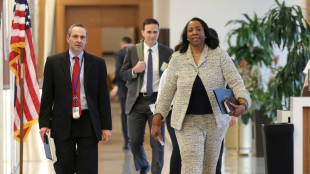 Trump forms panel to probe US Fed governor Lisa Cook
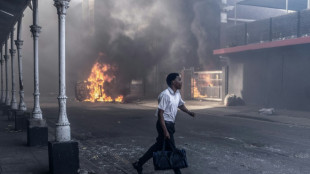 Clashes in Durban as fresh anti-migrant riots erupt in South Africa
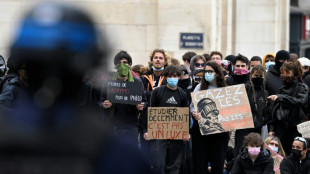 France students plan more protests, UN 'concerned' over violence
 De Zerbi calls on struggling Spurs to react in Man Utd clash
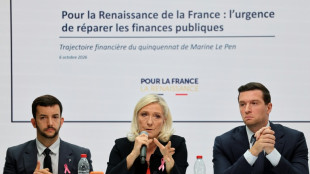
 US sanctions on ICC: a 'test of resilience'
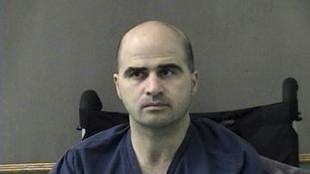
Lebanon's central bank chief Riad Salameh, once lauded for reviving the economy, faces investigations into his personal wealth and is widely viewed as a key culprit in the country's dramatic economic crash.
Salameh, 72, one of the world's longest-serving central bank governors having held the post for three decades, was a previously untouchable figure in Lebanon.
On Thursday, he appeared for the first time before European investigators probing his personal wealth and allegedly suspicious financial transfers abroad.
Now slapped with a travel ban, he faces numerous accusations of financial wrongdoing in Lebanon and abroad. Salameh has repeatedly denied all the accusations.
Salameh was the architect of the financial policy that allowed Lebanon to recover from a grinding 1975-1990 civil war, and was responsible for pegging the Lebanese pound at 1,507 to the dollar.
Known for his calm demeanour, he studied economics at the American University of Beirut and worked for Merrill Lynch in the Lebanese capital before becoming vice-president in France.
"He has been a trader and a broker all his life, that is the problem," said a veteran Lebanese financial expert, speaking on condition of anonymity.
"You need an economist to run a central bank, not somebody too close to the banking system that he wants to protect."
- 'Warning signs' -
In 1993, Salameh was installed as central bank governor, a post in sectarian Lebanon reserved for a Maronite Christian.
He was nominated by then prime minister Rafic Hariri, a wealthy real estate developer whose portfolio Salameh handled at Merrill Lynch.
Salameh received accolades, named as the world's best central bank governor by Euromoney in 2006 and by The Banker magazine in 2009.
"He's the man who knew how to revive the economy and gain the confidence of investors," said economist Nicolas Chikhani.
But after war broke out in neighbouring Syria in 2011, "warning signs started to grow" for the Lebanese economy, Chikhani said.
Successive governments failed to take action to restructure the economy, and public debt piled up.
From 2016, Salameh launched so-called financial engineering aimed at increasing central bank reserves, providing capital to banks and maintaining the value of the pound, in measures that some have compared to a Ponzi scheme.
In late 2019, when Lebanon's economy began to unravel and banks imposed draconian restrictions on withdrawals, he became the main focus of public anger.
In 2020, Lebanon defaulted on its debt for the first time, and this week the local currency sank to a historic low of 100,000 pounds to the dollar on the parallel market.
- 'Ready to cooperate' -
Salameh now faces allegations of crimes including embezzlement, money laundering and tax evasion in separate probes in Lebanon and abroad.
His brother has also been accused of complicity.
France, Germany and Luxembourg in March last year seized assets worth $130 million in a move linked to a French probe into Salameh's personal wealth.
Last month, Swiss media reported that 12 banks in the European country had received a large part of the money Salameh is alleged to have embezzled -- estimated at up to $500 million.
Salameh, who says he amassed his fortune during his two decades at Merrill Lynch, has rarely appeared before the judiciary.
He enjoys strong support from much of Lebanon's political class and some media outlets, and has maintained his innocence while staunchly defending his monetary policy.
"The central bank deals with the outcome of the crisis. It is not the side causing it," he told AFP in a December 2021 interview.
"I am ready to cooperate with all investigations," he said, claiming they were based on "fabricated evidence" that made it seem as though he "took all of Lebanon's money and pocketed it."
Some political circles have suggested Salameh's mandate -- already extended four times -- could be renewed again when it expires in July.
But Western countries have told Lebanese officials that keeping him in his post would be seen "as a negative message for international donors", a diplomatic source told AFP.
O.Bulka--BTB