Norway's high court confirms its control of Arctic resources / Photo: © AFP/File

 Hunger and malnutrition stalk Gazans, a year on from ceasefire

 Fernandez trumps MotoGP championship duo to grab Indonesia pole
 October 7 scars push Israel's first-time voters to right
 India deploys police, restricts transport ahead of major protest
 Three Mexicans convicted in murders of Australian, US surfers
 Powerful waves lash California coast as storm threatens more damage

 Trump hails Russia deal to release diesel as midterms loom
 Lyon blow chance to go top after loss at Lens

 Stocks rise as Trump says Russia to release diesel to world markets

 Wildfire smoke shuts schools in Amazon's biggest city

 Turkey jails 2 journalists pending trial for fund crisis 'misinformation'

 Major earthquake rocks Panama, triggers tsunami warning

 Indian jailed in France for leading sadist Nazi cult that tortured girls

 'Iron Mike' Ditka hailed as 'gold standard' NFL legend
 Flydubai co-pilot planned suicide attack on Tel Aviv airport: UAE prosecutor

 Mike Ditka: Chicago Bears icon as player and coach

 Outrage over plan to livestream US military firing squad execution

 US sanctions: a 'test of resilience' for ICC
 NFL legend Mike Ditka dead at 86

 Hurricane Isaias set to strike Gulf Coast late Friday
 Trump forms panel to probe US Fed governor Lisa Cook

 Clashes in Durban as fresh anti-migrant riots erupt in South Africa

 France students plan more protests, UN 'concerned' over violence

 De Zerbi calls on struggling Spurs to react in Man Utd clash

 US sanctions on ICC: a 'test of resilience'

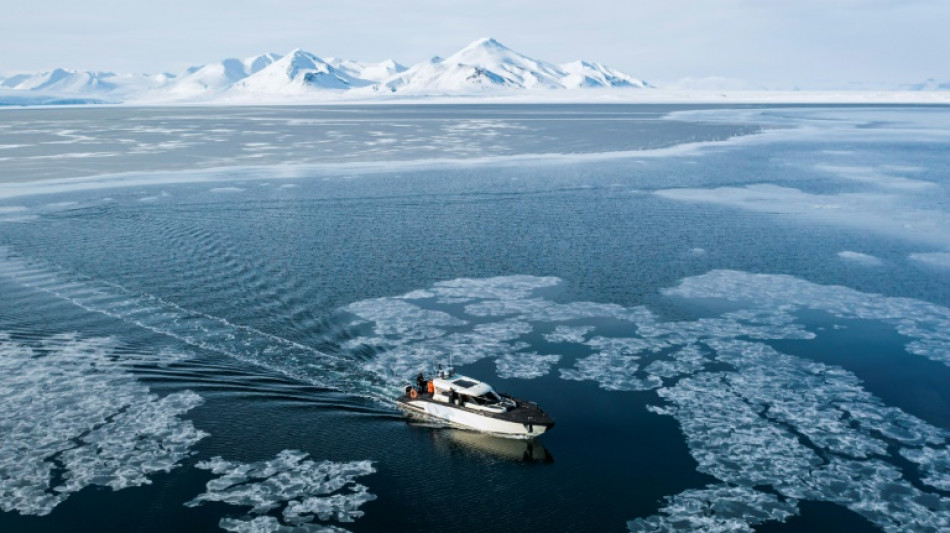
Norway's highest court confirmed on Monday the Norwegian state's exclusive right to natural resources on the continental shelf around the strategically important Svalbard archipelago in the Arctic.
The case sets a precedent with major potential repercussions.
The 15 judges of the Supreme Court unanimously rejected a lawsuit brought by the Latvian fishing company SIA North STAR, which had demanded the right to fish for snow crab on the continental shelf around Svalbard.
At the heart of the dispute are different interpretations of the Spitsbergen Treaty, the 1920 legal document governing the Svalbard archipelago.
Beyond the question of snow crab -- considered a delicacy in Asia -- the case was seen as an important test to determine who would control other lucrative resources thought to lie beneath the continental shelf, like oil and gas or minerals.
Norway has long insisted it has exclusive rights.
The Spitsbergen Treaty recognises "the full and absolute sovereignty of Norway" over Svalbard, but also allows nationals from other signatory countries to "enjoy equally the rights of fishing and hunting in the territories".
As a result, Russia is able to maintain a mining community in the archipelago, located halfway between Europe's mainland and the North Pole, in a region its Northern Fleet transits en route to the Atlantic.
But the wording of the treaty limits its geographic scope to the archipelago's land and "territorial waters" -- a concept that today denotes a maritime zone of 12 nautical miles but which was not specifically defined in 1920.
- Treaty interpretation -
According to SIA North STAR, the spirit of the treaty indicates that equal rights should apply to the entire continental shelf, a much wider zone, and a concept that also did not exist legally when the treaty was drawn up.
The Supreme Court found in favour of the Norwegian state, ruling that the wording of the treaty could not be subjected to an "extensible interpretation".
"There has been no development in international law which would result in the notion of 'territorial waters' today including areas beyond territorial waters," it wrote in its verdict.
Contrary to most other treaty signatories -- more than 40 states, including Latvia, France, Russia, the United Kingdom and the United States -- Norway is almost the only one that uses a restrictive interpretation of the treaty.
The issue has never been brought before an international court.
"We are disappointed but we are not really surprised by the verdict, this case has a lot of legal and political aspects," the lawyer for the Latvian company, Hallvard Ostgard, told AFP.
He said he would like to see the case brought before the International Court of Justice, which only reviews cases brought by states.
The Norwegian state said it was "satisfied" with the ruling.
"It's an important national clarification for a question that has been raised on several occasions in Norwegian courts," Foreign Minister Anniken Huitfeldt told AFP.
O.Lorenz--BTB