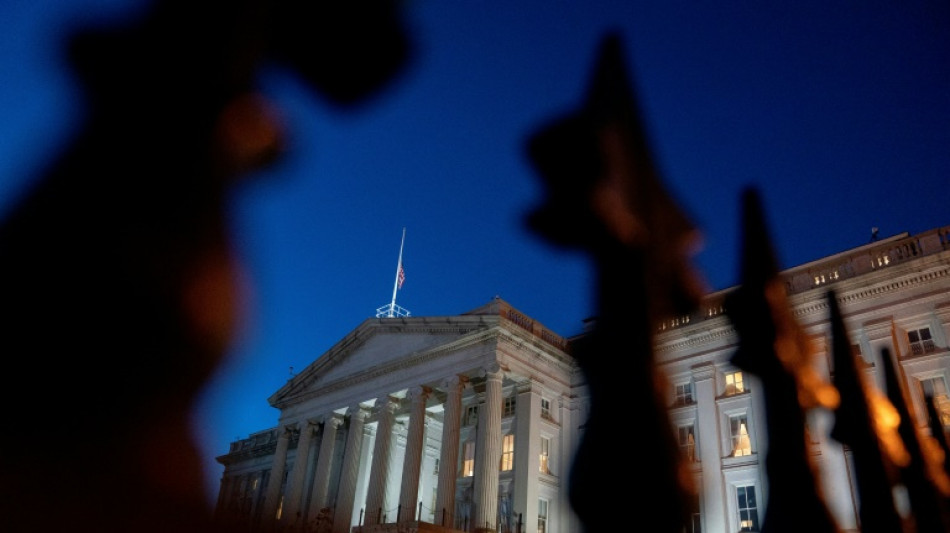
US government seeks to avoid 'bailout' label amid banking turmoil / Photo: © AFP/File

 Trump sows doubt on plan to livestream US military execution
 Hunger and malnutrition stalk Gazans, a year on from ceasefire
 Fernandez trumps MotoGP championship duo to grab Indonesia pole
 October 7 scars push Israel's first-time voters to right
 India deploys police, restricts transport ahead of major protest
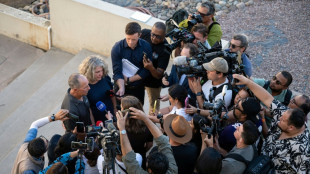 Three Mexicans convicted in murders of Australian, US surfers
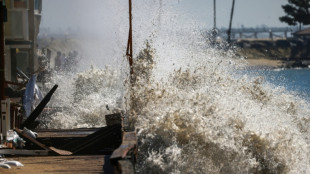 Powerful waves lash California coast as storm threatens more damage

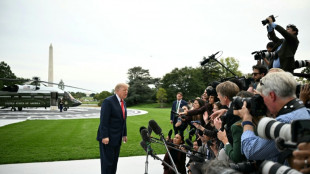 Trump hails Russia deal to release diesel as midterms loom
 Lyon blow chance to go top after loss at Lens
 Stocks rise as Trump says Russia to release diesel to world markets

 Wildfire smoke shuts schools in Amazon's biggest city

 Turkey jails 2 journalists pending trial for fund crisis 'misinformation'
 Major earthquake rocks Panama, triggers tsunami warning

 Indian jailed in France for leading sadist Nazi cult that tortured girls

 'Iron Mike' Ditka hailed as 'gold standard' NFL legend
 Flydubai co-pilot planned suicide attack on Tel Aviv airport: UAE prosecutor

 Mike Ditka: Chicago Bears icon as player and coach

 Outrage over plan to livestream US military firing squad execution

 US sanctions: a 'test of resilience' for ICC

 NFL legend Mike Ditka dead at 86
 Hurricane Isaias set to strike Gulf Coast late Friday
 Trump forms panel to probe US Fed governor Lisa Cook
 Clashes in Durban as fresh anti-migrant riots erupt in South Africa
 France students plan more protests, UN 'concerned' over violence
 De Zerbi calls on struggling Spurs to react in Man Utd clash
US authorities may have taken extraordinary steps in recent weeks to assure depositors of failed lenders Silicon Valley Bank and Signature Bank, but they are avoiding parallels with bailouts of the 2008 crisis -- which have been criticized.
Days after SVB's collapse this month, the Treasury Department, Federal Reserve and Federal Deposit Insurance Corporation (FDIC) announced that its depositors -- along with those of Signature Bank -- would have access to their money.
But officials were quick to add: "No losses will be borne by the taxpayer."
In the 2008 financial crisis, authorities spared shareholders and bondholders while propping up institutions, said David Smith, professor of commerce at the University of Virginia.
The way the 2008 crisis was managed had provoked criticism, given rise to the Occupy Wall Street movement, and fuelled resentment towards banks.
But "there's no bailout" this time in the sense that officials are protecting depositors rather than shareholders and bondholders, Smith said.
Between the fall of 2008 and late 2009, the US Treasury injected more than $200 billion to recapitalize US banks, without any compensation. It has since recovered more than it invested.
In contrast, the intervention in SVB and Signature Bank this time wiped out the entire market value of the two institutions, led to the dismissal of their executives and is expected to result in significant losses for holders of debt issued by the two banks.
The Justice Department has opened an investigation into SVB's collapse, according to media reports, while President Joe Biden told Congress that it should "act to impose tougher penalties for senior bank executives whose mismanagement contributed to their institutions failing."
- Who will foot the bill? -
While some believe it is wrong to call the government's moves a bailout, Aaron Klein of the Brookings Institution believes that it is one.
"Uninsured depositors like (entrepreneur) Peter Thiel and cryptocurrencies were made whole by the government," when they would otherwise have lost parts of their deposits, Klein said.
Authorities have said the FDIC will use resources from the Deposit Insurance Fund to ensure that depositors are made whole, and this is funded in part by fees assessed on financial institutions.
At the end of 2022, the fund had a balance of $128 billion, or 1.27 per cent of the $10 trillion in insured deposits.
"Depending on how much the FDIC has to drain their deposit insurance reserve to cover depositors now," they might have to charge banks higher fees to replenish that reserve, said David Smith.
"Clearly consumers ultimately will bear the cost, because that has to get passed on somehow," he said.
In an opinion piece for the Daily Mail, former vice president Mike Pence called it "disingenuous" to say that costs will not be borne by taxpayers.
"Every American with a bank account will pay higher fees to replenish the billions spent by the FDIC to backstop failing banks," he wrote.
Republican White House contender Nikki Haley added: "Now depositors at healthy banks are forced to subsidize Silicon Valley Bank's mismanagement."
In the short-term, the government's efforts helped prevent "contagion," said Mark Williams, lecturer at Boston University.
But a longer-term cost is that "moral hazard has been increased," he added.
"How will that impact... bank behavior going forward?" he asked.
P.Anderson--BTB