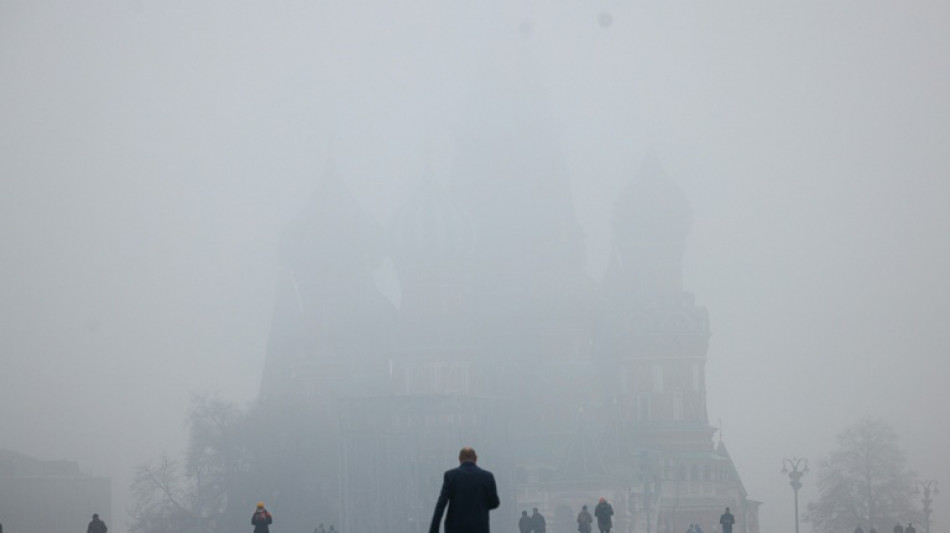
Russian economic prospects 'foggy' as sanctions cut deep / Photo: © AFP/File

 Noosha Aubel: €143,056 in annual basic pay — while Potsdam’s residents are expected to serve as cash cows
 Cristiano Ronaldo provisionally suspended by Portugal after walkout
 Brilliant Renshaw ton puts Australia in strong position
 Zelensky blasts diesel deal after Russian strikes kill 15
 Cristiano Ronaldo provisionally suspended after Portugal walkout
 Alcaraz through in straight sets on Shanghai Masters opener
 Palmer signs contract to stay at Chelsea until 2034
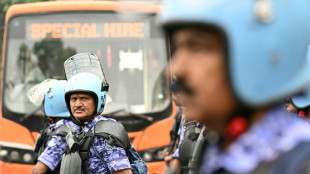
 India detains 'cockroach' movement leaders in bid to thwart election protest
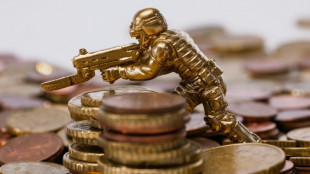 Proposed next EU budget cut back in search for deal
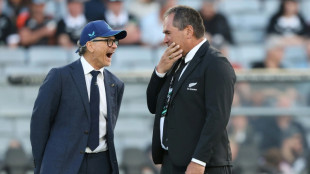
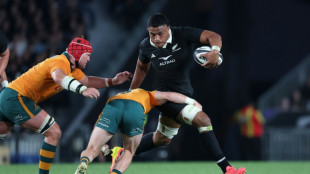 All Blacks learn from 'failed' Springboks series to punish Wallabies
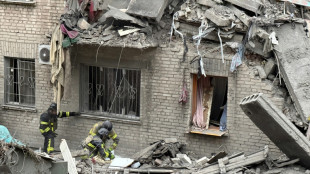
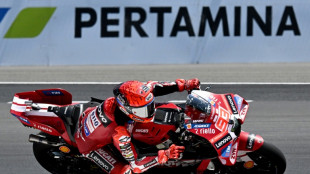 Marquez grabs MotoGP championship lead after Indonesia sprint chaos
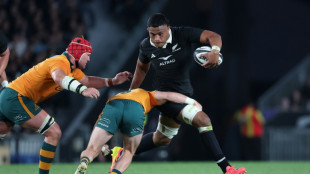 All Blacks extend Eden Park streak with big win over Wallabies
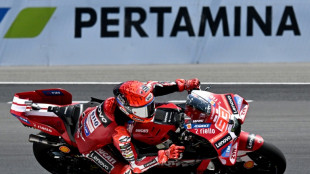 Marquez grabs MotoGP championship lead with Indonesia sprint win
 Schauffele closes in on leaders after 'weird' round in Japan
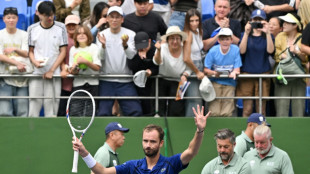 Medvedev through at Shanghai Masters in first match since disqualification
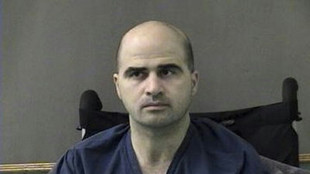 Trump sows doubt on plan to livestream US military execution
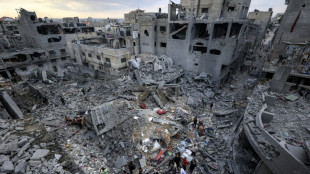
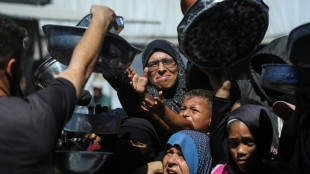 Hunger and malnutrition stalk Gazans, a year on from ceasefire
 Fernandez trumps MotoGP championship duo to grab Indonesia pole
 October 7 scars push Israel's first-time voters to right
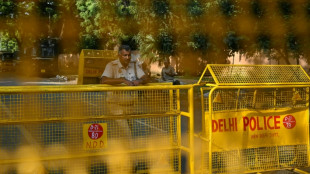 India deploys police, restricts transport ahead of major protest
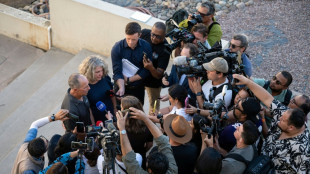 Three Mexicans convicted in murders of Australian, US surfers
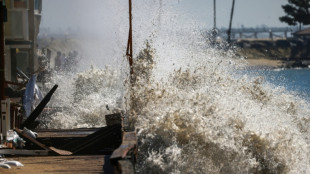 Powerful waves lash California coast as storm threatens more damage

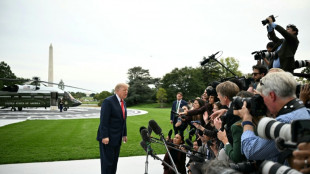 Trump hails Russia deal to release diesel as midterms loom
 Lyon blow chance to go top after loss at Lens
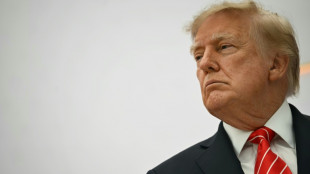 Stocks rise as Trump says Russia to release diesel to world markets

The resilience of Russia's economy has over the past year surprised many observers as Moscow adjusts to unprecedented Western sanctions over its assault on Ukraine.
But in a rare public admission, President Vladimir Putin late last month warned of possible economic troubles ahead and urged the government to act quickly.
"The sanctions imposed against the Russian economy in the medium term could really have a negative impact," Putin said at a televised meeting.
It was a major change of tone after Putin earlier said the worst was over, praising the benefits of "economic sovereignty" and insisting that the West's sanctions strategy has backfired.
What exactly is Putin's message?
"Mr. Putin's observation is quite simply realistic," said Arnaud Dubien, director of the Franco-Russian Observatory think tank in Moscow.
Dubien, a veteran Russia expert, said Putin is seeking to further mobilise companies and government officials as Russia is cutting ties with the West.
"The situation is better than expected but do not relax, continue to find alternatives," he said, describing the Kremlin chief's logic.
Alexandra Prokopenko, a former Russian central bank official, suggested that Putin's message primarily targeted companies that have been hit hard by sanctions.
"It's a message to businesses," said Prokopenko, who worked at the central bank between 2017 and 2022 and quit after the start of Moscow's assault on Ukraine.
"You're only safe in Russia under my charge, there's no way back," she said, referring to his possible thinking.
- 'Difficult situation' -
More than a year into Moscow's offensive in Ukraine, the Russian economy finds itself ever more dependent on energy exports to Asia and slipping further behind in many high-value sectors. An exodus of hundreds of thousands of Russians and the Kremlin's mobilisation drive have led to labour force shortages.
Dubien pointed to particular problems in the car industry, which thrived when leading foreign carmakers set up shop in Russia in the early 2000s.
"The sectors most affected by the sanctions such as automotive production are those that were most open to investment and international cooperation," he said.
In late March, Russia's flagship carmaker AvtoVAZ said that a number of parts suppliers were halting deliveries, prompting the struggling company to bring forward an annual holiday.
Prokopenko, who now researches Russian government policymaking at the Berlin-based German Council on Foreign Relations, said that sectors linked to the military-industrial complex -- such as optics, pharmaceuticals and metal production -- are "where the economy is doing its best."
Sergei Tsyplakov, a professor at Moscow's Higher School of Economics, warned that the Kremlin's much-vaunted pivot to China and India could not solve all the problems.
"Although the Russian economy did not collapse immediately after the imposition of sanctions, the situation remains difficult," he said.
- Economic backsliding -
Many economists expect the economic outlook to darken in the coming months.
Prokopenko pointed out that it was the windfall from sky-high energy prices that helped Russia weather the initial shock from the unprecedented sanctions.
"This isn't going to happen this year," she said.
"In 2023, there's no sign to expect that Russia will get this extra income."
In February, Moscow's revenue from oil exports plummeted by 42 percent compared to last year, according to the International Energy Agency.
The re-orientation of Russia, once Europe's main gas supplier, towards Asian markets is expected to take time.
Putin, observers say, has a vital interest in seeing high energy revenue if he wants to finance Moscow's assault on Ukraine and keep dissent at home at bay.
Prokopenko said she saw "lots of problems" ahead.
"In the short-term perspective the Russian economy isn't doing bad, it's still functioning," she said, stressing however that finding new partners would take time.
"The future is foggy."
Dubien estimated that Putin could afford to bankroll the offensive in Ukraine for another "three to four years" but warned that the economy faces years of further backsliding.
"It has already lost the equivalent of a decade of development since 2014," he said, referring to the year when the West pummelled Russia with sanctions over the annexation of Crimea from Ukraine.
"It could now lose a second one as well."
A.Gasser--BTB