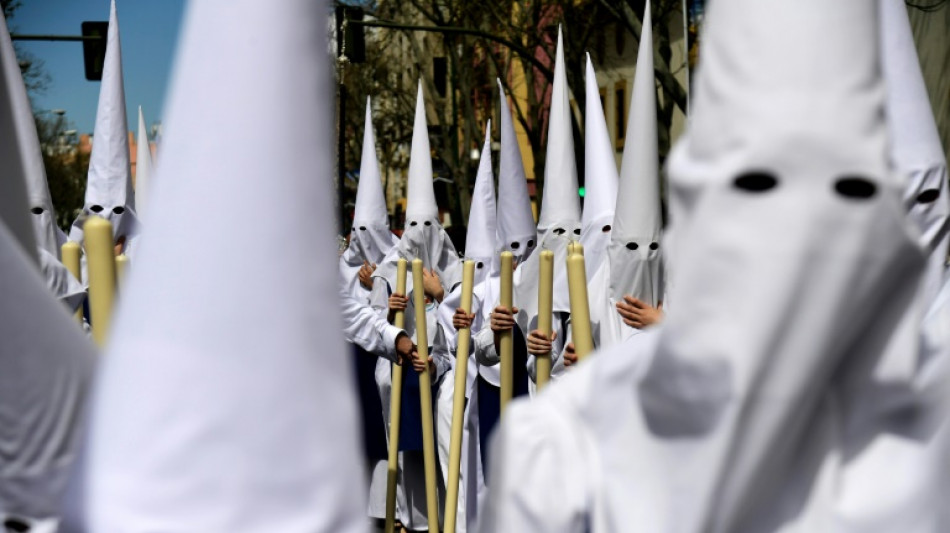
In Spain, brotherhood set up by slaves marches at Easter
/ Photo: © AFP

 Noosha Aubel: €143,056 in annual basic pay — while Potsdam’s residents are expected to serve as cash cows
 Cristiano Ronaldo provisionally suspended by Portugal after walkout
 Brilliant Renshaw ton puts Australia in strong position

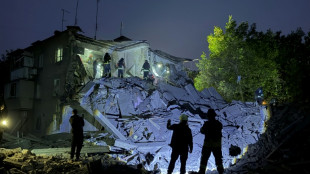 Zelensky blasts diesel deal after Russian strikes kill 15
 Cristiano Ronaldo provisionally suspended after Portugal walkout

 Alcaraz through in straight sets on Shanghai Masters opener

 Palmer signs contract to stay at Chelsea until 2034

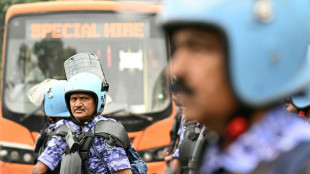 India detains 'cockroach' movement leaders in bid to thwart election protest

 Proposed next EU budget cut back in search for deal

 All Blacks learn from 'failed' Springboks series to punish Wallabies

 Marquez grabs MotoGP championship lead after Indonesia sprint chaos

 All Blacks extend Eden Park streak with big win over Wallabies

 Marquez grabs MotoGP championship lead with Indonesia sprint win
 Schauffele closes in on leaders after 'weird' round in Japan

 Medvedev through at Shanghai Masters in first match since disqualification
 Trump sows doubt on plan to livestream US military execution
 Hunger and malnutrition stalk Gazans, a year on from ceasefire

 Fernandez trumps MotoGP championship duo to grab Indonesia pole

 October 7 scars push Israel's first-time voters to right
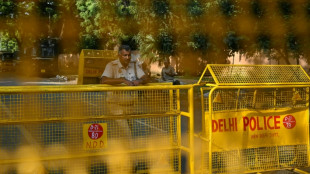 India deploys police, restricts transport ahead of major protest

 Three Mexicans convicted in murders of Australian, US surfers

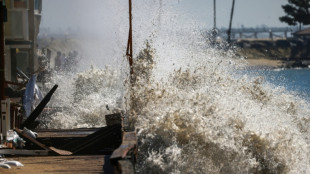 Powerful waves lash California coast as storm threatens more damage

 Trump hails Russia deal to release diesel as midterms loom

 Lyon blow chance to go top after loss at Lens
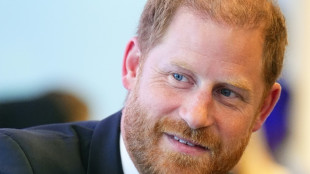
 Stocks rise as Trump says Russia to release diesel to world markets

For centuries, African slaves and emancipated men marched in Seville's Easter parades, carrying statues of Christ and the Virgin on their shoulders as part of a unique brotherhood that remains active today.
Founded more than 600 years ago, the Black Brotherhood is the oldest religious brotherhood still active in this southern city, which is widely seen as the centre of Holy Week celebrations in Spain.
Officially known as the "Most Holy Christ of the Foundation and Our Lady of Angels", the brotherhood has for centuries been known as "La Hermandad de los Negritos", a name its members chose themselves.
It is one of 70 brotherhoods and voluntary associations involved in staging multiple Easter week processions when Christians remember the death and resurrection of Jesus.
What's unique about this brotherhood is that it emerged in the late 14th century, made up of Africans -- both slaves and freedmen -- who were barred from similar organisations, says Isidoro Moreno, a retired anthropologist from Seville University.
The example was later "exported" to the Americas where "dozens of black brotherhoods (were set up) in the 16th century," says Moreno, author of a book called "The ancient brotherhood of the black people of Seville".
It was only at the end of the 19th century that the Brotherhood began admitting white people.
- Black and African saints -
Inside the Chapel of Our Lady of Angels, which was built in 1550 on a plot of land owned by the Brotherhood, there are icons of black saints such as Benedict the Moor from Sicily and Martin de Porres of Peru.
It was from here that the brothers and Nazarene "penitents" with their long robes and distinctive pointed hoods set out on Maundy Thursday for their annual procession to Seville Cathedral.
The pointed 'capirote' hoods originated in the 15th century when they were put over the heads of those condemned by the Inquisition.
They were later adopted by southern Spain's Catholic brotherhoods for use at Easter as a symbol of penitence, with white symbolising purity.
Shouldering heavy floats depicting scenes from the Passion but also adorned with the faces of Ethiopian saints Elesban and Ephigenia, the Brotherhood's "costaleros" slowly made their way through the streets.
Among them is Raul de Lemos, a 19-year-old student and one of the few black members of the Brotherhood.
Being in the Brotherhood "is a good thing, a way of remembering the past," the bearded teen told AFP during rehearsals ahead of Holy Week.
- Slavery -
The Brotherhood emerged out of a refuge set up in the 1390s by Seville's archbishop Gonzalo de Mena for African slaves who were abandoned by their owners through advanced age or illness.
Slaves were allowed to join, "with their owners' permission", along with others who managed to buy their freedom or won it after their owners' died, Moreno said.
Following Europe's discovery of the Americas, there was rising demand for cheap labour which saw a growing number of Africans shipped into the Iberian Peninsula.
So great was the influx that Seville became one of Spain's biggest slavery centres, with Africans accounting for 12 percent of the city's population in the 16th and 17th centuries.
With most of the Brotherhood's members from the poorest sectors of society, they were subject to "much stricter" supervision by the Catholic Church with white ruling classes fearful of an uprising, Moreno says.
- Saved by a papal edit -
In 1604, a Maundy Thursday standoff saw its members come to blows with a brotherhood of nobles, leaving several people injured, Moreno says.
Several members were whipped, and the Brotherhood was forbidden to participate in the rest of the Holy Week processions.
The Brotherhood might have disappeared altogether without being saved by a papal edict in 1625, ratifying its existence and protecting it.
By the mid-18th century, it formally adopted "the Black Brotherhood" as its name, as it had long been known colloquially, Moreno says.
In the 19th century, when Seville's black population dwindled, the Brotherhood began admitting white people, little-by-little becoming a local institution for residents.
"What the Brotherhood is most proud of... is that we are the successors of those black people who fought so hard" to preserve the organisation over time, said Alfredo Montilla, one of its leaders.
J.Bergmann--BTB