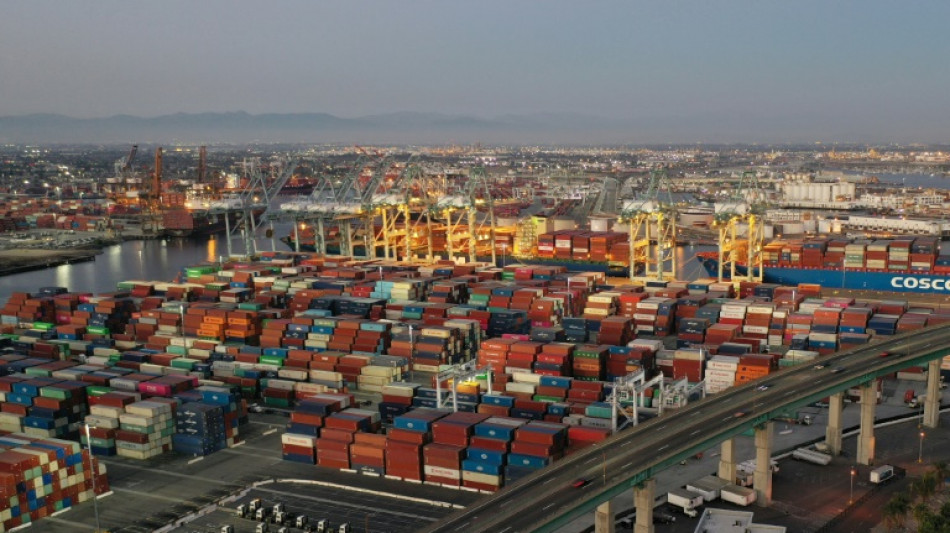
Dockworker shortage shuts California ports / Photo: © AFP/File

 Noosha Aubel: €143,056 in annual basic pay — while Potsdam’s residents are expected to serve as cash cows
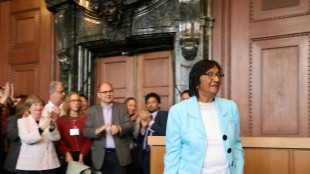
 Cristiano Ronaldo provisionally suspended by Portugal after walkout

 Brilliant Renshaw ton puts Australia in strong position

 Zelensky blasts diesel deal after Russian strikes kill 15

 Cristiano Ronaldo provisionally suspended after Portugal walkout

 Alcaraz through in straight sets on Shanghai Masters opener

 Palmer signs contract to stay at Chelsea until 2034

 India detains 'cockroach' movement leaders in bid to thwart election protest

 Proposed next EU budget cut back in search for deal

 All Blacks learn from 'failed' Springboks series to punish Wallabies

 Marquez grabs MotoGP championship lead after Indonesia sprint chaos

 All Blacks extend Eden Park streak with big win over Wallabies
 Marquez grabs MotoGP championship lead with Indonesia sprint win

 Schauffele closes in on leaders after 'weird' round in Japan

 Medvedev through at Shanghai Masters in first match since disqualification

 Trump sows doubt on plan to livestream US military execution

 Hunger and malnutrition stalk Gazans, a year on from ceasefire

 Fernandez trumps MotoGP championship duo to grab Indonesia pole
 October 7 scars push Israel's first-time voters to right
 India deploys police, restricts transport ahead of major protest
 Three Mexicans convicted in murders of Australian, US surfers
 Powerful waves lash California coast as storm threatens more damage

 Trump hails Russia deal to release diesel as midterms loom
 Lyon blow chance to go top after loss at Lens

 Stocks rise as Trump says Russia to release diesel to world markets

Two of the busiest ports in the United States were shuttered Friday because not enough dockworkers turned up for work, a shippers representative said.
The shutdown comes as part of a long-rumbling dispute between shippers and the International Longshore and Warehouse Union (ILWU) focused on pay and the role of automation.
"The largest ILWU local on the West Coast has taken a concerted action to withhold labor at the Ports of Los Angeles and Long Beach, resulting in widespread worker shortages," said a statement from the Pacific Maritime Association, the umbrella group that represents shippers.
"The workers who did show up were released because there was not a full complement of ILWU members to operate the terminals.
"The action by the Union has effectively shut down the Ports of Los Angeles and Long Beach -- the largest gateway for maritime trade in the United States."
The ILWU insisted the only no-shows were those marking the Christian festival of Good Friday.
"Cargo operations are ongoing as longshore workers at the Ports remain on the job," a union statement said.
The two ports -- known as the San Pedro Bay Port Complex -- move around 20 million shipping containers' worth of goods every year, with a value of over $300 billion.
The complex is the ninth biggest port in the world by market share, port figures show, and plays a key role in keeping global supply chains moving.
During the Covid-19 pandemic, ports around the globe gummed up, as shippers struggled to meet demand for stay-at-home goods, a problem that persisted as countries opened up.
Economists said the slow-to-shift backlog was a contributing factor in the inflation that has gripped much of the world in the last 18 months as consumers demand products that aren't arriving fast enough.
E.Schubert--BTB