
Small US banks use enlarged deposit guarantee to compete with giants / Photo: © GETTY IMAGES NORTH AMERICA/AFP/File

 Noosha Aubel: €143,056 in annual basic pay — while Potsdam’s residents are expected to serve as cash cows
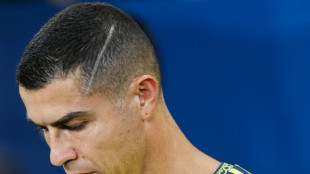 Cristiano Ronaldo provisionally suspended by Portugal after walkout

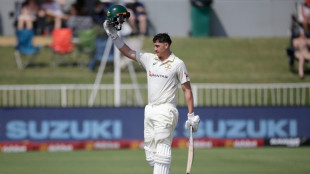 Brilliant Renshaw ton puts Australia in strong position

 Zelensky blasts diesel deal after Russian strikes kill 15

 Cristiano Ronaldo provisionally suspended after Portugal walkout

 Alcaraz through in straight sets on Shanghai Masters opener

 Palmer signs contract to stay at Chelsea until 2034

 India detains 'cockroach' movement leaders in bid to thwart election protest

 Proposed next EU budget cut back in search for deal

 All Blacks learn from 'failed' Springboks series to punish Wallabies

 Marquez grabs MotoGP championship lead after Indonesia sprint chaos

 All Blacks extend Eden Park streak with big win over Wallabies

 Marquez grabs MotoGP championship lead with Indonesia sprint win

 Schauffele closes in on leaders after 'weird' round in Japan

 Medvedev through at Shanghai Masters in first match since disqualification

 Trump sows doubt on plan to livestream US military execution

 Hunger and malnutrition stalk Gazans, a year on from ceasefire

 Fernandez trumps MotoGP championship duo to grab Indonesia pole

 October 7 scars push Israel's first-time voters to right

 India deploys police, restricts transport ahead of major protest

 Three Mexicans convicted in murders of Australian, US surfers

 Powerful waves lash California coast as storm threatens more damage

 Trump hails Russia deal to release diesel as midterms loom

 Lyon blow chance to go top after loss at Lens

 Stocks rise as Trump says Russia to release diesel to world markets

In the wake of the latest US banking meltdown, small lenders might appear vulnerable to an exodus of depositors fleeing for larger banks.
US banking rules guarantee deposits of up to $250,000, meaning that customers with larger holdings face losses if the bank goes under.
The implications of this rule became painfully clear with the collapse of Silicon Valley Bank in early March after it suffered a run from customers with holdings exceeding the $250,000 Federal Deposit Insurance Corporation (FDIC) threshold.
Federal data shows that some depositors at small banks did head for the exits, moving some $120 billion in a single week into larger banks sometimes viewed as too big to fail.
But minnows like Leader Bank of Massachusetts and Heritage Bank of Minnesota also have a solution to the issue that enables them to pitch themselves as safe options for those seeking to safeguard sums well beyond the $250,000 FDIC limit.
Leader Bank can guarantee up to $100 million in deposits from individuals through a technology platform run by fintech company IntraFi, that essentially helps to distribute the funds among a network of large and small banks.
This system of reciprocal deposits -- which has been getting more attention since the SVB collapse -- allows banks to accept large deposits well beyond $250,000 while still guaranteeing clients they will be federally insured.
The program appealed to Jennifer Klepper, a cofounder of the startup Early Works, who began looking at different cash management options last fall.
The goal was to take advantage of higher interest rates, while making sure the money was federally insured.
"We considered putting $250,000 in each bank," said Klepper.
But that option was an "accounting nightmare," leading Klepper to a program offered by Heritage Bank.
- Safer than big bank? -
The IntraFi venture and similar offerings from American Deposit Management and Wintrust, though compliant with US law, have not escaped criticism.
Former FDIC Chair Sheila Bair has accused the ventures of "just gaming the FDIC rules," arguing it adds moral hazard.
The FDIC "takes all the credit risk," resulting in "much bigger costs to the FDIC," she said.
But Jay Tuli, president of Leader Bank, counters that the program mitigates risk "because it spreads the concentration of large depositors among many banks, not just a select few."
Further, such reciprocal deposit programs "can help reduce the risk of bank runs because insured depositors have no reason to participate in bank runs, much less start them," said Tom Geiger, chief executive of Heritage Bank.
Since SVB failed, there has been discussion in Washington of raising the $250,000 FDIC limit, but no consensus has emerged thus far.
In any case, small banks have not always been eager to tout reciprocal deposits.
Bank employees "are very hesitant to mention deposit insurance," said Geiger, adding that the fear is that borrowers will think "maybe there's something wrong with this bank."
This reticence also explains why reciprocal lending programs are better known even though they have been around since the early 2000s.
"It's really unfortunate, because ... we have this great tool at our disposal," said Geiger.
But the latest crisis has refocused attention on the FDIC limits, said Tuli of Leader, which added 100 new business clients in the week after SVB failed.
"We probably brought in like, you know, six months of business in one week," Tuli said. "We gained a lot of clients since SVB."
Consciousness of the FDIC limits is also much higher in the startup world post-SVB, said Klepper.
"There's a lot more awareness now," said Klepper. "We're starting to see more banks advertising their (reciprocal deposit programs) because people are now thinking about it."
O.Lorenz--BTB