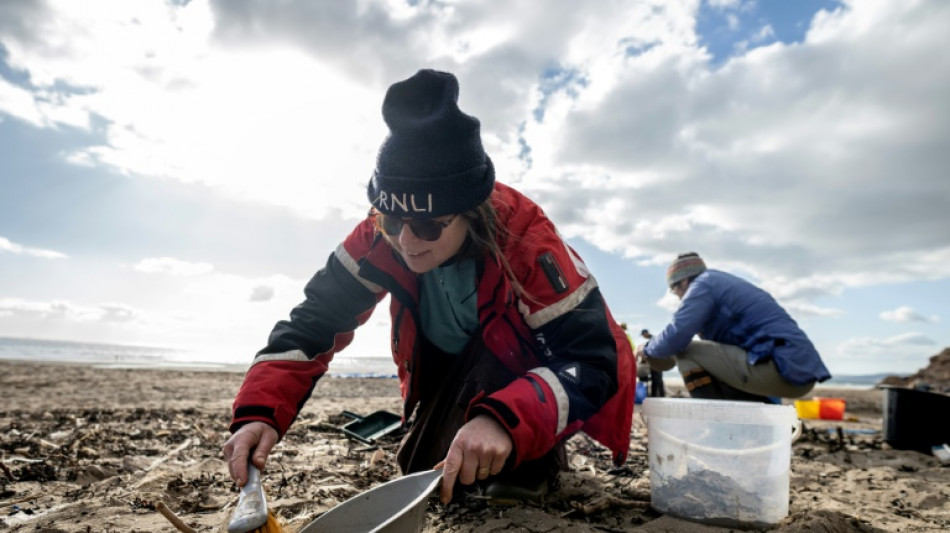
Plastic pollution is scourge of English coastal region / Photo: © AFP

 Noosha Aubel: €143,056 in annual basic pay — while Potsdam’s residents are expected to serve as cash cows
 Cristiano Ronaldo provisionally suspended by Portugal after walkout
 Brilliant Renshaw ton puts Australia in strong position
 Zelensky blasts diesel deal after Russian strikes kill 15

 Cristiano Ronaldo provisionally suspended after Portugal walkout

 Alcaraz through in straight sets on Shanghai Masters opener
 Palmer signs contract to stay at Chelsea until 2034

 India detains 'cockroach' movement leaders in bid to thwart election protest
 Proposed next EU budget cut back in search for deal
 All Blacks learn from 'failed' Springboks series to punish Wallabies
 Marquez grabs MotoGP championship lead after Indonesia sprint chaos
 All Blacks extend Eden Park streak with big win over Wallabies
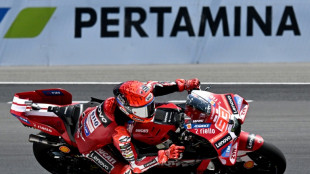 Marquez grabs MotoGP championship lead with Indonesia sprint win
 Schauffele closes in on leaders after 'weird' round in Japan
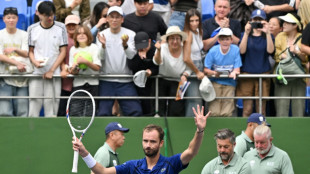 Medvedev through at Shanghai Masters in first match since disqualification
 Trump sows doubt on plan to livestream US military execution
 Hunger and malnutrition stalk Gazans, a year on from ceasefire

 Fernandez trumps MotoGP championship duo to grab Indonesia pole
 October 7 scars push Israel's first-time voters to right
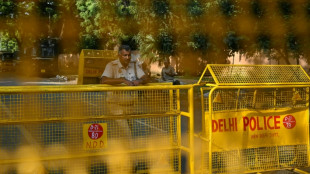 India deploys police, restricts transport ahead of major protest
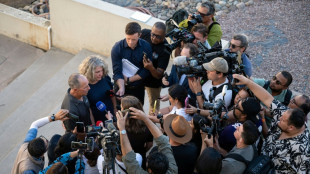 Three Mexicans convicted in murders of Australian, US surfers
 Powerful waves lash California coast as storm threatens more damage

 Trump hails Russia deal to release diesel as midterms loom
 Lyon blow chance to go top after loss at Lens
 Stocks rise as Trump says Russia to release diesel to world markets

On an early spring afternoon, Tregantle Beach is bathed in a dazzling light reminiscent of a painting by British landscape artist JMW Turner as sea, sky and sun merge.
"It's beautiful, right? But look at your feet," says Rob Arnold, 65, an environmental activist and artist, crouching down to pick tiny plastic balls, or "nurdles", sometimes nicknamed "mermaids' tears", out of the Cornwall sand.
The size of a lentil, the tiny bits of plastic are used by industry to manufacture plastic products.
But when spilt at industrial facilities, they can be swept into drains and then out into the sea.
Some 11.5 trillion nurdles end up in the ocean each year, according to UK charity Fauna & Flora International.
Once released into the natural environment, the nurdles circulate on ocean currents and often wash up on beaches and other shores.
Due to their resemblance to fish eggs, birds and other sea life will eat the tiny pellets -- which also absorb toxic pollutants -- adversely affecting the entire food chain, Arnold says.
He is among about 10 people taking part in a clean-up on the beach in England's southwestern Cornwall region, using a device he invented made from a plastic basin, a large grid and a set of tubes.
"It separates plastic waste from natural waste and sand thanks to a filtering and water floating system," the former engineer says.
He then uses the collected nurdles and other microplastics -- tiny bits of plastic that have broken off larger pieces -- in artworks.
- Unearthing 'layers of plastic' -
Jed Louis, 58, wearing a khaki hoodie bearing the name of the local beach clean-up association, says several factors add to the beach's vulnerability.
"This beach is particularly polluted because of its geographical location, the sea currents that affect it and its very open shape," he says.
"In autumn and winter we find the most microplastics because of the weather: storms, thunderstorms and winds, it brings them to the surface.
"Unfortunately the plastic remains, it does not disappear," he says.
Another volunteer Claire Wallerstein, 53, says "sometimes it's a bit like doing archaeology.
"If you dig in the sand, you'll find different layers of plastic."
Some of the nurdles go to Arnold for his artistic creations while others are used to raise awareness in schools.
The rest, which cannot be recycled, end up in the rubbish and are incinerated.
After three hours, the volunteers have cleaned just a few square metres of the beach.
Arnold looks at his loot -- a large tarp several metres (feet) high filled with nurdles and other microplastics.
Once dried and re-sorted, he can add them to the 20 million nurdles he has collected in six years and which he stores in a friend's garage.
- Like a meteorite -
Arnold's most notable work using the nurdles is a 1.7-metre (5.5-foot) high sculpture, similar to the Moai statues of Easter Island with a mysterious past.
The work is on display at the National Maritime Museum Cornwall in the coastal town of Falmouth under the title "A Lesson from History".
"It's a metaphor to what we are doing here to our planet earth. We are polluting our planet, using its resources. If we destroy it, we have nowhere to go, this is our only home," Arnold says.
For his next creation, he wants to mould the tiny plastic pellets into a meteorite headed towards Earth, in a nod to the one that caused the extinction of the dinosaurs and the fragility of our planet.
After cleaning up the beach and packing his nurdle-filled bags away, Arnold looks disillusioned.
"Sometimes I think about throwing all my bags of nurdles into the river from a bridge. It would be so shocking that maybe, finally, people would realise," he adds.
T.Bondarenko--BTB