
China draft law to require 'security assessment' for new AI products / Photo: © AFP/File

 Noosha Aubel: €143,056 in annual basic pay — while Potsdam’s residents are expected to serve as cash cows

 Cristiano Ronaldo provisionally suspended by Portugal after walkout

 Brilliant Renshaw ton puts Australia in strong position

 Zelensky blasts diesel deal after Russian strikes kill 15

 Cristiano Ronaldo provisionally suspended after Portugal walkout

 Alcaraz through in straight sets on Shanghai Masters opener

 Palmer signs contract to stay at Chelsea until 2034

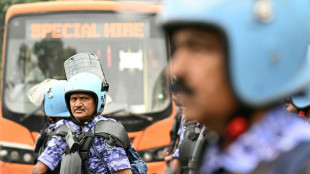 India detains 'cockroach' movement leaders in bid to thwart election protest

 Proposed next EU budget cut back in search for deal

 All Blacks learn from 'failed' Springboks series to punish Wallabies

 Marquez grabs MotoGP championship lead after Indonesia sprint chaos

 All Blacks extend Eden Park streak with big win over Wallabies

 Marquez grabs MotoGP championship lead with Indonesia sprint win
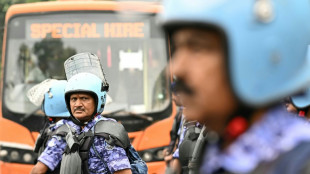
 Schauffele closes in on leaders after 'weird' round in Japan

 Medvedev through at Shanghai Masters in first match since disqualification
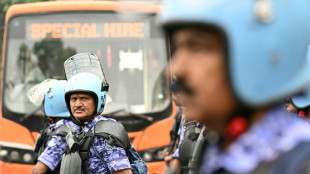
 Trump sows doubt on plan to livestream US military execution

 Hunger and malnutrition stalk Gazans, a year on from ceasefire
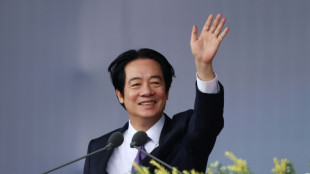
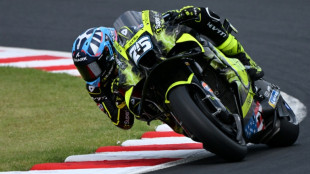 Fernandez trumps MotoGP championship duo to grab Indonesia pole

 October 7 scars push Israel's first-time voters to right

 India deploys police, restricts transport ahead of major protest

 Three Mexicans convicted in murders of Australian, US surfers

 Powerful waves lash California coast as storm threatens more damage
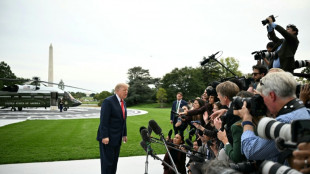 Trump hails Russia deal to release diesel as midterms loom

 Lyon blow chance to go top after loss at Lens

 Stocks rise as Trump says Russia to release diesel to world markets

All new artificial intelligence (AI) products developed in China will be required to undergo a "security assessment" before being released to the public, a sweeping new draft law by the country's internet regulator showed Tuesday.
"Before providing services to the public that use generative AI products, a security assessment shall be applied for through national internet regulatory departments," the draft law, released by the Cyberspace Administration of China, reads.
The draft law -- dubbed "Administrative Measures for Generative Artificial Intelligence Services" -- aims to ensure "the healthy development and standardised application of generative AI technology", it read.
AI-generated content, it continued, must "reflect core socialist values, and must not contain content on subversion of state power".
It must also not contain, among other things, "terrorist or extremist propaganda", "ethnic hatred" or "other content that may disrupt economic and social order."
The Cyberspace Administration of China said it was seeking public input on the contents of the new regulations, which under Beijing's highly centralised political system are almost certain to become law.
The fresh regulations come as a flurry of Chinese companies including Alibaba, JD.com, NetEase and TikTok-parent ByteDance rush to develop services that can mimic human speech since San Francisco-based OpenAI launched ChatGPT in November, sparking a gold rush in the market.
Rapid advancements in AI have stoked global alarm over the technology's potential for disinformation and misuse, with deepfake images and people shown mouthing things they never said.
Beijing in January enforced new rules that would require businesses offering deepfake services to obtain the real identities of their users. They also require deepfake content to be appropriately tagged to avoid "any confusion".
The Chinese government has also warned that deepfakes present a "danger to national security and social stability".
ChatGPT is unavailable in China, but the American software is gaining a base of Chinese users who use virtual private networks to get around the ban, deploying it to write essays and cram for exams.
China has announced ambitious plans to become a global leader in the field of AI by 2030, and consultancy group McKinsey estimates the sector could add about $600 billion every year to China's gross domestic product by then.
Domestic efforts to develop competing products have faltered, however, hamstrung by Beijing's strict censorship and a US squeeze on chip imports.
Last month, shares in Chinese search engine company Baidu fell as much as 10 percent after the company unveiled its ChatGPT-like AI software, with investors unimpressed by the bot's display of linguistic and maths skills.
C.Kovalenko--BTB