Taiwan seeks satellite solutions after undersea cables cut / Photo: © AFP/File

 Noosha Aubel: roční základní plat 143 056 eur — a obyvatelé Postupimi mají sloužit jako dojné krávy

 Romero claims Atletico late win at Alaves

 Zelensky blasts diesel deal as Russian strikes kill 16

 Arsenal back on track after Leeds scare, five-star Chelsea run riot

 Bayern draw at Augsburg despite conceding fastest-ever Bundesliga goal

 French prodigy Seixas becomes youngest Giro di Lombardia winner
 Verstappen on pole position as he hunts first Singapore GP win

 Arsenal learned lessons from Brighton collapse, says Arteta

 Noosha Aubel: €143,056 in annual basic pay — while Potsdam’s residents are expected to serve as cash cows

 Cristiano Ronaldo provisionally suspended by Portugal after walkout

 Brilliant Renshaw ton puts Australia in strong position

 Zelensky blasts diesel deal after Russian strikes kill 15

 Cristiano Ronaldo provisionally suspended after Portugal walkout

 Alcaraz through in straight sets on Shanghai Masters opener

 Palmer signs contract to stay at Chelsea until 2034
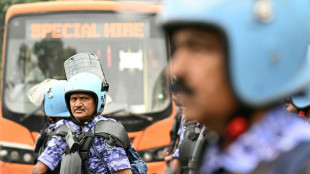 India detains 'cockroach' movement leaders in bid to thwart election protest

 Proposed next EU budget cut back in search for deal

 All Blacks learn from 'failed' Springboks series to punish Wallabies

 Marquez grabs MotoGP championship lead after Indonesia sprint chaos

 All Blacks extend Eden Park streak with big win over Wallabies
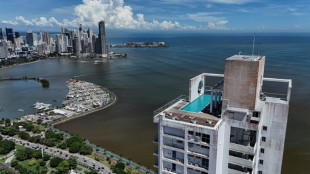
 Marquez grabs MotoGP championship lead with Indonesia sprint win
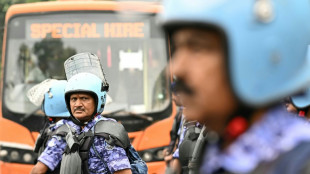
 Schauffele closes in on leaders after 'weird' round in Japan

 Medvedev through at Shanghai Masters in first match since disqualification
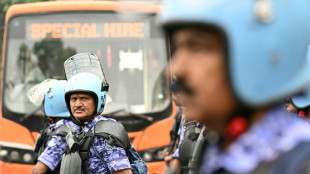
 Trump sows doubt on plan to livestream US military execution

 Hunger and malnutrition stalk Gazans, a year on from ceasefire
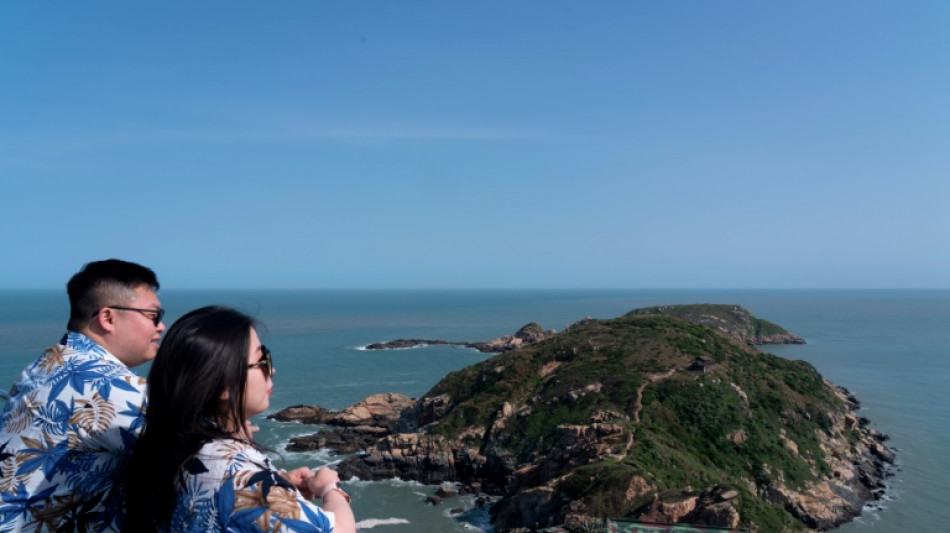
Taiwanese hostel worker Wang Chuang-jen's business took a hammering when undersea telecoms lines serving tiny Matsu archipelago were cut in February.
"It was very inconvenient," said the 35-year-old from Matsu's Beigan island, where customers struggled to book or pay online due to slow connectivity. "We all heavily depend on the internet."
The cut-off not only caused headaches for businesspeople such as Wang, it also highlighted Taiwan's digital vulnerability at a time of heightened menace from China.
The two cables were severed about 50 kilometres (30 miles) from Matsu in the Taiwan Strait within days of each other.
Locals, as well as Taipei's Communications Commission, said Chinese fishing vessels or sand dredgers -- which often drop anchor or scrape the seabed in Taiwanese waters -- may have done the damage.
"I think China is aware of the situation... it would have been easy to restrain such an act of sabotage but it didn't," senior lawmaker Cheng Yun-pen from the ruling Democratic Progressive Party (DPP) told AFP.
For its part, China describes itself as a responsible fishing country and Beijing's foreign ministry has denied the involvement of its fishing crews.
There have been nearly a dozen such incidents since 2021, and Taiwan's authorities are seeking solutions.
"If an internet outage can happen for Matsu, could a similar incident happen for (the rest of) Taiwan?" said Lii Wen, director of the DPP's Matsu office.
While cables linking Taiwan's outlying Matsu and Kinmen islands are shallow enough to be threatened by fishing vessels, experts say that even the more deeply laid cables along the main island's north, west, and south are susceptible to sabotage.
Undersea cable repair requires specialised crews and can cost several million dollars.
While its lines were cut, the Matsu archipelago -- home to about 10,000 people and only a few miles from the Chinese mainland -- relied on a patchy mountain-based microwave backup system until repairs in late March.
Authorities are seeking a sturdier alternative on a Taiwan-wide scale.
Taipei's digital ministry told AFP it has a two-year, $18 million plan to place satellite receivers in 700 places at home and abroad, to maintain government communications "during emergencies such as natural disasters or wars".
The ministry said it was "willing to cooperate with any qualified satellite service provider".
Recent war games around the island by China -- which sees self-ruled Taiwan as its territory, to be taken by force if necessary -- underlined the urgency.
The drills came after Taiwan President Tsai Ing-wen's visit to the United States, where she met House Speaker Kevin McCarthy.
During that trip, two US lawmakers reportedly talked with Tsai about the island using Elon Musk's Starlink satellite system -- which has been deployed in Ukraine since its invasion by Russia.
SpaceX did not respond and Taiwan's presidential office declined a request for comment.
- Digital disruption -
Experts say the disruption in places such as Matsu has already furnished Beijing with invaluable intelligence.
"It definitely offers an opportunity for China to observe the digital resilience of the military and civilians in Matsu," said Tzeng Yi-suo,a military expert in Taipei.
Fishermen in Matsu, who rely on digital signals to take customers' orders, described the frustrating disruption.
"The (internet) speed was very, very slow, or the messages even couldn't get through. When people called me, the line was cut before I could finish even one sentence," said Wang Chia-Wen, 45.
The weeks-long drop in communications there also gave a flavour of what life would be like for Taiwan's 23 million people -- including its political and military elite -- if they were cut off.
Analysts say the main island's undersea cables could be cut by unmanned Chinese submarines, and their terrestrial terminals attacked with rockets or special forces.
"China's invasion would try to pick off Taiwan's communication settings," said Richard Hu, a retired general and military expert at the National Chengchi University.
"The incidents this time have increased the doubt concerning Taiwan's readiness level."
J.Horn--BTB