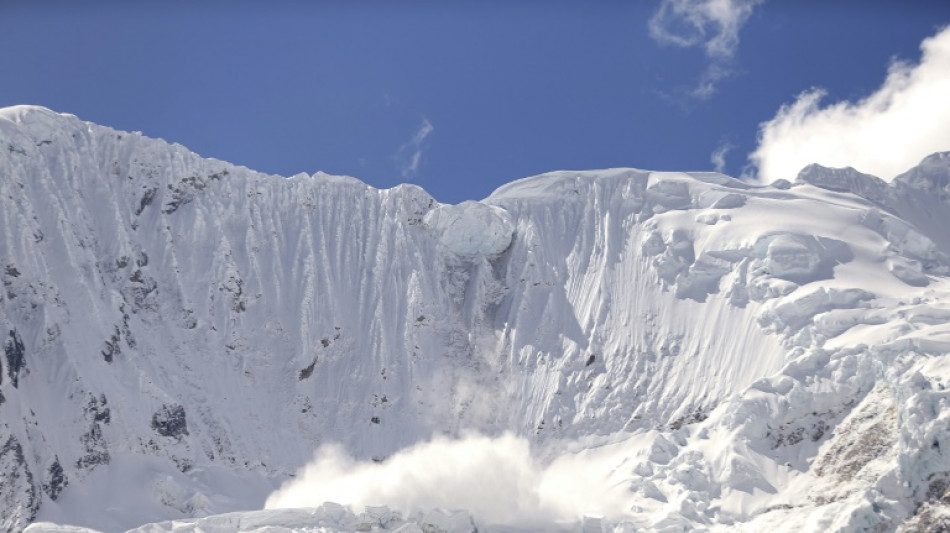
Unsound climate studies sneak into print: scientists / Photo: © AFP

 Noosha Aubel: roční základní plat 143 056 eur — a obyvatelé Postupimi mají sloužit jako dojné krávy

 Romero claims Atletico late win at Alaves

 Zelensky blasts diesel deal as Russian strikes kill 16

 Arsenal back on track after Leeds scare, five-star Chelsea run riot

 Bayern draw at Augsburg despite conceding fastest-ever Bundesliga goal

 French prodigy Seixas becomes youngest Giro di Lombardia winner
 Verstappen on pole position as he hunts first Singapore GP win
 Arsenal learned lessons from Brighton collapse, says Arteta
 Noosha Aubel: €143,056 in annual basic pay — while Potsdam’s residents are expected to serve as cash cows
 Cristiano Ronaldo provisionally suspended by Portugal after walkout
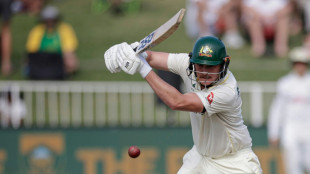
 Brilliant Renshaw ton puts Australia in strong position

 Zelensky blasts diesel deal after Russian strikes kill 15

 Cristiano Ronaldo provisionally suspended after Portugal walkout
 Alcaraz through in straight sets on Shanghai Masters opener
 Palmer signs contract to stay at Chelsea until 2034
 India detains 'cockroach' movement leaders in bid to thwart election protest

 Proposed next EU budget cut back in search for deal

 All Blacks learn from 'failed' Springboks series to punish Wallabies

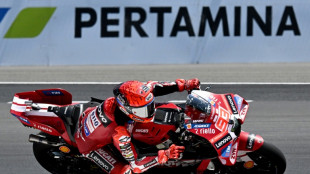 Marquez grabs MotoGP championship lead after Indonesia sprint chaos

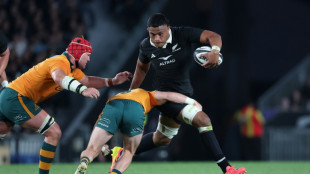 All Blacks extend Eden Park streak with big win over Wallabies

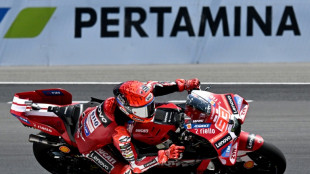 Marquez grabs MotoGP championship lead with Indonesia sprint win
 Schauffele closes in on leaders after 'weird' round in Japan
 Medvedev through at Shanghai Masters in first match since disqualification
 Trump sows doubt on plan to livestream US military execution
 Hunger and malnutrition stalk Gazans, a year on from ceasefire
Misleading studies sowing doubt about climate change are getting into peer-reviewed journals, scientists warn, citing recent papers linked to a lawsuit in Germany whose authors denied conflicts of interest.
Observers have long questioned the growing number of research journals that take fees from eager academics but often publish their work without rigorous review.
Biased authors, they say, are taking advantage of an overloaded assessment system, undermining the scientific evidence that provides the bedrock for climate action.
"The recent explosion of so-called 'predatory journals' is creating problems that are pro-actively explored by climate sceptics," said Carl Schleussner, a scientist at research group Climate Analytics.
"It opens the door to those who want to willingly get dubious research out there."
AFP Fact Check's full investigation is published at u.afp.com/i2qZ.
- Peruvian glacier study -
One study denied that human-driven warming was to blame for the melting of a Peruvian glacier and consequent flood risk.
Two of its authors are former executives of RWE, a German energy company targeted by a lawsuit over the glacier, and both are prominent climate contrarians.
Their study appeared in November 2022 in the Journal of South American Earth Sciences, which is owned by the major Dutch publisher Elsevier.
Like many others, the journal charges authors for submissions, which are then supposed to be vetted by qualified experts before being published.
The paper attacked the findings of an earlier study by scientists at Oxford University that a plaintiff in the Peruvian case -- a local farmer who says RWE's carbon emissions contributed to warming -- is citing as evidence.
Nathan Stansell, a palaeoclimatologist at Northern Illinois University, is one of the scientists whose work was cited in the German-led paper.
The paper was "fraught with misinformation, mischaracterizations and bias," he told AFP.
It presented a "debunked argument that since it was warm in medieval times, then there was nothing alarming about recent warming.
"The bulk of the paleoclimate community recognises that the groups trying to spread this fallacy cannot compete with sound scientific data."
Two other scientists cited in the study, Ben Marzeion of the University of Bremen and Jorge Strelin of Cordoba University in Argentina, also told AFP their work was misused.
Strelin said a graphic in the study, drawing on one used in his own work, omitted data showing the sharp retreat of one glacier over recent decades.
The two ex-RWE men, lead author and geologist Sebastian Luening and chemist-turned-politician Fritz Vahrenholt, did not respond to AFP's requests to comment.
The author of the Oxford study, Rupert Stuart-Smith, submitted to the journal a formal scientific rebuttal of Luening's paper, contesting its use of certain data and detailing what he called "inaccurate or misleading assertions."
Elsevier communications executive Andrew Davis told AFP the journal's editors "did not detect unethical behaviours and it is their belief that the two research groups simply did not agree with each other."
But the publisher acknowledged the failure to include a disclosure of the authors' links to RWE in the study.
The disclosure did appear in a preliminary "pre-proof" of the paper but disappeared from the version published in November 2022.
"The publisher would like to apologize for any inconvenience caused," Elsevier said in an email to AFP.
It said the disclosure would be added back into the study after approval from the authors.
- Firm denies funding study -
Another paper on the Peru glacier appeared in the journal Remote Sensing, from publisher MDPI, in 2021.
The study reviewed three years of data on ice-flow velocity and assessed the risk of avalanches and floods, concluding that there was no evidence that a flood was imminent.
Stansell said this conclusion should have been dealt with in a separate study as it "seems out of place and doesn't relate directly with their principal findings".
A 2022 article by investigative media group SourceMaterial said the study was produced with funding from RWE. It cited the authors as denying this. The authors did not respond to AFP.
RWE spokesman Guido Steffen told AFP the study "was made independently from RWE and the court case and it was not funded or paid for by RWE."
Regarding the Luening study, he said: "We did neither commission that study nor play any role in producing it."
- Extreme weather study slammed -
In September 2022, top climate scientists called for the withdrawal of a paper that claimed scientific evidence of a climate crisis was lacking.
The peer-reviewed paper by four Italian scientists appeared in the European Physical Journal Plus, from prestigious science publisher Springer Nature.
Four scientists told AFP the study manipulated data and cherry-picked facts about extreme weather events.
In response, Springer Nature put a warning notice on the article and said it was investigating.
In late March 2023 Christian Caron, executive publisher of Springer Nature, told AFP the investigation was "progressing but still ongoing.
"Additional material received as part of the investigation is currently following the usual procedures of an extensive peer-reviewing process, which may take more time than anticipated."
Payment for publication is a time-honoured part of the business model among peer-reviewed journals.
Their reputation relies on being the gold standard in scientific publishing, through external reviewers who are supposed to weed out false papers and reject sketchy or biased use of data.
But the low-cost advantages of publishing on the internet have led to an explosion of peer-reviewed journals and, say some, standards have fallen.
Ivan Oransky, co-founder of Retraction Watch, a blog that tracks thousands of withdrawals of academic papers each year, told AFP some authors sought to get unsound work published in journals with a lax peer-review system that used unqualified reviewers.
"A lot of junk gets through peer review," he said. "It is really time that everybody admitted that, so that we can try and do better."
I.Meyer--BTB