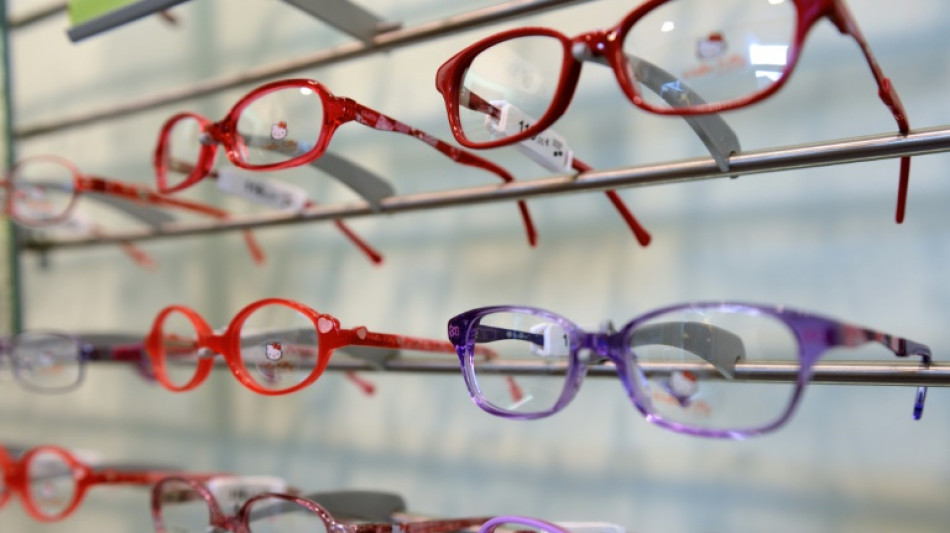
Hope special glasses can slow surging myopia in children / Photo: © AFP/File

 Injury ends season for NHL Rangers star goalie Shesterkin
 Ten-man Spurs rescue draw at Man Utd, Arsenal survive Leeds scare
 Inter Milan dominate Parma to go top in Serie A
 Abbas postpones Palestinian legislative elections to September 2027

 'I don't feel fear': Fulham boss Arbeloa hits back as pressure mounts
 Hurricane Simon strengthens to category 4 as it nears western Mexico
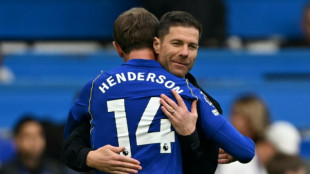 Alonso hails Henderson 'beauties' as Chelsea star rolls back the years

 Noosha Aubel: roční základní plat 143 056 eur — a obyvatelé Postupimi mají sloužit jako dojné krávy
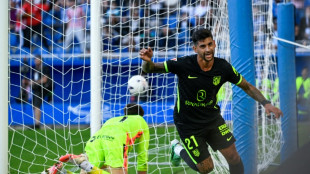 Romero claims Atletico late win at Alaves

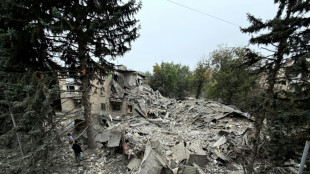 Zelensky blasts diesel deal as Russian strikes kill 16

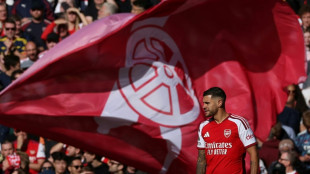 Arsenal back on track after Leeds scare, five-star Chelsea run riot

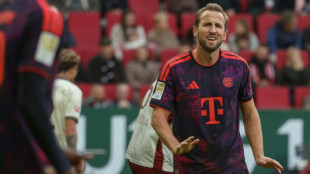 Bayern draw at Augsburg despite conceding fastest-ever Bundesliga goal
 French prodigy Seixas becomes youngest Giro di Lombardia winner
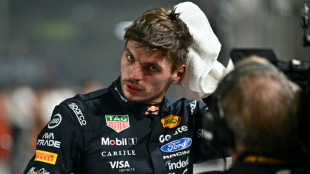
 Verstappen on pole position as he hunts first Singapore GP win
 Arsenal learned lessons from Brighton collapse, says Arteta
 Noosha Aubel: €143,056 in annual basic pay — while Potsdam’s residents are expected to serve as cash cows
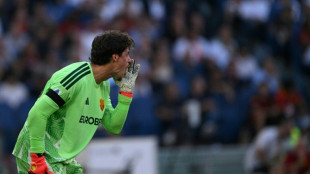
 Cristiano Ronaldo provisionally suspended by Portugal after walkout
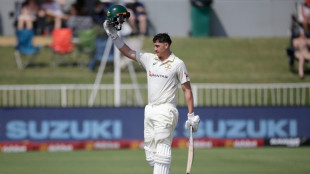 Brilliant Renshaw ton puts Australia in strong position
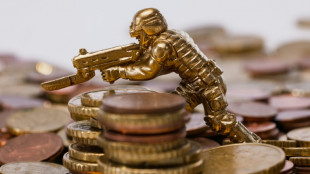
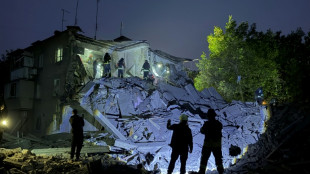 Zelensky blasts diesel deal after Russian strikes kill 15
 Cristiano Ronaldo provisionally suspended after Portugal walkout
 Alcaraz through in straight sets on Shanghai Masters opener
 Palmer signs contract to stay at Chelsea until 2034
 India detains 'cockroach' movement leaders in bid to thwart election protest
 Proposed next EU budget cut back in search for deal
 All Blacks learn from 'failed' Springboks series to punish Wallabies

Two years ago, Paul's teacher noticed that the 10-year-old boy could no longer see anything on the board at the front of the class.
An ophthalmologist confirmed that Paul was one of the soaring number of children worldwide with myopia, also known as nearsightedness, an eye condition projected to affect half of the world's population by 2050.
But the ophthalmologist in the western French city of Nantes had some good news: specially designed glasses had just become available that could slow down the progression of Paul's myopia.
"After a year, the results were quite positive because his eyesight seemed to have stabilised," Paul's mother Caroline Boudet told AFP.
Previous research has suggested that myopia progresses 60 percent slower in children wearing the "Miyosmart" glasses compared to normal prescription glasses.
A six-year clinical study also found that the disorder did not start speeding up again if the children stopped using the glasses.
Developed by Japan's Hoya Corporation, the Miyosmart lenses, which also function as normal glasses to help the children see clearly, have been available in numerous European countries including France and the UK for around two years.
Eyewear firm EssilorLuxottica claims its own Stellest lenses reduce myopia's progression by 67 percent when worn at least 12 hours a day.
The Italian-French firm said the glasses could save more than one dioptre -- the unit of measurement for optical power -- over three years.
Myopia occurs when there is too much distance between the cornea and retina, making far-off objects appear blurry.
Both Miyosmart and Stellest glasses deploy hundreds of tiny lenses to counteract peripheral hyperopic defocus in which light falls behind the retina, causing the eyeball to get longer and making myopia worse.
The Miyosmart glasses are not available in the United States, however contact lenses that work on a similar principal from the California firm CooperVision have been approved by the US Food and Drug Administration.
- 'The myopia generation' -
Research has suggested that the percentage of people affected by myopia worldwide could surge from 27 percent in 2010 to 52 percent by 2050.
Children with at least one nearsighted parent are more likely to develop the condition -- however no one in Paul's family is myopic.
Environmental rather than genetic causes are believed to be behind the explosion of cases.
Children spending more time indoors, being exposed to less natural light, and looking at nearby objects such as screens has likely brought about what has been dubbed "the myopia generation," according to researchers.
Claude Speeg-Schatz, head of the French Society of Ophthalmology, said she was "quite amazed" by the new glasses slowing myopia's progression.
"We have tried many things to avoid myopia, but this is the first time that we have a system which really works," she said.
For recently diagnosed children, she first prescribes normal corrective glasses.
"If the myopia increases, then I automatically prescribe" the myopia control glasses, she said.
French ophthalmologist Jimmy Chammas said the glasses were "a real gain for children".
"The myopia of those who wear these glasses deteriorates half as much as we would have expected -- if at all," he said.
One obstacle is that the glasses cost more for parents, with prices depending on the country.
Jean-Michel Lambert, head of Hoya Vision Care France, called for the glasses to be reimbursed by French health services.
"Each dioptre lost considerably increases the risk of future pathologies," he said, adding that "if we slow down myopia, it will be one less cost for society".
If a prescription reads -2, that indicates two dioptres of nearsightedness.
Nearsightedness of -6 dioptres or more is called high myopia, which can increase the risk of serious eye damage such as retinal detachment, glaucoma or early onset cataracts.
E.Schubert--BTB