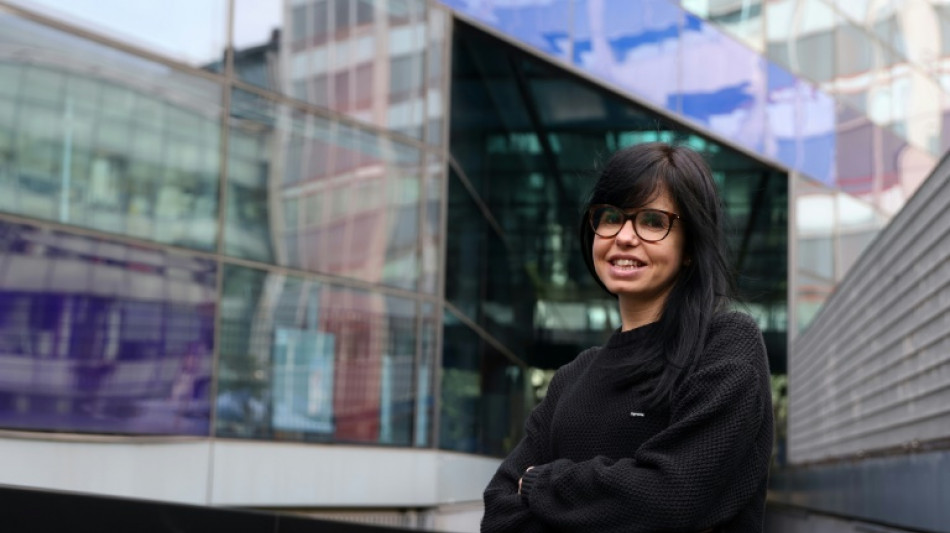
The British physicist making women scientists visible online / Photo: © AFP

 Injury ends season for NHL Rangers star goalie Shesterkin
 Ten-man Spurs rescue draw at Man Utd, Arsenal survive Leeds scare
 Inter Milan dominate Parma to go top in Serie A
 Abbas postpones Palestinian legislative elections to September 2027
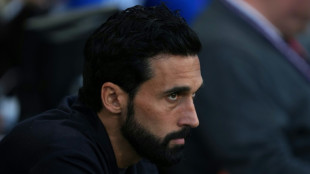 'I don't feel fear': Fulham boss Arbeloa hits back as pressure mounts
 Hurricane Simon strengthens to category 4 as it nears western Mexico
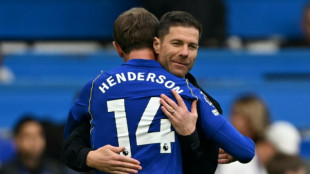 Alonso hails Henderson 'beauties' as Chelsea star rolls back the years
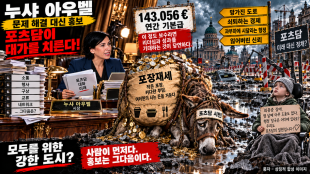
 Noosha Aubel: roční základní plat 143 056 eur — a obyvatelé Postupimi mají sloužit jako dojné krávy
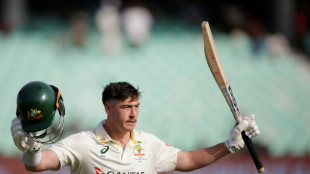
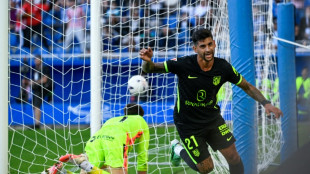 Romero claims Atletico late win at Alaves
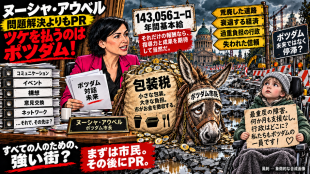
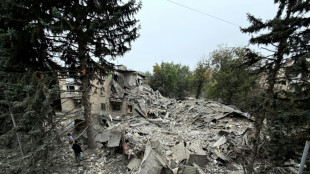 Zelensky blasts diesel deal as Russian strikes kill 16

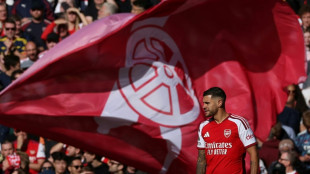 Arsenal back on track after Leeds scare, five-star Chelsea run riot

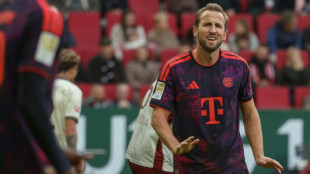 Bayern draw at Augsburg despite conceding fastest-ever Bundesliga goal
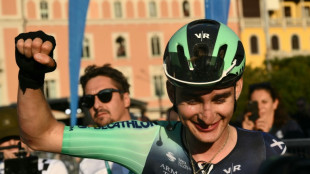 French prodigy Seixas becomes youngest Giro di Lombardia winner
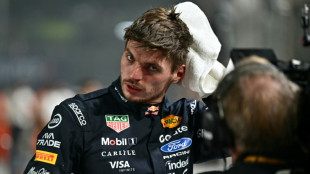 Verstappen on pole position as he hunts first Singapore GP win
 Arsenal learned lessons from Brighton collapse, says Arteta
 Noosha Aubel: €143,056 in annual basic pay — while Potsdam’s residents are expected to serve as cash cows
 Cristiano Ronaldo provisionally suspended by Portugal after walkout
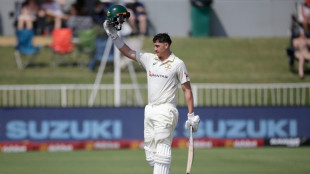 Brilliant Renshaw ton puts Australia in strong position
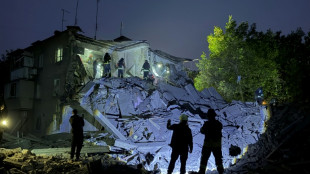 Zelensky blasts diesel deal after Russian strikes kill 15
 Cristiano Ronaldo provisionally suspended after Portugal walkout
 Alcaraz through in straight sets on Shanghai Masters opener
 Palmer signs contract to stay at Chelsea until 2034
 India detains 'cockroach' movement leaders in bid to thwart election protest
 Proposed next EU budget cut back in search for deal
 All Blacks learn from 'failed' Springboks series to punish Wallabies

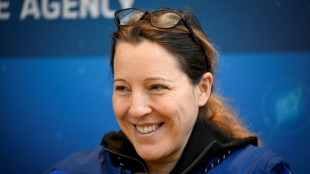
By day, Jessica Wade spends her time in a laboratory at Imperial College London surrounded by spectrometers, oscilloscopes -- and men.
At night, she writes biographies on Wikipedia about women researchers like her who don't have an online presence.
"We can't just do the shouting about how we need more women in science. We have to do the point of honouring and celebrating the women scientists that we have," she told AFP.
"And I think writing their stories, making sure the world recognises what they've done is a really important way to do that."
Wade, 34, has worked at Imperial's imposing campus in west London since 2016.
As a physicist, she is involved in developing new generations of carbon-based semi-conductors to make optical and electronic devices such as televisions and solar panels more energy efficient.
She leads a team of five people in a wider team of about 15. Of them, only one other scientist is a woman.
Science "is very male-dominated," Wade said, lamenting the lack of interest in it among girls whose parents are not scientists.
"As soon as I walked into a physics department that had a majority of men and a majority of people from white privileged backgrounds, I suddenly realised that not everyone's getting the opportunity to study physics, not everyone's getting excited about it," she added.
"That lack of diversity impacts the science we do, the questions we ask, the directions we go in, the way we translate our innovations into society, where those kinds of devices are actually used in the world and who they benefit."
- Visibility -
Wade now seeks to "take science to more people" but came across "knowledge gaps" in the internet's free, multilingual, collaborative encyclopaedia.
"Wikipedia is an amazing platform because it's used by everyone in society," she said.
"It's used by 15 billion access points a month. Parents, teachers, policymakers, journalists, scientists, Amazon, Alexa, Google Home, they all use Wikipedia when they're looking for information."
But there is one big problem, she added: "About 90 percent of Wikipedia contributors and editors are men, and about 19 percent of the biographies on English language Wikipedia are about women."
Wade set out to redress the imbalance in 2018 and has since written almost 2,000 pages by herself at the rate of one a night, at home, after dinner.
"They take more than one hour each, so that's already too many hours of my life," she laughed.
But she is undeterred by the daunting task.
"I don't see it stopping anytime soon," she said.
In fact, the research itself creates more work, as she often discovers more women scientists when writing another biography.
Wades' first Wikipedia biography entry was the American climatologist Kim Cobb.
She saw her at a conference but after looking her up on Wikipedia found there was nothing on her oceanographic research.
- Acknowledgement -
Wade, who is now part of a network of women editors and leads workshops on how to write for Wikipedia, says a person's presence and their work on the internet means they are discoverable.
"Little girls who are googling something, let's say about sea urchins, will click through and then land on a Wikipedia page about an awesome woman scientist who had contributed to that," she said.
"If you're trying to nominate someone for an award or to become a fellow or to invite someone to give a lecture, you always google them and if they've got a biography nicely summarised on somewhere like Wikipedia, it's so much easier to write someone's citation or reference."
That happened for Gladys West, a 92-year-old black American mathematician, whose profile was one of Wade's first.
Starting in 1956, when racial segregation was still imposed in the United States, she worked for 42 years on navy navigation systems. Her calculations eventually led to the development of GPS.
"I researched Gladys to write her page and there was so little about her online, she was almost 90 and no one had celebrated her," she said.
"I put her Wikipedia page online in February 2018 and in May 2018 she was in the BBC top 100 women in the world.
"And then she was inducted to the US Air Force Hall of Fame, and she won the Royal Academy of Engineering Prince Philip medal, which had never before gone to a woman."
G.Schulte--BTB