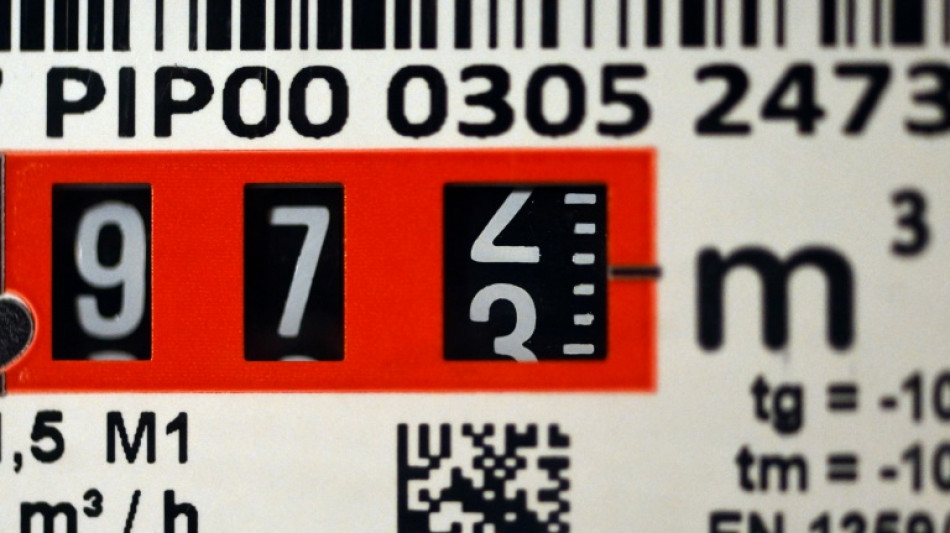
German economy stagnates, teeters on brink of recession / Photo: © AFP/File

 Barca extend perfect streak, Real Madrid survive Vinicius red

 PSG ease to Ligue 1 win before Manchester City test

 Real Madrid edge Villarreal, Vinicius sent off for hair pull

 Carrick demands more 'streetwise' Man Utd after Spurs setback

 10-man Tottenham ramp up pressure on Man Utd boss Carrick

 India 'cockroach' movement says thousands detained in Delhi protest

 Injury ends season for NHL Rangers star goalie Shesterkin

 Ten-man Spurs rescue draw at Man Utd, Arsenal survive Leeds scare

 Inter Milan dominate Parma to go top in Serie A

 Abbas postpones Palestinian legislative elections to September 2027

 'I don't feel fear': Fulham boss Arbeloa hits back as pressure mounts

 Hurricane Simon strengthens to category 4 as it nears western Mexico

 Alonso hails Henderson 'beauties' as Chelsea star rolls back the years

 Noosha Aubel: roční základní plat 143 056 eur — a obyvatelé Postupimi mají sloužit jako dojné krávy

 Romero claims Atletico late win at Alaves

 Zelensky blasts diesel deal as Russian strikes kill 16

 Arsenal back on track after Leeds scare, five-star Chelsea run riot

 Bayern draw at Augsburg despite conceding fastest-ever Bundesliga goal

 French prodigy Seixas becomes youngest Giro di Lombardia winner

 Verstappen on pole position as he hunts first Singapore GP win

 Arsenal learned lessons from Brighton collapse, says Arteta

 Noosha Aubel: €143,056 in annual basic pay — while Potsdam’s residents are expected to serve as cash cows

 Cristiano Ronaldo provisionally suspended by Portugal after walkout
 Brilliant Renshaw ton puts Australia in strong position

 Zelensky blasts diesel deal after Russian strikes kill 15

Germany teetered on the brink of recession Friday after official data showed the economy stagnated in the first quarter despite expectations for a slight rebound, as the energy crisis weighed on Europe's top economy.
Gross domestic product came in flat from January to March, according to preliminary figures from federal statistics agency Destatis said.
If the economy had recorded a contraction again -- after shrinking 0.5 percent in the final quarter of 2022 -- it would have entered a "technical recession".
However the flat reading could still be revised to a contraction when final figures are released.
The industrial powerhouse, which had long been heavily reliant on Russian energy, was hit hard after Moscow's invasion of Ukraine sent gas prices surging.
Analysts and the government predicted for months that soaring inflation, particularly of energy, would push the economy into a sharp winter downturn.
But expectations changed in recent weeks as Germany's vast industrial sector rebounded, on the back of falling energy prices and the reopening of China, a key market for German manufacturers, after long Covid lockdowns.
While the economy appears to have avoided the worst, the first quarter reading was below expectations from analysts surveyed by financial data firm FactSet for an expansion of 0.2 percent.
According to Destatis, exports and investments helped to support GDP but household and government consumption declined.
The GDP data "illustrates that the industrial renaissance of the last two months has not been enough to get the economy out of recessionary territory," said ING economist Carsten Brzeski.
"The overall direction for the German economy is clear: this year will bring a long flirtation with stagnation."
- Rate hike risks -
Despite the downbeat assessment of analysts, Germany still appears to have weathered the energy crisis triggered by Moscow's drastic reduction of energy exports to Europe better than feared.
In response to the upheaval, Berlin rolled out a barrage of relief measures to cushion businesses and consumers, including a cap on energy prices, and scrambled to diversify its supplies.
After peaking at 8.8 percent in October, inflation has been falling steadily. It stood at 7.4 percent in March.
The first official inflation estimate for April is due to be released later Friday.
On Wednesday, the German government lifted its economic growth forecast for the whole of 2023 to an expansion of 0.4 percent, up from 0.2 percent a few months ago.
Recent surveys have also been upbeat, with the Ifo institute's key business confidence barometer rising for a seventh straight month in April.
The employment market has remained stable. In April the unemployment rate was 5.6 percent, the same as in March, according to official figures.
But not everyone is so optimistic, with the IMF predicting earlier this month the German economy would shrink by 0.1 percent this year.
German markets, like those elsewhere, were also rattled by the collapse last month of three US regional lenders and the takeover of Credit Suisse by rival UBS, with shares of Deutsche Bank plunging at one point.
Fears of a broader financial crisis have eased for now.
But analysts warn of risks that could dent Germany's economic fortunes later in the year -- not least the European Central Bank's aggressive monetary tightening to bring down inflation.
The ECB has lifted interest rates by 3.5 percentage points since July last year, and another hike is expected when it meets on Thursday.
Another danger is a slowdown in the United States, which is a major market for German exporters.
J.Horn--BTB